










City Cruisers vs. Trail Explorers: Comparing E-Scooter Features for Different UK Terrains
City Runs Or Rough Lanes: Which UK E-Scooter Comparison Actually Matches Your Ride?
A useful UK e-scooter comparison starts with surface quality, not speed claims. If your route is mostly smooth pavement, cycle-lane joins, and short storage lifts, a commuter electric scooter usually gives you the best mix of efficiency and portability. If your ride includes patched tarmac, cracked edges, gravel cut-throughs, or rural lanes, the wrong setup quickly feels harsh, twitchy, and tiring. That is why this comparison focuses on matching scooter type to real UK terrain instead of treating every model as interchangeable.
Within iScooter’s range, the split is clear. The commuter side covers lighter city use with models such as the i9, i9Max, and i10Plus, while the off-road side moves toward stronger suspension, climbing ability, and rough-surface control with options like the iX4 and F7Ultra. One practical note matters before any terrain discussion: in the UK, privately owned e-scooters remain illegal on public roads, pavements, and parks; they are only legal on private land with permission, while rental trial rules are separate and currently extended through May 31, 2026, according to GOV.UK and GOV.UK.
City Runs Or Rough Lanes: Where Do You Actually Ride?

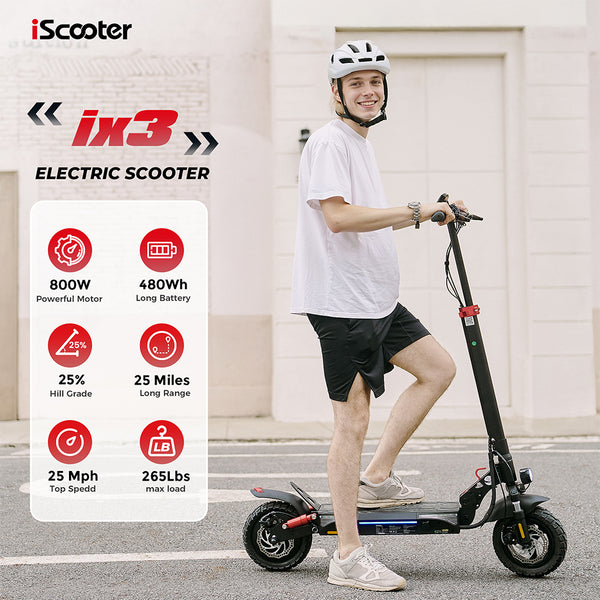
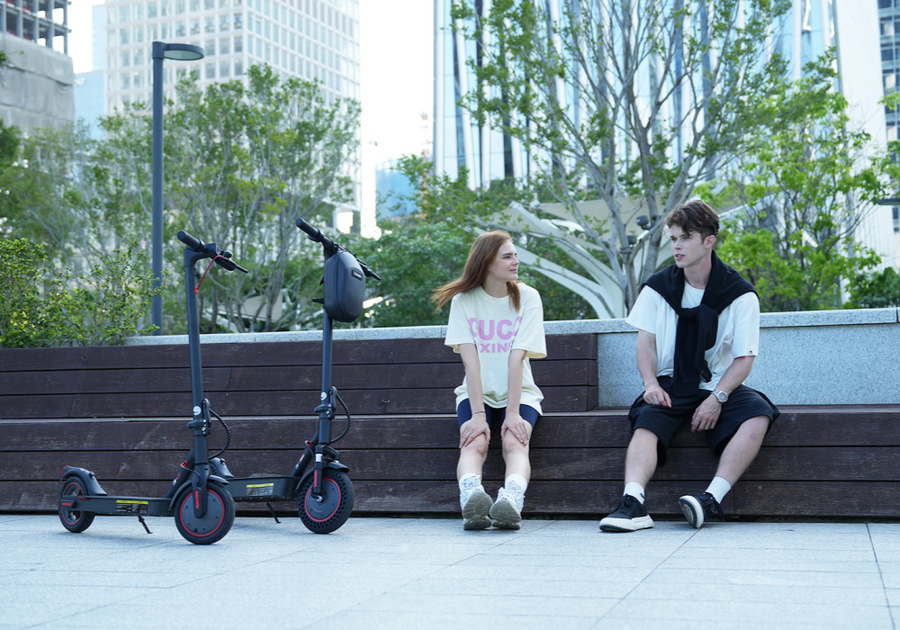
If your weekly riding is mostly predictable, a commuter electric scooter is the better tool. The iScooter i9 keeps things simple with a 350W motor, 18.6-mile claimed range, 12 kg weight, 8.5-inch solid tyres, and a 15% incline rating. That package suits short city hops, station links, and riders who carry the scooter often. Move up to the i9Max and the ride changes meaningfully: 500W output, 24.8-mile range, 10-inch solid tyres, dual suspension, 16.3 kg weight, and a 20% climbing angle make it much better on bumpy streets and repeated curb cuts. For a higher daily-use ceiling, the i10Plus adds an 800W motor, 31-mile range, 10-inch pneumatic tyres, dual suspension, and 20 kg weight.
Commuter models still have a limit, though. They are easier to fold, store, and thread through compact spaces, but once the ground becomes consistently broken, loose, or muddy, comfort and grip fall behind a true off-road electric scooter. CPSC notes that small tyres and uneven obstacles can stop an e-scooter suddenly, which is exactly why tyre size, suspension, and terrain intent matter more than headline speed on rough routes.
Shop: Commuter E Scooters
All-Terrain Off-Road Adult Scooter Models Shift Urban Commute Tradeoffs
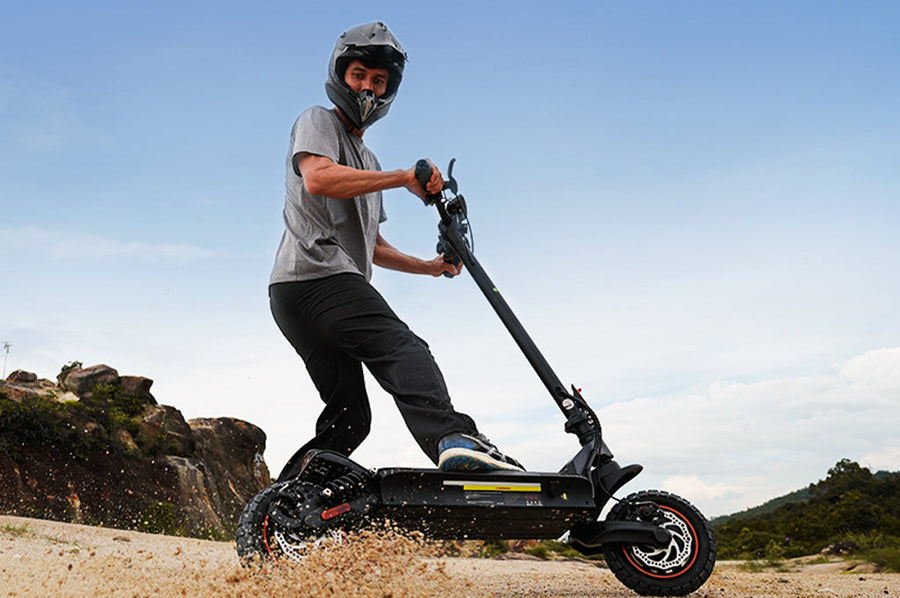
An off-road electric scooter shifts the priority from compactness to control. The iScooter iX4 is the clearest entry point for mixed terrain: it uses an 800W motor, claims 25% climbing ability, and is positioned specifically for all-terrain riding with app control. That makes it a better fit for patched back roads, gravel sections, and rural routes where a city scooter starts to feel underbuilt. The F7Ultra pushes even further with a 1500W peak motor, 56 to 62 miles of claimed range, dual suspension, front and rear disc brakes with e-brake, and a larger 16-inch front plus 12-inch rear all-terrain wheel setup.
The tradeoff is easy to understand in real use. More tyre, more suspension, and more battery help the scooter stay composed when surfaces change, but they also bring more bulk. The F7Ultra is built to feel planted and long-legged, not quick to carry up stairs. So if your route is mainly town riding with the occasional rough shortcut, a high-spec commuter may still be the cleaner answer. If the route itself is rough most of the time, an off-road model stops being a luxury and becomes the more sensible best fit.
There is an obvious practical trade-off for e-scooters: larger tires, upgraded suspension and bigger batteries deliver stable rides on uneven ground yet add extra weight. The Off Road Electric Scooter F7Ultra boasts solid off-road performance but is cumbersome to carry. Standard high-end commuter scooters suit daily city trips with occasional bumpy roads, while off-road scooters are the practical choice for routes mostly covered in rough terrain.
Which iScooter Line Fits Your Terrain Best?
Ride Comfort For Commutes Over Rough Terrain Broken Surfaces
For mild road damage, the i9Max and i10Plus are the strongest commuter picks because both add front and rear suspension, while the i10Plus also uses 10-inch pneumatic tyres that soften repeated impacts better than solid tyres. The basic i9 stays useful for smoother pavement, but it is the least forgiving once cracks and curb edges become routine. On the trail side, the iX4 is better suited to loose or uneven ground, and the F7Ultra goes furthest by pairing dual suspension with much larger all-terrain wheels.
Long-Distance Commute Range & Powerful Motor Headroom
Lighter commuters use power more efficiently on flatter city routes. The i9 covers short trips, the i9Max adds useful commuting margin, and the i10Plus is the best commuter choice when you ride farther or face more hills. Off-road models spend more energy controlling rough terrain, but they repay that with stronger climbing and less strain when surfaces get draggy or steep. In plain terms, commuter scooters stretch urban efficiency, while off-road scooters buy confidence.
Foldable Portability Vs. Stable Handling On Off-Road Terrain
This is the clearest divide in the whole article. The i9 at 12 kg is easiest to carry and store, the i9Max remains practical at 16.3 kg, and the i10Plus is still foldable but much less pleasant for frequent stair use at 20 kg. By contrast, the iX4 and especially the F7Ultra are better when your priority is stability over speed humps, gravel, and longer rural sections rather than daily carrying.
Waterproof Performance For Mud, Wet Weather & Urban Commute Real-World Use
Messier routes reward the off-road side. The i10Plus has IP54 water resistance and enough tyre and suspension support for rougher pavement, but commuter models still make more sense on cleaner routes. Once mud, loose grit, or repeated broken edges enter the picture, the off-road range becomes the more natural countryside e-scooter direction. Also, battery care matters in every use case: CPSC advises riders to use the supplied charger, avoid charging while asleep, and use only approved replacement battery packs. Find more: Compare Electric Scooters
| Dimension | i9/i9Max/i10Plus Commuter Line | iX4/F7Ultra Off-Road Line |
|---|---|---|
| Best surface | Pavement, urban streets | Gravel, rough lanes |
| Comfort on cracks | Fair to very good | Good to excellent |
| Tyre approach | 8.5-10 inch city focus | Larger all-terrain focus |
| Climbing headroom | 15%-20% typical | 25% and above |
| Carry convenience | Better for folding | Heavier, bulkier |
| Stability on rough ground | Moderate | Strong |
| Ideal rider routine | Commute and errands | Mixed terrain, rural use |
| Limitations | Less forgiving off-road | Harder to carry/store |
Best Fit Inside The Commuter Range

Entry Value Or Daily Upgrade?
The i9 is the right pick when your route is short, your storage is tight, and you want the lightest commuter. Its 12 kg frame and 350W motor make sense for flatter urban miles, but the lack of suspension and smaller solid tyres mean you feel more of the road. The i9Max is the better daily upgrade for riders who still want a commuter electric scooter but need more comfort and distance. With 500W power, dual suspension, 10-inch solid tyres, and a 24.8-mile claimed range, it covers the gap between basic city travel and rougher daily streets.
Need More Speed And Suspension?
Thei10Plus is the commuter line’s strongest all-rounder if your route is longer, hillier, or simply more punishing. Its 800W rear-drive setup, 31-mile claimed range, dual suspension, and 10-inch pneumatic tyres make it the best fit for riders who want urban practicality without the harsher ride of entry models. Compared with the i9Max, it gives you more motor headroom and better shock absorption, but you pay in extra weight. Best fit: i9 for light city carry, i9Max for better daily value, i10Plus for longer and rougher commuting.
Conclusion
Terrain should decide this UK e-scooter comparison before spec sheets do. If your riding is mostly predictable city pavement, the commuter line is the smarter choice: the i9 works for short and light trips, the i9Max is the best daily-value upgrade, and the i10Plus is the commuter best fit for rougher streets and longer routes. If your routine includes broken lanes, gravel, rural climbs, or mixed-surface distance, the off-road line makes more sense, with the iX4 covering accessible mixed terrain and the F7Ultra handling the toughest ground with the most confidence. If you already know your route profile, start by browsing the commuter or off-road iScooter range that matches it and choose the smallest model that still gives you enough comfort and range margin.
FAQ
Which electric scooter is best for rough roads?
An off-road-leaning model is usually best for rough roads because suspension, tyre grip, and climbing support matter more than low weight. In the iScooter range, the iX4 is the clearest first candidate for patched tarmac, uneven paving, and repeated curb cuts because it is built for mixed terrain rather than smooth-only commuting. If the route is rough for most of the ride, the F7Ultra is the stronger best fit thanks to its larger wheels and heavier-duty setup. A commuter model can still work for occasional bumps, but not as comfortably.
I need a electric commuter scooter for bumpy streets and curb cuts—what brands do comfort and stability well?
Prioritize suspension first, then tyre type, then enough motor power to keep the scooter calm over broken sections. Inside the iScooter commuter range, the i9Max and i10Plus are the right directions because both add front and rear suspension, while the i10Plus also uses 10-inch pneumatic tyres for better shock absorption. If your route is mostly city streets with repeated surface damage, those features help more than chasing the lightest frame. Once the route starts including gravel or muddy cut-throughs, move into the iX4 instead.
How do I choose the best e-scooters for countryside rides?
Start with the route itself and ask how much of it is actually uneven, loose, or hilly. If most of the ride mixes village streets with farm lanes or broken edges, the iScooter off-road range is the right recommendation path, with the iX4 for moderate mixed use and the F7Ultra for rougher, longer runs. Choose extra range buffer so detours and headwinds do not leave you short. If the route is mostly smooth road with only brief rough sections, a stronger commuter like the i10Plus may be enough.
Is a commuter e-scooter enough for occasional trail sections?
Yes, sometimes, but only when those trail sections are short, dry, and fairly mild. A higher-spec commuter such as the i9Max or i10Plus can handle occasional uneven ground better than a basic city scooter because it brings more suspension support and stronger road comfort. The compromise starts to break down when gravel, mud, potholes, or steeper climbs show up repeatedly. At that point, the iX4 becomes the better fit rather than an unnecessary upgrade.
Table of Contents
- City Runs Or Rough Lanes: Which UK E-Scooter Comparison Actually Matches Your Ride?
- City Runs Or Rough Lanes: Where Do You Actually Ride?
- All-Terrain Off-Road Adult Scooter Models Shift Urban Commute Tradeoffs
- Which iScooter Line Fits Your Terrain Best?
- Best Fit Inside The Commuter Range
- Conclusion
- FAQ
iScooter E Scooter Collections:
Electric Scooter | Kids Electric Scooter | Electric Scooter for Adults | Electric Scooter with Seat | Off-Road Electric Scooter | Foldable Electric Scooter | Girls Electric Scooter | 1000W Electric Scooter | 2000W Electric Scooter | Boys Electric Scooter | Dual Motor Electric Scooter | Big Electric Scooter | Electric Scooter with Suspension | Lightweight Electric Scooter | Commuter E-Scooters | 3 Wheel Electric Scooter
Show more ▼iScooter E Bike Collections:
Foldable Electric Bike | Affordable Cheap Electric Bike | Electric Bike for Adults | Electric Motor Bikes | Trek Electric Bike | Fastest Electric Bike | Electric Road Bike | Full Suspension Electric Mountain Bike | Giant Electric Bike | Womens Ladies Electric Bike | Mens Electric Bike | Electric Bike with Throttle | Electric Gravel Bike | Electric Mountain Bike UK | Fat Tyre Electric Bike | Electric Hybrid Bike | Electric Motorised Bike | Electric Push Bike | 1000W Electric Bike | Cool Electric Bikes | Electric Off Road Bike | Pedal Assist Electric Bike | Good Electric Bikes | Small Electric Bike | Trek Electric Mountain Bike | 2000W Electric Bike | Full Suspension Electric Bike | Mini Electric Bike | Road Legal Electric Bike | Step Through Electric Bike
Show more ▼👍 Buying Guide | 🚴♂️ Riding Guide
📋 Feature Guide | ❓ Common problem

Product category
Electric Scooter
Cheap Electric Scooters for Adults | Fastest Electric Scooter | Kids Electric Scooter | Mini Electric Scooter
Electric Bike
U4 Foldable E-bike | EB3S E-MTB
Hoverboards
Electric Scooter for Kids | iK3Pro E-Scooter for Kids | iK7 Height Adjustable Kids E-Scooter







Article tags :
Leave us a message