










Top 3 Best Budget Electric Scooter for City Commuting
Introduction
Electric scooters keep getting more practical in 2026 because commuters want predictable trip times, less parking stress, and lower daily hassle. If you have ever asked, "Can an electric scooter actually replace my short drive or bus ride?", the answer is yes, if you match range, speed, and tire setup to your route.
Demand is also moving in the right direction. Mordor Intelligence estimates the electric scooters market at USD 20.35 billion in 2025 and projects USD 33.61 billion by 2030, which signals more product options and faster iteration on batteries and reliability. This is one reason electric scooters are now a real daily-commute tool, not just a weekend toy. Mordor Intelligence
Because you asked for a commuter-focused listicle, this guide ranks iScooter models by commute distance and road conditions. It also calls out what matters in real use: speed discipline, tire comfort, braking confidence, and ownership details that show up after week one.
Top commuter-friendly iScooter picks for 2026
These electric scooters are listed from simple city commuters to a higher-power off-road electric scooter option for rougher routes.
1: iScooter i8 Electric Scooter
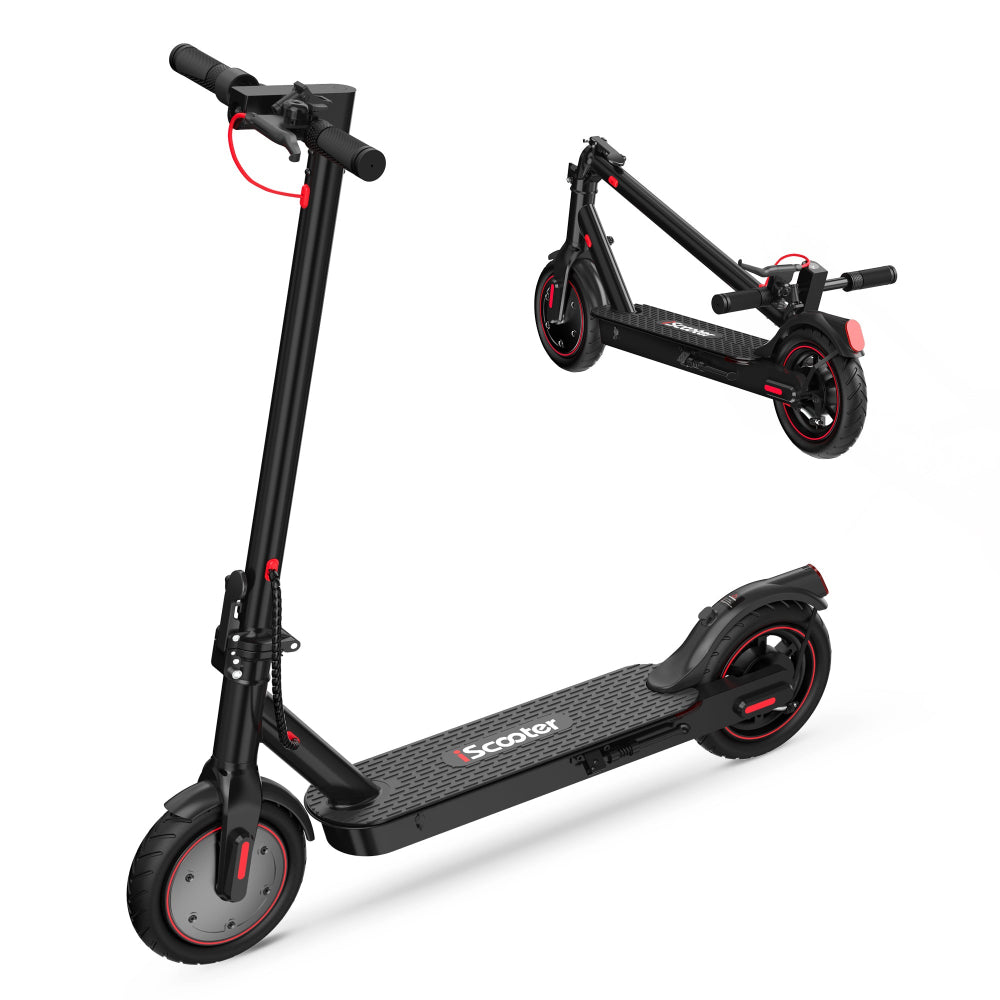
- Best for: short commutes, flat routes, and riders who want a lighter, simpler daily electric scooter.
- Commute-fit range: up to 12 miles (20 km) max range, which can cover many short round trips with a buffer for detours.
- Practical speed: up to 18.6 mph (30 km/h), a common sweet spot for bike lanes and mixed-use paths.
- Motor setup: listed at 350 W in iScooter's comparison chart, which typically favors efficiency and predictable handling over aggressive hill performance.
- Tire feel: 8.5-inch pneumatic tires, which usually soften cracks and curb transitions better than solid tires.
- Key trade-off: pneumatic tires can require pressure checks and can puncture if your route has glass, thorns, or sharp debris.
Shop: iScooter i8 Electric Scooter
Why it wins:
- The i8 stays focused on the basics that matter in commuting: manageable speed, usable range for short routes, and pneumatic tires for comfort. If your goal is to park less, arrive less sweaty than an ebike ride, and keep storage simple, this is a clean entry point.
2: iScooter i9 Commuter Electric Scooter (iScooter i9)
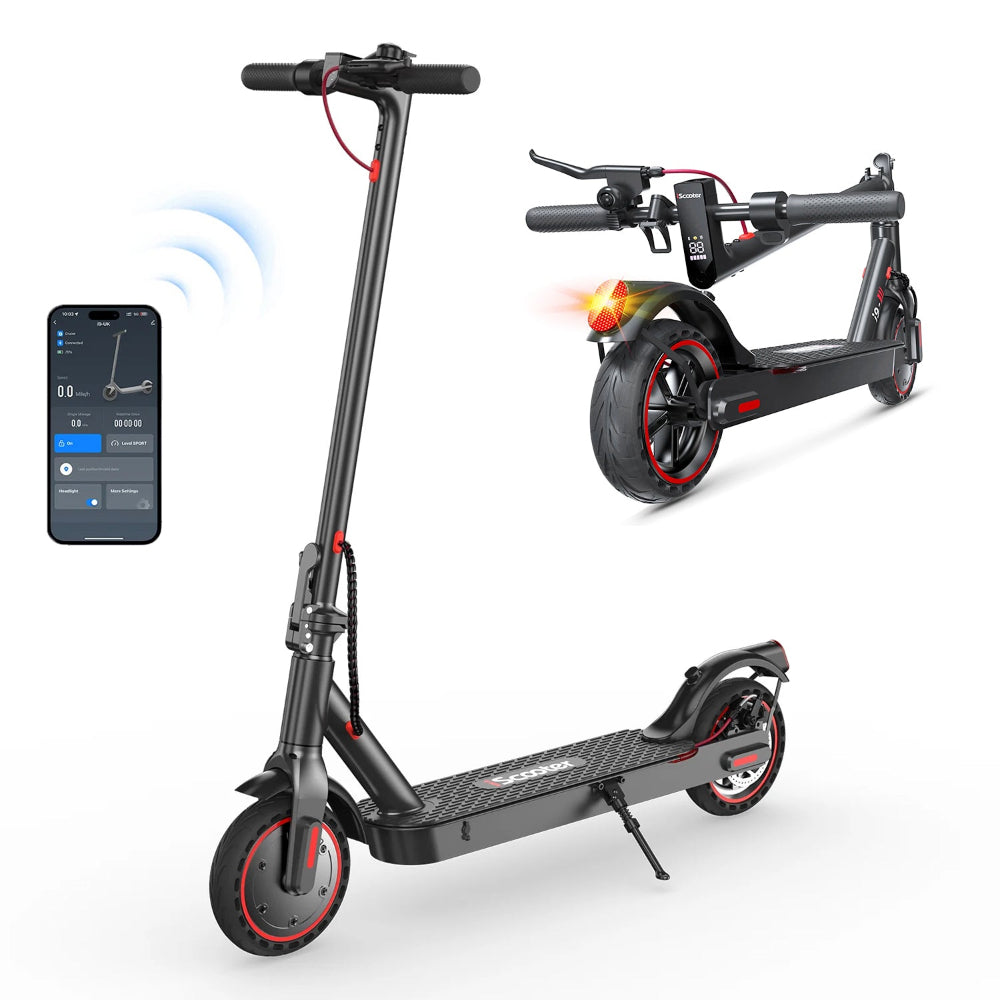
- Best for: everyday city commuting when you want more range without stepping up to a bigger chassis.
- Want more range without more bulk?: the iScooter i9 lists up to 18.6 miles (30 km) max range, which adds meaningful buffer for errands or longer return routes.
- Practical speed: up to 18.6 mph (30 km/h), which helps keep pace consistent with many urban micromobility flows.
- Motor setup: 350 W motor listed, which fits steady commuting and moderate hills rather than steep, repeated climbs.
- Tires: 8.5-inch honeycomb solid tires, designed to reduce flat risk and day-to-day tire maintenance.
- Braking setup: front electronic brake plus rear disc brake is listed in the comparison chart, which can feel more controlled than a single rear brake when roads are slick.
- Water rating: IP54 is listed, which can help with confidence in light rain, but you still want to avoid deep puddles and heavy downpours.
Shop: iScooter i9 Commuter Electric Scooter
Why it wins:
- The iScooter i9 is a very commuter-shaped choice because it trades a bit of ride softness for less flat anxiety. If you want an electric scooter that you can grab daily with minimal tire upkeep, the honeycomb setup is the main reason to choose it.
3: iScooter iX4/iX3 Off Road Electric Scooter with APP Control (iX4 31Miles)
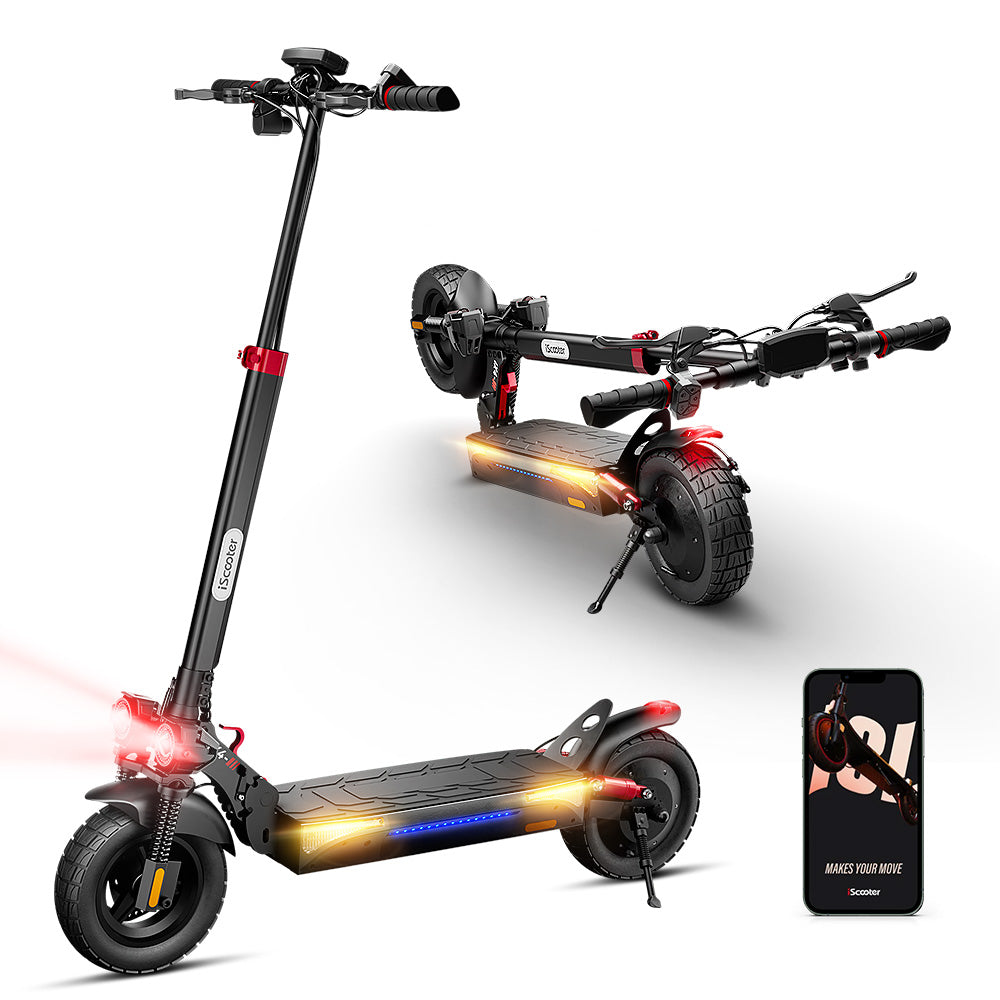
- Best for: riders who face rough pavement, longer distances, or steeper hills and want an off-road electric scooter feel for commuting.
- Need power for hills and rougher roads?: the iX4 is positioned as a higher-power platform, with a listed peak motor of 800 W and rear-wheel drive in its key specs.
- Speed headroom: up to 28 mph (45 km/h) is listed for iX4, which can be useful on open stretches where legal, but it also demands more restraint in traffic.
- Range for longer commutes: iX4 key specs list 25-28 miles (40-45 km) max range, which is a big step up for commuters doing longer round trips.
- Comfort and control: front and rear dual suspension is listed, which matters more than most people expect on broken pavement.
- Braking and visibility: front and rear mechanical disc plus electronic brake, and a lighting system that includes turn signals and ambient lighting is listed in iX4 key specs.
- App control: iX4 is sold as an APP control model, which can matter for ride settings and daily convenience.
Shop: iScooter iX4 Off Road Electric Scooter
Why it wins:
- If your commute is not "smooth city lanes" but instead patched asphalt, uneven shoulders, or frequent hills, the iX4 is the most route-tolerant electric scooter on this short list. The suspension and stronger drivetrain are the practical reasons, not the top speed.
How to pick a commuter electric scooter in 2026
A commuter electric scooter works best when you size it for your route, not for the maximum numbers on a product page. Ask yourself a few simple questions first, then match specs.
How much range do you really need?
Range claims are usually best-case. Real commuting cuts range because you stop often, accelerate hard, and ride in colder weather.
- Start with your round-trip miles, then add a buffer of 30-50% for detours, wind, and battery aging.
- Short commute: a 12-mile max range model like the i8 can work if your ride is truly short and you can charge regularly.
- Longer commutes: target 18-31 miles of stated max range so you are not arriving with a nearly empty battery.
What top speed is practical for commuting?
Higher top speed is not always better, because faster riding directly increases stopping distance and drains battery faster. It's essential to understand the physics of braking as speed directly impacts how far you travel before stopping safely.
- Around 18.6 mph: often practical for bike lanes and mixed paths, and it can feel safer in stop-and-go riding.
- Around 28 mph: best reserved for open, legal routes and confident riders with space to brake and scan hazards.
- Local rules matter: many cities cap electric scooter speeds, and enforcement can change by area.
Ownership details commuters forget
Specs do not help if support is hard when something goes wrong.
- Delivery windows: iScooter highlights fast delivery (often 1-3 working days) and free shipping, which matters if you are replacing a daily ride.
- Returns: iScooter states new, unused products can be returned within 30 days of delivery. That only helps if you test quickly and keep packaging.
- Warranty and support: iScooter states up to 24 months warranty and after-sales support, plus a local UK team.
- Payments: iScooter supports PayPal, credit card, and Klarna (18+, T and C apply, credit subject to status).
Quick tips before your first commute
Do you want your first ride to feel boring in a good way? Build a simple routine.
- Do a 10-minute practice route first, then add traffic complexity later.
- Charge planning: keep your charger in a dedicated bag, or keep a second charger at work if possible.
- Tire habit: check pneumatic pressure weekly. Under-inflation quietly reduces range and can make steering feel vague.
Common mistakes that waste money
Commuters usually regret one of these choices.
- Buying too fast and too heavy for your route, then avoiding riding because storage is annoying.
- Ignoring tire type until the first rough week. Comfort and flats are usually tire problems.
- Choosing range with no buffer, then riding every day at low battery, which can feel stressful.
Specs snapshot for fast comparison
The table below focuses on what most commuters compare when shopping for electric scooters: range, speed, tires, and daily practicality. Pricing is intentionally excluded.
| Model | Max range (claimed) | Top speed (claimed) | Motor (listed) | Tires | Suspension | Water rating (listed) | Best for | Standout feature | Trade-offs to consider |
|---|---|---|---|---|---|---|---|---|---|
| iScooter i8 Electric Scooter | 12 miles (20 km) | 18.6 mph (30 km/h) | 350 W | 8.5-inch pneumatic | None listed | IP54 (in comparison chart) | Short, flat commutes | Softer ride feel from pneumatic tires | Tire puncture risk and periodic pressure checks |
| iScooter i9 Commuter Electric Scooter | 18.6 miles (30 km) | 18.6 mph (30 km/h) | 350 W | 8.5-inch honeycomb solid | None listed | IP54 | City commuting with less maintenance | Flat-reducing honeycomb tires + app support | Firmer ride on rough pavement than pneumatic |
| iScooter iX4 Off Road Electric Scooter | 25-28 miles (40-45 km) | 28 mph (45 km/h) | 800 W peak (listed) | Off-road tire setup (varies by version) | Front and rear dual suspension | Listed on page under key specs section | Longer routes, hills, rough pavement | Dual suspension and stronger drivetrain | Bigger performance means you must manage speed and braking margin |
Conclusion
The best commuter electric scooter choice is the one that matches your distance, surface quality, and storage reality.
- Short rides: the iScooter i8 keeps things simple with a 12-mile claimed range and pneumatic tires for comfort.
- Daily city rides: the iScooter i9 balances more range with lower flat risk, which is why many commuters prefer it.
- Rough roads and hills: if you need an off-road electric scooter approach for commuting, the iScooter iX4 adds suspension and higher power for tougher routes.
For broader context, Statista projects a volume-weighted average price for the electric kickscooter market in 2025, which helps explain why commuters keep comparing value, durability, and total ownership experience rather than just peak specs. Statista
FAQ
1) How do I choose between the iScooter i8 and iScooter i9 for commuting?
Pick the i8 if your round trip is short and you want a simpler electric scooter that feels a bit smoother over rough pavement because of pneumatic tires. Pick the iScooter i9 if you need more distance buffer, because its claimed max range is longer while keeping a similar top speed. Also consider tire maintenance: solid honeycomb tires reduce flat risk, but they can feel firmer on cracks. Finally, think about braking feel and your local road surfaces, because those factors can matter more than motor wattage.
2) Can I use an off-road electric scooter like the iX4 for city commuting?
Yes, an off-road electric scooter can be a strong commuter choice when your route includes broken pavement, steep hills, or longer distances. Suspension helps keep the ride stable over repeated bumps, and that can reduce fatigue over a week of riding. However, higher-performance scooters can encourage higher speed, so you should ride to conditions and leave extra braking distance. Storage also matters, so measure your hallway, office corner, or car boot before you commit.
3) What's the difference between pneumatic tires and honeycomb solid tires for commuting?
Pneumatic tires use air, so they typically absorb vibration better and feel smoother on cracks, brick paths, and uneven pavement. The drawback is puncture risk and the need to check pressure, because under-inflation can hurt range and handling. Honeycomb solid tires are designed to reduce flats and reduce routine tire maintenance, which can be ideal for daily commuting. The trade-off is a firmer ride feel, so rough roads can feel harsher without suspension.
4) Can I ride an electric scooter in light rain, and what should I watch for?
Light rain can be manageable, but wet surfaces reduce traction and increase braking distance immediately. Painted road lines, metal covers, and smooth tiles can become slippery, so slow down and keep turns gentle. Avoid deep puddles, because splashes can reach sensitive areas even if the scooter has a water-resistance rating. After riding, wipe the scooter down and check brakes and wheels for grit, because debris can reduce braking performance over time.
5) What safety checks should I do before each commute?
Start with the basics: confirm the folding mechanism is locked and the stem feels rigid, because looseness can make steering unstable. Test brakes at low speed for consistent bite, and confirm lights work if you ride early or late. For pneumatic tires, do a quick squeeze test and inflate if they feel soft, because low pressure can cause poor handling and shorter range. Finally, scan the deck and wheels for anything stuck, because small debris can lead to sudden noise, drag, or vibration mid-ride.
Table of Contents
- Introduction
- Top commuter-friendly iScooter picks for 2026
- How to pick a commuter electric scooter in 2026
- Quick tips before your first commute
- Common mistakes that waste money
- Specs snapshot for fast comparison
- Conclusion
-
FAQ
- 1) How do I choose between the iScooter i8 and iScooter i9 for commuting?
- 2) Can I use an off-road electric scooter like the iX4 for city commuting?
- 3) What's the difference between pneumatic tires and honeycomb solid tires for commuting?
- 4) Can I ride an electric scooter in light rain, and what should I watch for?
- 5) What safety checks should I do before each commute?
iScooter E Scooter Collections:
Electric Scooter | Kids Electric Scooter | Electric Scooter for Adults | Electric Scooter with Seat | Off-Road Electric Scooter | Foldable Electric Scooter | Girls Electric Scooter | 1000W Electric Scooter | 2000W Electric Scooter | Boys Electric Scooter | Dual Motor Electric Scooter | Big Electric Scooter | Electric Scooter with Suspension | Lightweight Electric Scooter | Commuter E-Scooters | 3 Wheel Electric Scooter
Show more ▼iScooter E Bike Collections:
Foldable Electric Bike | Affordable Cheap Electric Bike | Electric Bike for Adults | Electric Motor Bikes | Trek Electric Bike | Fastest Electric Bike | Electric Road Bike | Full Suspension Electric Mountain Bike | Giant Electric Bike | Womens Ladies Electric Bike | Mens Electric Bike | Electric Bike with Throttle | Electric Gravel Bike | Electric Mountain Bike UK | Fat Tyre Electric Bike | Electric Hybrid Bike | Electric Motorised Bike | Electric Push Bike | 1000W Electric Bike | Cool Electric Bikes | Electric Off Road Bike | Pedal Assist Electric Bike | Good Electric Bikes | Small Electric Bike | Trek Electric Mountain Bike | 2000W Electric Bike | Full Suspension Electric Bike | Mini Electric Bike | Road Legal Electric Bike | Step Through Electric Bike
Show more ▼👍 Buying Guide | 🚴♂️ Riding Guide
📋 Feature Guide | ❓ Common problem

Product category
Electric Scooter
Cheap Electric Scooters for Adults | Fastest Electric Scooter | Kids Electric Scooter | Mini Electric Scooter
Electric Bike
U4 Foldable E-bike | EB3S E-MTB
Hoverboards
Electric Scooter for Kids | iK3Pro E-Scooter for Kids | iK7 Height Adjustable Kids E-Scooter








Article tags :
Leave us a message