










Countryside Rides: How to Choose an E-Scooter for Rural UK Routes
Introduction
You roll out for a quiet countryside ride and immediately hit the usual rural UK chaos: patchy tarmac, muddy lane edges, loose gravel at the apex of a bend, and a pothole that was not there last week. If your electric scooter is specced for smooth city paths, that first mile can feel like a constant fight for control.
Get the choice wrong, and you do not just lose comfort. You risk pinch flats, shaky braking on wet descents, and range anxiety when hills and cold air drain the battery faster than expected. This step-by-step guide helps you match range, tires, suspension, and safety features to your actual routes, then shows how to sanity-check the pick against real rural scenarios.
How-To Steps
Step 1: Confirm where you can ride
Before you compare electric scooters, lock down where you will actually ride, because UK legality changes the whole decision. Start by splitting your map into three buckets: private land with permission, public roads, and public paths like pavements and many off-road trails. Then decide whether your plan is realistic (a) private-land riding only, or (b) using an official rental trial area.
According to GOV.UK, you can use a rental e-scooter on roads (not motorways) and in cycle lanes within an official trial area, while the rules for privately owned e-scooters have not changed. In practice, that means a privately owned off-road electric scooter is generally not permitted on public roads, pavements, or cycle lanes, even if it feels like the perfect countryside tool.
Quick decision checklist (write down your answers):
- Will you ride only on private land with landowner permission?
- Are you inside an active rental trial area for public-road use?
- Will you need to carry the scooter through gates or stiles (common on rural access)?
Step 2: Define your route roughness
Do this first: walk your most common route and list the surfaces you actually touch, because one rural ride can include four or five different traction problems. Note the worst 200 meters, not the average mile. Your goal is to pick a scooter that stays stable on the worst section, since that is where crashes and damage happen.
Create a roughness score using these route notes:
- Surface mix: smooth tarmac, chipseal, gravel, hard-packed dirt, mud
- Debris: flint, thorns, hedge clippings, wet leaves
- Defects: potholes, broken edges, cattle grids, drain covers
- Gradients: longest sustained hill, steepest short ramp
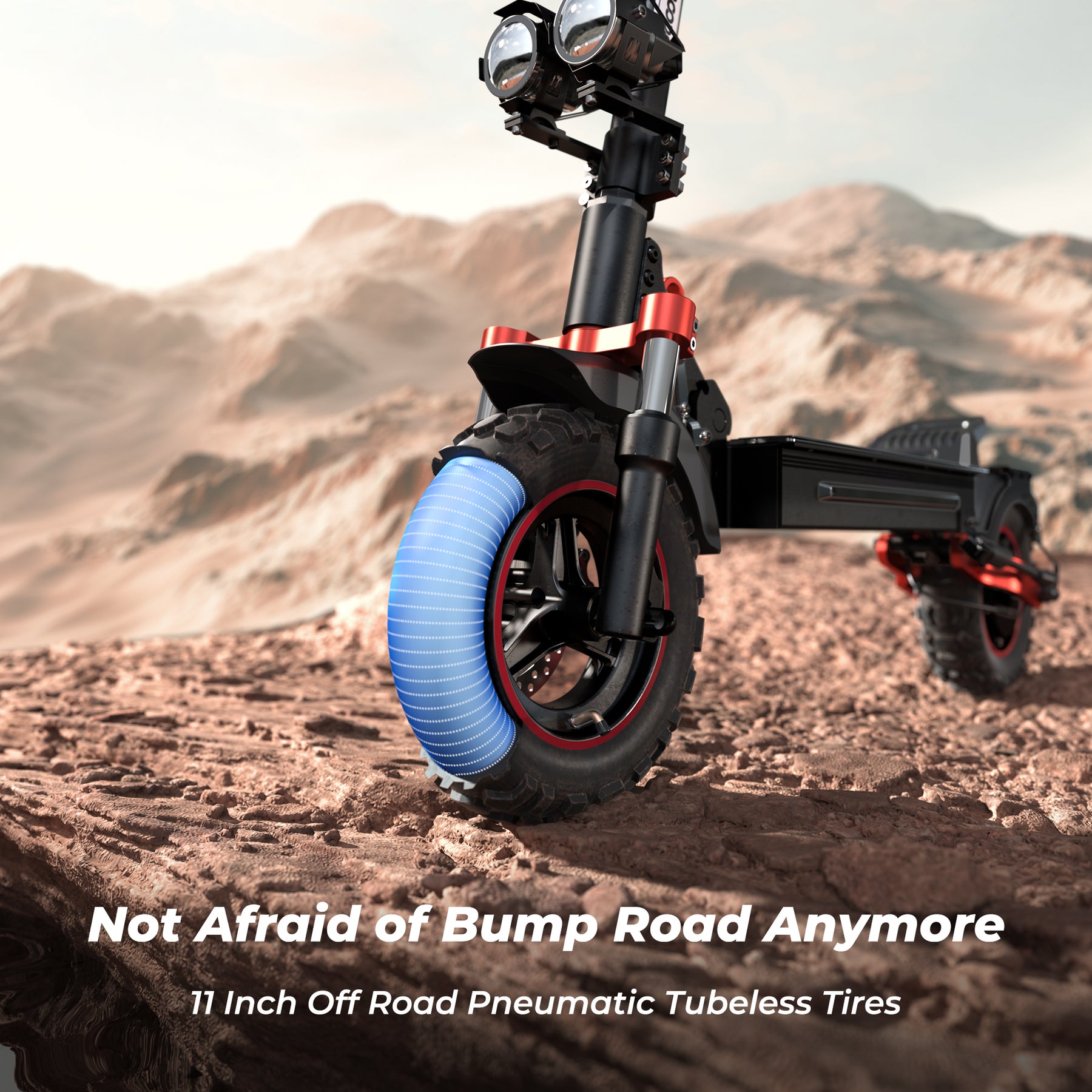
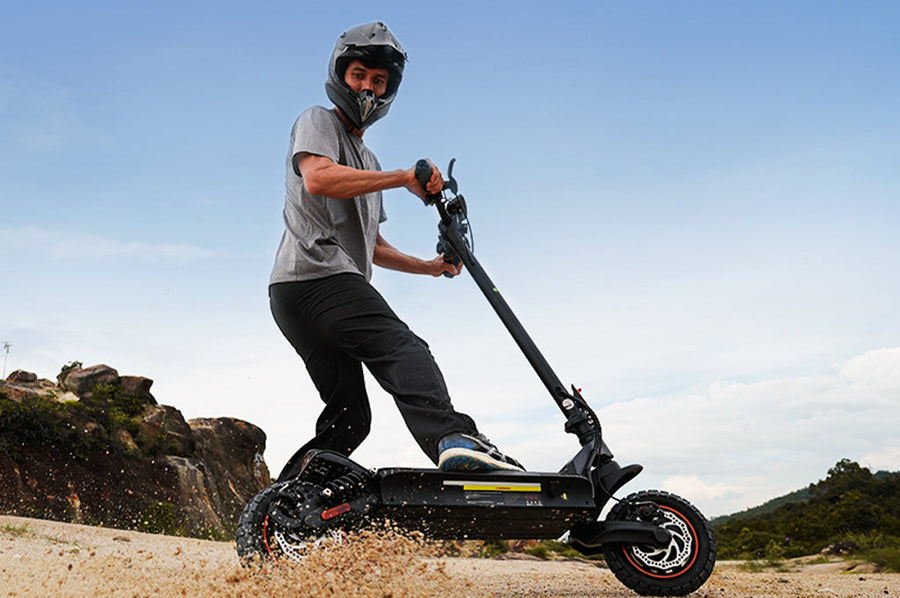
If your route includes gravel, farm tracks, or broken lane edges, prioritize an off-road electric scooter with larger pneumatic tires and real suspension. For example, the iScooter iX5 is positioned as an off-road electric scooter with pneumatic off-road tires and dual front and rear suspension, which is exactly the combo that reduces chatter on washboard surfaces and helps the front end track straight over loose stones.
Shop: iScooter iX5 Off Road Electric Scooter
Step 3: Set a real-world range target
Start with a simple rule: take your longest typical round trip and add a buffer that assumes the countryside will steal range. Hills, cold air, and rough surfaces all increase demand on the motor, and tire pressure losses over time can add more drag than you expect.
Use this range planning workflow:
- Measure your longest round-trip distance (phone map is fine).
- Add a 30% buffer for hills, wind, and cold.
- Add another 10% if you often ride on gravel or soft ground.
If you want an off-road electric scooter for rural UK routes, you will usually be happier choosing capacity for consistency, not for bragging rights. The iScooter iX5 lists a 48V 15Ah (720Wh) battery capacity and a max range of 50-55 km, which gives you room to dial back speed and still get home if conditions worsen mid-ride.
Range sanity checks before you buy:
- Can you finish the ride without arriving under 20% battery?
- Can you detour 2-3 miles if a lane is closed?
- Can you still do the route after battery aging?
Shop: iScooter iX5 Off Road Electric Scooter
Step 4: Prioritize tires and puncture resilience
If you only upgrade one thing for rural riding, make it the tires, because tire choice determines traction, comfort, and whether you get stranded. On country lanes, thorns and sharp flint are common, and the shoulder is often messy. Your workflow is to choose a tire type that matches your risk tolerance, then commit to pressure checks.
What to do:
- Choose pneumatic tires for comfort and grip on uneven surfaces.
- Choose an off-road tread pattern if you see gravel, mud, or farm tracks.
- Commit to checking tire pressure before longer rides.
On the iScooter iX5, the specs call out 10-inch pneumatic off-road tires. That larger pneumatic footprint helps it roll through small potholes and loose gravel more predictably than smaller, harder tires. If your route is mostly clean village streets, a commuter-oriented scooter like the iScooter i9 uses 8.5-inch honeycomb solid tires, which reduce puncture anxiety but typically transmit more vibration on rough lanes.
Shop: iScooter i9 Electric Scooter
Step 5: Choose suspension and deck stability
On rural routes, suspension is not a luxury; it is fatigue control. First, decide how long you typically ride without stopping. Then assume your body will become the suspension if the scooter does not have enough travel and damping for repeated hits.
Do this test on your route:
- Count how many times you must bend your knees hard in one mile.
- Note any repeated ripples (washboard) or broken edges.
- Note any surprise drops like pothole lips.
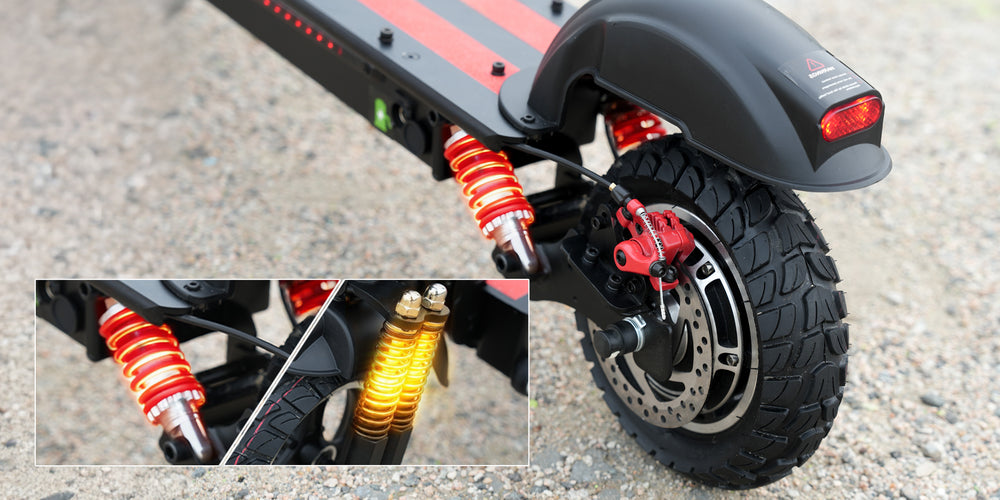
The iScooter iX5 lists dual front and rear suspension and an aluminum alloy frame. That dual suspension setup is useful on country lanes because it reduces front-wheel deflection over loose stones and helps the rear stay planted when the road surface changes mid-corner. Also, pay attention to overall stability: a heavier, more planted platform can feel more controlled on rough ground, while a lighter platform is easier to carry through gates.
Shop: iScooter iX5 Off Road Electric Scooter
Step 6: Check braking, lights, and visibility
In the countryside, you often need to slow down quickly for blind bends, tractors, dogs, or loose gravel patches. So set this requirement: you need confident braking with enough modulation to avoid locking up on wet surfaces. Next, treat lights as a must-have, because hedgerows and unlit lanes can hide you from drivers.
What to check on any electric scooter:
- Front and rear braking (not just rear-only)
- Brake feel: progressive, not grabby
- Front light that actually throws distance
- Rear/brake light visibility from a car height
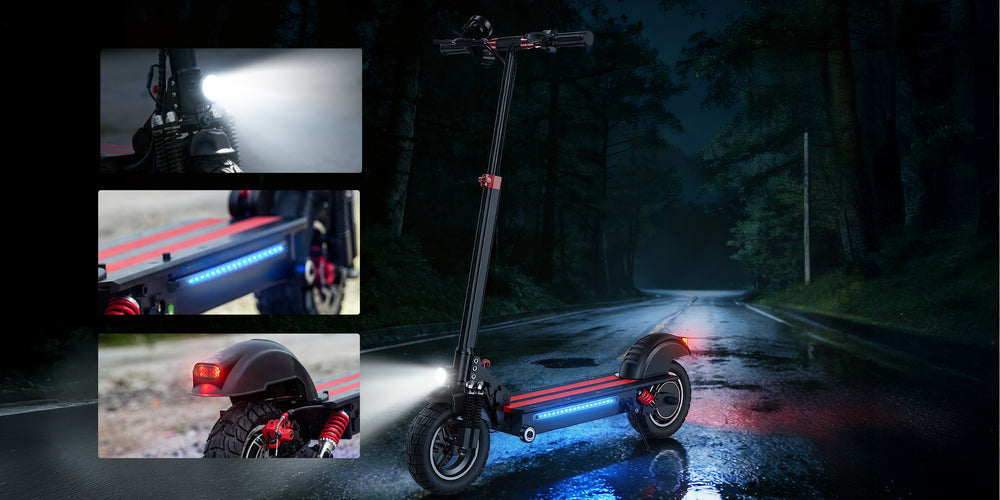
The iScooter iX5 specs list a mechanical disc brake up front and a mechanical disc brake plus E-ABS electronic brake at the rear, along with front and rear LED lights and brake lights. That mix helps you manage traction by spreading braking load across both wheels while keeping you visible.
For a broader safety context, Transport for London reported that killed or seriously injured risk rates for people riding trial e-scooters decreased across the phase and were comparable to pedal cycling by 2023, while emphasizing that these figures reflect trial e-scooters with specific safety standards.
Shop: iScooter iX5 Off Road Electric Scooter
Step 7: Match a scooter to your needs (and your route)
Now do the matching step: pick the scooter that meets your route constraints first, then your convenience preferences second. Write down your top three constraints (example: gravel sections, 10-mile round trip, and wet descents). Then choose the model whose tires, suspension, and battery headroom align with those constraints.
Two practical picks from this brief:
- If your priority is rural roughness and off-road bias, the iScooter iX5 lines up well with 10-inch pneumatic off-road tires, dual suspension, and a 48V 15Ah (720Wh) battery.
- If your priority is lighter city errands and carrying the scooter, the iScooter i9 is a simpler commuter-style electric scooter with solid tires and a lighter listed weight.
Competitor comparison (kept brief and practical): Segway is well known for commuter-oriented platforms. For example, Segway lists the Ninebot KickScooter Max G2 with 10-inch tires and a front hydraulic suspension, which can suit mixed-road comfort where the route is mostly paved, and you want a proven commuting format.
Shop: iScooter iX5 Off Road Electric Scooter
Scenario Variations
Farm tracks and field edges
If you regularly see loose stones, mud patches, or ruts, prioritize an off-road electric scooter with pneumatic tires and dual suspension. Slow down earlier before turns, because traction changes fast when the surface is mixed.
Village errands and quick stops
If you will fold and carry the scooter into shops or through gates, weight and folding ease matter more. A lighter commuter electric scooter can feel easier for short hops, even if it is less comfortable on rough lanes.
Wet hedgerows and slick descents
When it is wet, treat braking and tire grip as the main decision drivers. Give yourself extra stopping distance, avoid hard front-only braking on loose gravel, and keep tire pressure within the recommended range for the tire type.
Mixed commute plus countryside loop
For a hybrid use case, balance range and comfort against portability. If you do not want to maintain tire pressure often, a solid tire commuter scooter reduces puncture risk, but you may trade away comfort on broken lanes.
Prerequisites & Safety
Required Tools & Materials
Get these ready before your first rural ride so you do not turn a small issue into a long walk:
- Helmet sized correctly, strap snug
- Full-finger gloves for grip on wet bars
- Clear or lightly tinted eye protection
- Phone mount plus offline maps downloaded
- Power bank and charging cable
- Portable pump (for pneumatic tires)
- Tire sealant or plug kit (if compatible)
- Lock and a small reflective vest
Safety Considerations
Do these actions first, then ride:
- Do a 30-second bolt check: stem, bars, brake levers
- Test brakes at walking speed before the first descent
- Reduce speed on loose gravel and wet leaves
- Avoid fast descents on unknown lanes
- Respect landowner permissions on private routes
If you are planning Last-mile Delivery work (even informally), add a stronger lock routine and more frequent checks. Predictive Maintenance can be as simple as logging tire pressure and brake feel after each ride so you catch problems before they become failures. If Carbon Neutrality is part of your goal, keep batteries healthy by avoiding full storage at 0% or 100% for long periods.
Troubleshooting
| Problem | Cause | Solution |
|---|---|---|
| Short range | Cold, hills, soft ground | Slow down, add 30% buffer |
| Wobble at speed | Low tire pressure | Inflate to recommended PSI |
| Brake squeal | Wet grit on rotors | Clean rotor, bed pads |
| Harsh ride | Solid tires, rough lane | Lower speed, choose suspension |
| Poor night visibility | Light angle too low | Re-aim headlight, add reflectives |
If you keep getting flats on rural lanes, adjust your routine rather than blaming the route. Check tire pressure before longer rides, avoid riding on the thorny verge, and slow down over flint so the tire can deform instead of puncturing. If you notice braking changes after muddy sections, rinse and dry the braking surfaces and do a few controlled stops to restore consistent bite.
Conclusion
You will get a better countryside ride when you match the electric scooter to the worst parts of your rural UK routes, not the easiest parts. First, confirm where you can legally ride, then score your surfaces, then set a real range target with a buffer. After that, prioritize tires, suspension, and braking because those features decide whether you stay upright on wet, broken lanes.
Once you buy, treat the first two rides as calibration runs. Re-check range, tire pressure, and braking feel, then adjust speed and route choice accordingly. If you want an off-road electric scooter setup, start with a platform like the iScooter iX5 and tune your riding habits around traction and visibility.
FAQ
Can I ride a private e-scooter on UK public roads?
In most cases, no, you cannot legally ride a privately owned electric scooter on UK public roads, pavements, or cycle lanes. Legal use on public roads generally applies to rental e-scooters within official trial areas under specific rules. If you want countryside riding, assume private land with permission unless you are clearly inside a rental trial scheme. When in doubt, treat the route as off-limits and choose a different plan.
What matters most for rural routes: motor power or tires?
Tires usually matter first because traction and stability decide whether you can keep rolling safely on loose gravel, wet leaves, and broken lane edges. More motor power can help on climbs, but it cannot fix a tire that slips or a front end that deflects off stones. If your route is rough, prioritize pneumatic tires and an off-road tread pattern, then look at motor output. For mixed surfaces, suspension plus tires often improves control more than extra peak watts.
How much range buffer should I plan for on country lanes?
Plan at least a 30% buffer beyond your longest normal round trip, then add more if you ride in winter or on soft ground. Hills, headwinds, and cold temperatures can reduce effective range enough to strand you if you plan too tightly. Try to finish most rides with 20% battery remaining so you have room for detours. After two weeks of riding, re-estimate using your real results rather than the marketing range.
Are off-road electric scooters safe in wet conditions?
They can be, but wet rural conditions demand a slower, more defensive style and a stronger focus on braking control. Reduce speed earlier before corners, increase following distance, and avoid hard braking on loose gravel. Keep tires at the recommended pressure and check that brake response is consistent before any descent. If visibility is low, prioritize bright front and rear lighting and reflective gear.
How do I reduce flats on rural UK lanes?
Keep tire pressure in the recommended range because underinflation increases pinch-flat risk when you hit pothole edges. Avoid riding on the verge where thorns and flint collect, and slow down over rough patches so the tire can absorb impacts. If your tires support it, use sealant or a plug/patch routine and carry a small pump for longer rides. Also, inspect the tread after rides, because removing embedded sharp debris early prevents the next puncture.
What is the simplest way to compare two scooters for countryside rides?
Compare them in this order: real-world range, tire size and type, suspension setup, braking system, and weight you can actually carry through gates. Then check lights and visibility features because rural lanes get dark fast and hedgerows hide riders. Finally, consider support factors like warranty length and local service response, because breakdowns feel worse when you are miles from a shop. If you write your route constraints first, the right scooter usually becomes obvious.
Table of Contents
- Introduction
-
How-To Steps
- Step 1: Confirm where you can ride
- Step 2: Define your route roughness
- Step 3: Set a real-world range target
- Step 4: Prioritize tires and puncture resilience
- Step 5: Choose suspension and deck stability
- Step 6: Check braking, lights, and visibility
- Step 7: Match a scooter to your needs (and your route)
- Scenario Variations
- Prerequisites & Safety
- Troubleshooting
- Conclusion
-
FAQ
- Can I ride a private e-scooter on UK public roads?
- What matters most for rural routes: motor power or tires?
- How much range buffer should I plan for on country lanes?
- Are off-road electric scooters safe in wet conditions?
- How do I reduce flats on rural UK lanes?
- What is the simplest way to compare two scooters for countryside rides?
iScooter E Scooter Collections:
Electric Scooter | Kids Electric Scooter | Electric Scooter for Adults | Electric Scooter with Seat | Off-Road Electric Scooter | Foldable Electric Scooter | Girls Electric Scooter | 1000W Electric Scooter | 2000W Electric Scooter | Boys Electric Scooter | Dual Motor Electric Scooter | Big Electric Scooter | Electric Scooter with Suspension | Lightweight Electric Scooter | Commuter E-Scooters | 3 Wheel Electric Scooter
Show more ▼iScooter E Bike Collections:
Foldable Electric Bike | Affordable Cheap Electric Bike | Electric Bike for Adults | Electric Motor Bikes | Trek Electric Bike | Fastest Electric Bike | Electric Road Bike | Full Suspension Electric Mountain Bike | Giant Electric Bike | Womens Ladies Electric Bike | Mens Electric Bike | Electric Bike with Throttle | Electric Gravel Bike | Electric Mountain Bike UK | Fat Tyre Electric Bike | Electric Hybrid Bike | Electric Motorised Bike | Electric Push Bike | 1000W Electric Bike | Cool Electric Bikes | Electric Off Road Bike | Pedal Assist Electric Bike | Good Electric Bikes | Small Electric Bike | Trek Electric Mountain Bike | 2000W Electric Bike | Full Suspension Electric Bike | Mini Electric Bike | Road Legal Electric Bike | Step Through Electric Bike
Show more ▼👍 Buying Guide | 🚴♂️ Riding Guide
📋 Feature Guide | ❓ Common problem

Product category
Electric Scooter
Cheap Electric Scooters for Adults | Fastest Electric Scooter | Kids Electric Scooter | Mini Electric Scooter
Electric Bike
U4 Foldable E-bike | EB3S E-MTB
Hoverboards
Electric Scooter for Kids | iK3Pro E-Scooter for Kids | iK7 Height Adjustable Kids E-Scooter








Article tags :
Leave us a message