










Electric Scooter Battery Guide: How Range, Voltage, and Capacity Affect Real-World Riding
Pick scooter battery specs based on your real route, not marketing headline rang
A battery can look impressive on a product page and still feel limiting once you add hills, stop-start traffic, colder weather, and your usual carrying weight. That is why an electric scooter battery guide matters before you compare speed or styling. If you rely only on a claimed mileage figure, you can end up with too little reserve for a routine commute or far more scooter than you need for short urban trips.
The more useful approach is to read battery figures as a system. Range, voltage, amp-hours, and watt-hours each tell part of the story, and they only make sense when matched to your riding pattern. In the sections below, you will see how those numbers work together, what reduces real-world battery performance, and where iScooter models such as the i9, i10Plus, and iX7Pro fit different types of journeys.
Essential scooter battery terminology every urban commute rider should master
Battery numbers are easier to compare when you know what each one actually controls. The short version is simple: range is an outcome, voltage shapes power delivery, capacity shows stored charge, and watt-hours give you the clearest overall battery-size comparison.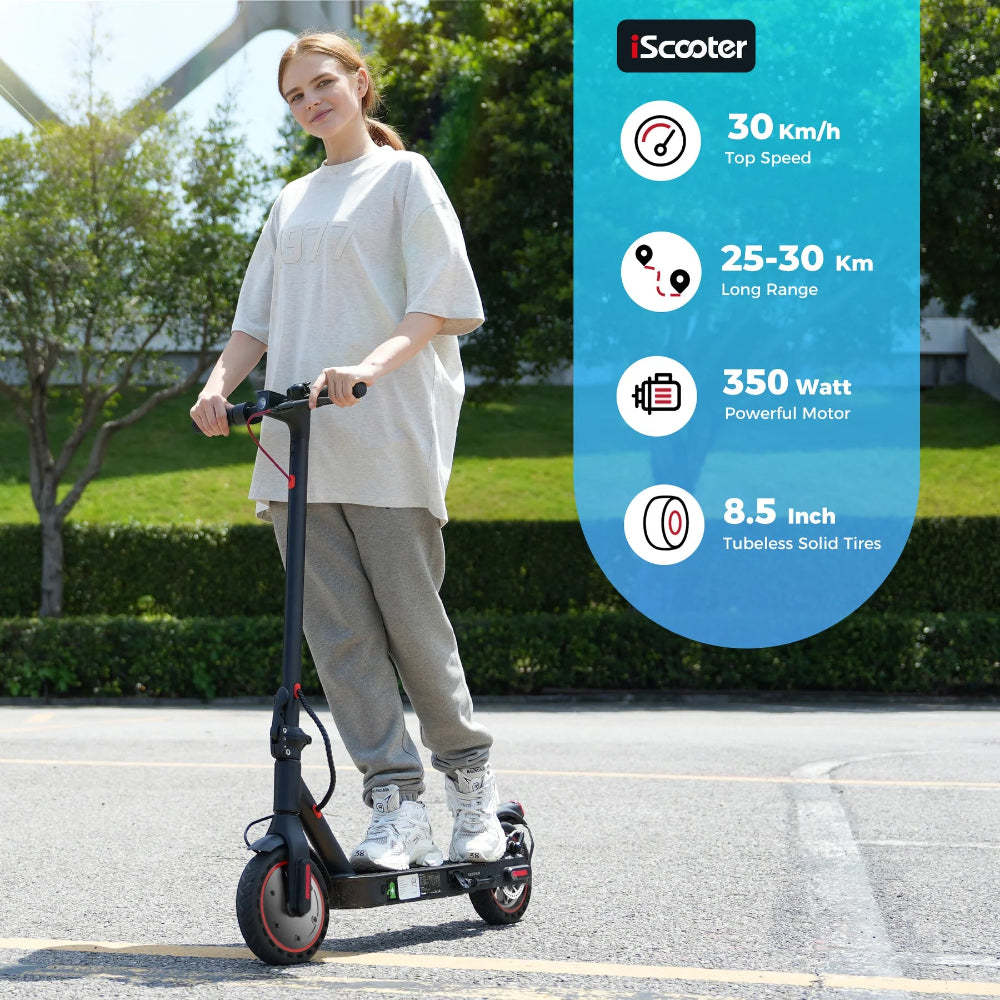
What e-scooter range, voltage and battery capacity truly mean in real‑world ridin
- Range is the maker’s estimated distance on one charge under test conditions.
- Voltage affects how strongly the scooter can deliver power.
- Capacity, usually shown in amp-hours, indicates how much charge the battery stores.
- Watt-hours combine voltage and capacity into one battery-energy figure.
A good example is the iScooter comparison page. The i9 is listed with a 7.5 Ah battery rated at 270 Wh and a maximum range of 18.6 miles, while the i10Plus is listed at 17.5 Ah and 630 Wh with a 31-mile maximum range. The numbers are not just bigger for show; they reflect a larger energy reserve available for longer rides.
Why your electric‑scooter battery’s key numbers work together in real‑world riding
A bigger battery does not work in isolation. Motor output, rider weight, tyre type, braking, and route profile all influence how quickly energy is used. On the iScooter model comparison page, the i10Plus pairs an 800 W motor with a 630 Wh battery, while the iX7Pro combines 2000 W with an 840 Wh battery and a claimed 50-mile maximum range.
What this means for you:
- Higher voltage and output usually support stronger acceleration.
- Higher watt-hours usually support more distance.
- More power can also drain energy faster if you ride aggressively.
- A larger reserve matters more on mixed or demanding routes.
A simple way to read e-scooter specs
If you want one quick filter, start with watt-hours. That figure gives you a clearer comparison than maximum miles alone because it shows how much battery energy is available before conditions start working against you.
Check specs in this order:
- Watt-hours first for battery size
- Claimed range second for best-case distance
- Motor output third for how hard the battery may need to work
- Weight and tyres last for portability and rolling efficiency
Which scooter battery setup fits urban commute trips, errands and longer leisure rides
The right battery is the one that still covers your route when conditions are less than ideal. For most riders, that means choosing a e-scooter with margin rather than one that only works on paper.
Urban daily commuting with generous real‑world distance buffer for scooter rides
Once your routine becomes regular, reserve becomes more important than the smallest possible frame. A stronger battery gives you more consistency when there is a detour, a headwind, or repeated stop-start sections across the week.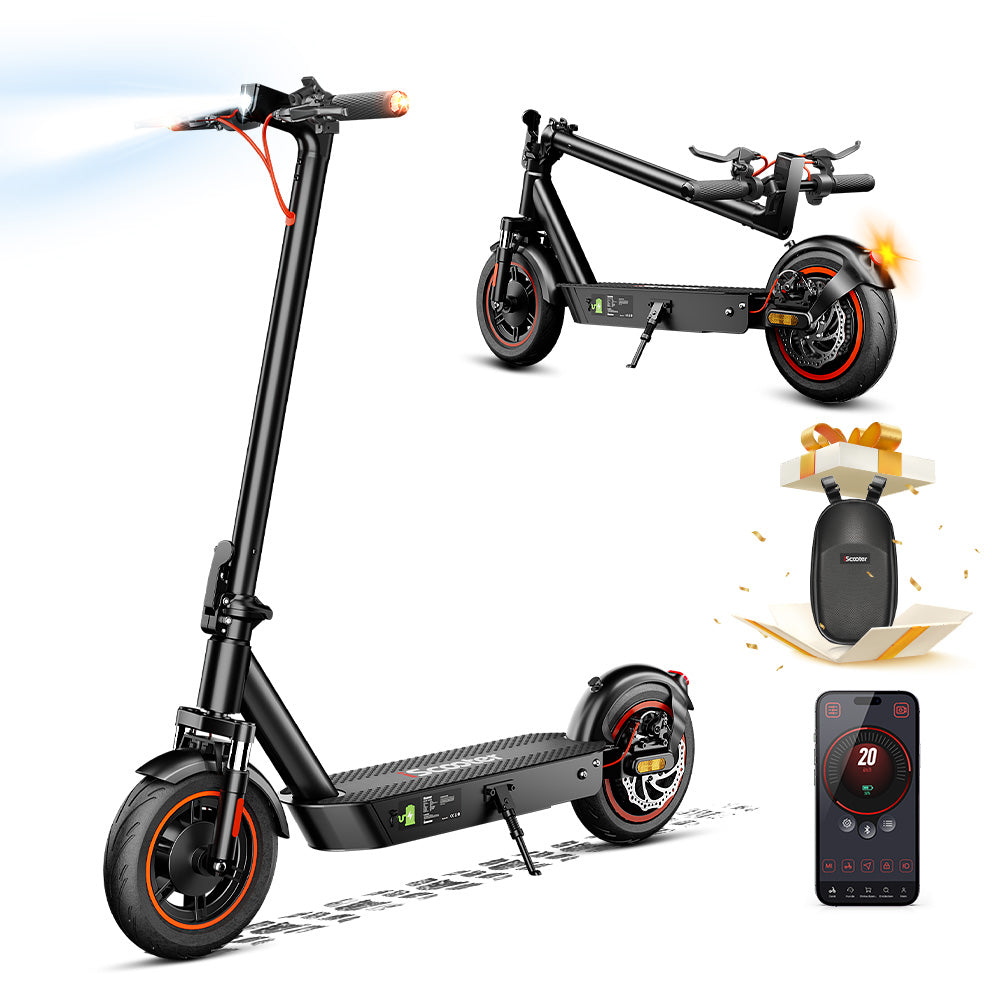
Look for these signs:
- You want a reliable weekday commuting scooter
- Your route is often longer than 8 to 10 miles total
- You prefer not to recharge after every outing
- Comfort features matter alongside battery size
The i10Plus is the clear step up here. iScooter lists it with a 36V 17.5Ah battery, equal to 630 Wh, alongside an 800 W motor and a claimed 31-mile maximum range. That gives you more buffer than entry commuter models when your route is mixed rather than minimal.
Scooter setup for longer rides and high‑demand real‑world commute routes
When hills, heavier loads, rougher surfaces, or extended weekend rides are part of the plan, battery reserve needs to rise with motor demand. This setup is less about portability and more about sustaining performance across longer sessions.
What to expect:
- Higher battery capacity and stronger output
- More scooter weight to manage off the ride
- Better support for demanding terrain
- More useful reserve when conditions worsen
The iX7Pro is the high-demand option in the current iScooter line-up, with 2000 W, 17.5 Ah, 840 Wh, and a claimed 50-mile maximum range on the comparison page. That specification places it closer to extended-range and off-road orientated use than ordinary short-trip commuting.
How iScooter models compare on battery-related performance
A quick comparison helps when you are deciding between portability, reserve, and route difficulty.
| Model | Motor | Battery | Claimed max range | Listed weight | Best fit |
|---|---|---|---|---|---|
| i9 | 350 W | 270 Wh | 18.6 miles | 26.4 lb | Short routine trips |
| i10Plus | 800 W | 630 Wh | 31 miles | 44 lb | Daily commuting with buffer |
| iX7Pro | 2000 W | 840 Wh | 50 miles | 73.85 lb | Longer, higher-demand routes |
The key point is not that one model has the “best” battery in every case. It is that the i9, i10Plus, and iX7Pro solve different battery-use problems. If your priority is easy handling and shorter distances, the lighter model makes sense. If your route must still work after real-world reductions, the larger battery options give you more breathing room.
What most affects real-world battery performance?

Manufacturers test under controlled conditions, but everyday riding rarely stays controlled. iScooter’s own comparison page notes that terrain, rider weight, wind, temperature, and tyre pressure can all change actual range.
Riding conditions that reduce usable range
- Hills increase current draw quickly.
- Frequent stops and strong acceleration waste energy.
- Under-inflated pneumatic tyres add rolling resistance.
- Cold weather can reduce battery efficiency.
- Heavier loads shorten usable distance.
This is also why safe charging and battery care matter. UK government guidance says lithium-ion batteries can cause serious fires if damaged or improperly used, and advises users to buy from known sellers, follow manufacturer charging instructions, and avoid unsafe charging practices.
Rider habits that help preserve battery life
Battery life over months and years is not just about chemistry; it is also about routine. Smooth riding and sensible charging put less stress on the pack than repeated hard launches and careless storage.
Useful habits:
- Accelerate progressively when possible.
- Check tyre pressure regularly.
- Leave a range buffer instead of draining the battery every ride.
- Let the battery cool before recharging.
- Use the supplied charger rather than a substitute.
According to the UK government’s battery safety guidance, you should charge in a safe place, avoid blocking exits, and unplug the charger when charging is complete.
Conclusion
A useful electric scooter battery guide does not end with the biggest number on the page. It helps you choose a battery that still works when roads are rougher, journeys run longer, or conditions are less favourable than the test ride. For lighter urban use, the i9 keeps things simple. For regular commuting with more margin, the i10Plus offers a stronger all-round battery reserve. For extended and higher-demand riding, the iX7Pro gives the largest energy cushion in this group.
FAQ
What electric scooters have the best batteries?
The best battery depends on how you ride, not on one universal winner. Within the current iScooter range covered here, the i9 suits shorter urban trips, the i10Plus is better for longer weekday commuting, and the iX7Pro is the strongest fit for extended and higher-demand riding. Look first at watt-hours, then compare claimed range against your usual route. That method gives you a better answer than choosing purely by marketing distance.
Which electric scooter has the longest battery life?
If you mean the longest claimed range within these iScooter models, the iX7Pro is the clearest answer at up to 50 miles. The i10Plus follows at 31 miles, while the i9 is listed at 18.6 miles. Real riding distance will still change with hills, rider weight, speed, and temperature. A sensible buying rule is to choose a scooter whose claimed range exceeds your normal route by a clear margin.
Are there electric scooters that last all day on a single charge?
Yes, they can, but only if “all day” matches your actual mileage and riding conditions. For lighter commuting and local errands, an i10Plus may comfortably cover a full day for some riders. If your schedule includes much longer distances or more demanding terrain, the iX7Pro is the safer fit because it carries a larger energy reserve. In practice, you should plan around your real daily miles rather than the best-case figure on the product page.
How do voltage and capacity change the feel of a ride?
Voltage and capacity affect different parts of the experience. Voltage is more closely tied to how confidently the scooter delivers power, especially when pulling away or climbing, while capacity tells you how much stored energy is available across the journey. That is why two scooters can feel very different even if their claimed range looks similar. Watt-hours are useful because they combine the battery figures into one clearer comparison point.
What battery setup works best for urban riding?
For urban riding, the best setup usually balances enough range for stop-start travel with manageable weight and storage needs. A lighter scooter such as the i9 works well if your trips stay short and portability matters most. If you want more reserve for repeated weekday rides, the i10Plus is often the stronger urban all-rounder because its 630 Wh battery gives you more margin. The right answer depends on whether your main limit is carrying weight or running short on charge.
Table of Contents
- Pick scooter battery specs based on your real route, not marketing headline rang
- Essential scooter battery terminology every urban commute rider should master
- Which scooter battery setup fits urban commute trips, errands and longer leisure rides
- How iScooter models compare on battery-related performance
- What most affects real-world battery performance?
- Conclusion
- FAQ
iScooter E Scooter Collections:
Electric Scooter | Kids Electric Scooter | Electric Scooter for Adults | Electric Scooter with Seat | Off-Road Electric Scooter | Foldable Electric Scooter | Girls Electric Scooter | 1000W Electric Scooter | 2000W Electric Scooter | Boys Electric Scooter | Dual Motor Electric Scooter | Big Electric Scooter | Electric Scooter with Suspension | Lightweight Electric Scooter | Commuter E-Scooters | 3 Wheel Electric Scooter
Show more ▼iScooter E Bike Collections:
Foldable Electric Bike | Affordable Cheap Electric Bike | Electric Bike for Adults | Electric Motor Bikes | Trek Electric Bike | Fastest Electric Bike | Electric Road Bike | Full Suspension Electric Mountain Bike | Giant Electric Bike | Womens Ladies Electric Bike | Mens Electric Bike | Electric Bike with Throttle | Electric Gravel Bike | Electric Mountain Bike UK | Fat Tyre Electric Bike | Electric Hybrid Bike | Electric Motorised Bike | Electric Push Bike | 1000W Electric Bike | Cool Electric Bikes | Electric Off Road Bike | Pedal Assist Electric Bike | Good Electric Bikes | Small Electric Bike | Trek Electric Mountain Bike | 2000W Electric Bike | Full Suspension Electric Bike | Mini Electric Bike | Road Legal Electric Bike | Step Through Electric Bike
Show more ▼👍 Buying Guide | 🚴♂️ Riding Guide
📋 Feature Guide | ❓ Common problem

Product category
Electric Scooter
Cheap Electric Scooters for Adults | Fastest Electric Scooter | Kids Electric Scooter | Mini Electric Scooter
Electric Bike
U4 Foldable E-bike | EB3S E-MTB
Hoverboards
Electric Scooter for Kids | iK3Pro E-Scooter for Kids | iK7 Height Adjustable Kids E-Scooter







Article tags :
Leave us a message