










iScooter W8 vs iF1: Which New All-Terrain Scooter Is Right for You?
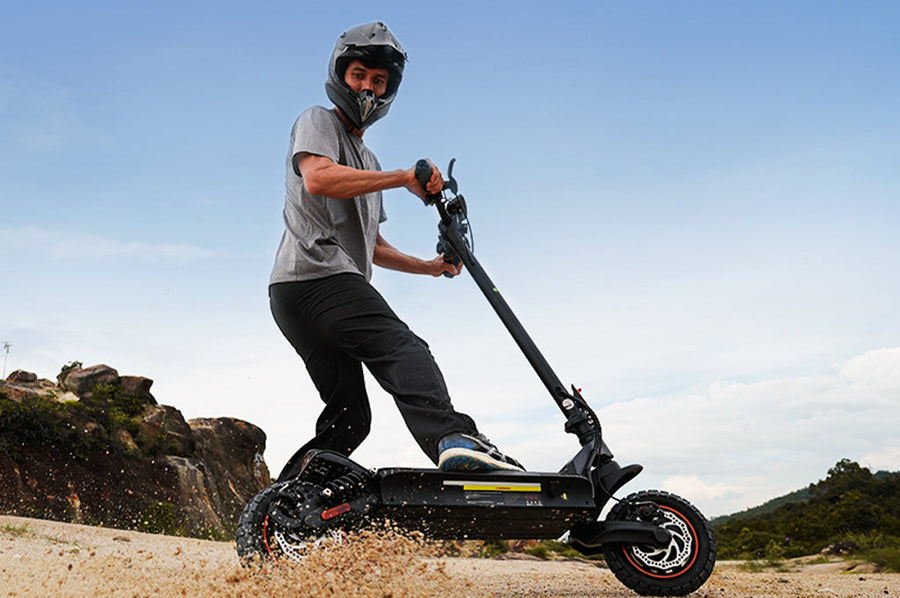
If you've been comparing an all terrain electric scooter for weekend trail rides or a rougher daily commute, two iScooter models are probably on your shortlist right now: the W8 and the iF1. Both are built to handle more than smooth pavement, but they're aimed at slightly different riders. In this guide, we'll break down the motor power, suspension, battery range, and real-world value of each model, so you can work out which one actually fits your rides, not just your budget. The iScooter W8 is the more approachable of the pair. It pairs a 750W motor with 9.3-inch pneumatic tyres and dual suspension, making it a solid all terrain electric scooter for adults who want off-road capability without stepping up to a heavier, pricier build. It's the kind of scooter that handles a gravel towpath on the way to work just as easily as a smooth cycle lane. The iScooter iF1 sits a notch higher. With a 1200W motor and 10-inch all-terrain tyres, it's built for riders who want more headroom on inclines, longer weekend routes, and a scooter that shrugs off rougher ground with less effort. Both models fold down for storage, but the iF1 is the heavier, more powerful option of the two, weighing in at around 22.7kg. Here's a quick side-by-side before we get into the detail: Motor 750W 1200W Top speed 25mph (40km/h) 28mph (45km/h) Battery 48V 14Ah 48V 10Ah Max range Up to 28 miles (45km) Up to 32 miles (51km) Tyres 9.3" pneumatic 10" all-terrain Suspension Front & rear dual shock Front & rear Braking Front disc + rear drum + e-brake Front & rear disc + e-brake Max load 120kg Rated for most adult riders Water resistance IPX4 IPX5 Power is where these two scooters really part ways. The W8 runs a 750W motor with a top speed of around 25mph (40km/h), which is plenty for parks, canal paths, and light trail riding. It has enough torque to handle moderate inclines without straining, though steep hills will ask more of it than a flatter commute would. The iF1 steps things up with a 1200W motor and a top speed near 28mph, plus a claimed climbing ability of up to 20 degrees. That extra power matters most when you're riding loaded gravel tracks, muddy inclines, or longer countryside loops where consistent torque keeps you moving instead of bogging down. If you're after a genuinely powerful electric scooter UK riders can rely on for demanding routes, the iF1's motor is the bigger draw. Both scooters use front-and-rear suspension, but the details differ enough to matter. The W8's 9.3-inch pneumatic tyres, combined with its dual shock-absorbing setup, smooth out potholes and uneven pavement well for a scooter in its class. It's comfortable on mixed routes without feeling overbuilt for city use. The iF1's 10-inch all-terrain tyres give it a slightly larger contact patch and more clearance, which translates into better stability on loose gravel, rutted paths, and wet grass. Braking is another point of separation: the W8 uses a front disc brake with a rear drum brake and a hidden electronic brake, while the iF1 pairs front and rear disc brakes with an electric brake system for more consistent stopping power when you're carrying speed downhill. Range is one of the biggest practical differences between these two models. The W8 runs a 48V 14Ah battery with a claimed range of up to 28 miles (45km) under ideal conditions, which comfortably covers most daily commutes and weekend outings. The iF1 pushes further, with a 48V 10Ah battery rated for up to 32 miles (51km) per charge. Real-world range on either scooter will dip on hillier or wetter routes, rider weight and terrain both draw down the battery faster than a flat commute would. Still, if long-distance trail riding is the priority, the iF1 has the edge on paper. The W8 makes sense if you want a genuinely capable off road e scooter without a steep learning curve or a heavier frame to lug around. Choose the W8 if you: The iF1 is the better call if you're regularly tackling steeper inclines, longer off-road stretches, or you simply want more motor in reserve. Choose the iF1 if you: iScooter W8 iScooter iF1 Price £339.99 (RRP £559.99) £488.99 (RRP £699.99) Best for Light trails, canal paths, occasional gravel shortcuts Steeper inclines, longer off-road routes, heavier use Value takeaway Strong performance without the higher price tag Higher upfront cost, but built for sustained rough-terrain use The W8 is the clear pick on price and for the kind of riding most people actually do, a mix of pavement with the odd rough patch, it delivers more than enough capability for the money. It's arguably the best off road electric scooter for anyone easing into all-terrain riding for the first time. The iF1 costs more, but that gap narrows the harder you push the scooter. If you're regularly riding rough terrain rather than occasionally detouring onto it, the extra spend tends to pay off in fewer strained components and a scooter that keeps pace with your confidence as it grows. For a broader look at how different models stack up on private trails and mixed terrain, our guide to light off-road e-scooters is worth a read before you decide. Both the W8 and the iF1 prove that iScooter takes all-terrain performance seriously, but they're built for different points on the same journey. The W8 offers a lighter, more affordable way into off-road riding, while the iF1 rewards riders who want more power, more range, and more confidence on genuinely rough ground. Whichever you choose, browse the full off-road electric scooter range to compare specs side by side before you commit and pick the scooter that matches the rides you'll actually be doing, not just the one with the biggest numbers on paper. The W8 has a top speed of around 25mph (40km/h). Enough for most commuter routes and light-trail riding, without stepping up to the iF1's higher-powered motor. The iF1 has the edge here. Its IPX5 water-resistance rating offers stronger protection against splashes and standing water than the W8's IPX4 rating, and its larger 10-inch tyres bite better into soft or slippery ground. Yes. The iF1 weighs around 22.7kg, noticeably more than the W8, thanks to its larger motor and battery. Worth factoring in if you'll be carrying the scooter up stairs or into storage regularly. W8 and iF1 at a glance: what's new and who they're aimed at
Off road electric scooter UK: motor, speed, and all-terrain performance compared
Electric scooter with suspension UK: tyres and ride feel where the differences show
Battery range on mixed UK terrain: which goes further?
W8 vs iF1: who should choose which, and why
Price vs performance: are either of these the best value off-road buy in 2026?
Which Off-Road iScooter Is Right for You?
FAQs
What is the top speed of the iScooter W8?
Which model handles wet, muddy UK trails better — W8 or iF1?
Is the iF1 significantly heavier than the W8?
iScooter E Scooter Collections:
Electric Scooter | Kids Electric Scooter | Electric Scooter for Adults | Electric Scooter with Seat | Off-Road Electric Scooter | Foldable Electric Scooter | Girls Electric Scooter | 1000W Electric Scooter | 2000W Electric Scooter | Boys Electric Scooter | Dual Motor Electric Scooter | Big Electric Scooter | Electric Scooter with Suspension | Lightweight Electric Scooter | Commuter E-Scooters | 3 Wheel Electric Scooter
Show more ▼iScooter E Bike Collections:
Foldable Electric Bike | Affordable Cheap Electric Bike | Electric Bike for Adults | Electric Motor Bikes | Trek Electric Bike | Fastest Electric Bike | Electric Road Bike | Full Suspension Electric Mountain Bike | Giant Electric Bike | Womens Ladies Electric Bike | Mens Electric Bike | Electric Bike with Throttle | Electric Gravel Bike | Electric Mountain Bike UK | Fat Tyre Electric Bike | Electric Hybrid Bike | Electric Motorised Bike | Electric Push Bike | 1000W Electric Bike | Cool Electric Bikes | Electric Off Road Bike | Pedal Assist Electric Bike | Good Electric Bikes | Small Electric Bike | Trek Electric Mountain Bike | 2000W Electric Bike | Full Suspension Electric Bike | Mini Electric Bike | Road Legal Electric Bike | Step Through Electric Bike
Show more ▼👍 Buying Guide | 🚴♂️ Riding Guide
📋 Feature Guide | ❓ Common problem

Product category
Electric Scooter
Cheap Electric Scooters for Adults | Fastest Electric Scooter | Kids Electric Scooter | Mini Electric Scooter
Electric Bike
U4 Foldable E-bike | EB3S E-MTB
Hoverboards
Electric Scooter for Kids | iK3Pro E-Scooter for Kids | iK7 Height Adjustable Kids E-Scooter








Article tags : 500W vs 1200W electric scooter · all-terrain electric scooter comparison · electric scooter for hills · off-road tyre electric scooter · value-for-money electric scooter ·
Leave us a message