










Rain-Ready E-Scooters for Safe Wet-Weather Commuting
Introduction
Your gloves are soaked, the deck feels slick, and every painted line looks like a trap. If you have ever tried to commute on an electric scooter in light rain, you already know the weird part: the scooter can feel fine one second, then suddenly feel unpredictable the next.
Getting wet-weather commuting wrong can mean a painful slide, a bent brake rotor, or water-related electrical problems that end your ride early. This guide helps you build a safer, rain-ready electric scooter setup by focusing on what actually changes in the wet: traction, braking, water exposure limits, and Lithium-ion Battery care. We will start with the fundamentals, then walk through practical modules you can apply to your route and your scooter.
Rain-Ready E-Scooter Fundamentals
Wet traction basics rubber texture and load
Before you worry about speed or range, treat wet commuting like a grip management problem. Wet pavement reduces friction, and it does it unevenly: smooth asphalt can still feel decent, while polished concrete, painted markings, and metal covers can turn into low-grip zones with almost no warning.
The practical lever you control is how much grip you ask for at one time. Every time you brake, turn, or accelerate, you spend traction. In the dry, you can spend a lot and still recover. In the wet, the margin is smaller, so you need to spread traction demands out.
Key wet-grip variables you can actually feel on an electric scooter:
- Rubber contact patch: larger usually feels calmer
- Surface texture: rough asphalt beats smooth concrete
- Load transfer: hard braking unloads the rear
- Temperature: colder wet surfaces grip less
Braking basics modulation redundancy and fade
In the rain, braking is not just about maximum stopping power. It is about controllability. You want brakes that let you smoothly build force without suddenly locking traction, because once you slide on a scooter, you have less ability to correct than on an ebike or electric bike.
Two ideas matter most:
- Modulation: how precisely you can control braking force
- Redundancy: what happens if one system underperforms
Many electric scooters combine electronic braking (often E-ABS behavior) with a mechanical brake. That pairing can be useful in wet conditions because you are not relying on one mechanism alone. However, you still need to practice progressive braking so your first squeeze is gentle and your maximum squeeze is delayed until the scooter is stable.
Water protection IP codes and real limits
IP ratings are easy to misunderstand because they sound like a promise, but they are closer to a test snapshot. An IPX4 rating generally indicates protection against splashing water from any direction, not protection against submersion or pressure jets. A puddle that hides a pothole can turn into a much harsher scenario than typical rain.
For context, IEC 60529 describes IPX4 as protection against splashing water from any direction, with no harmful effect under the test conditions. (hellermanntyton.com)
Use IP ratings as a boundary, not as permission. Even with IPX4 or IP54, you should avoid deep standing water and avoid spraying a hose at seals, charge ports, or under-deck battery areas.
Battery safety moisture corrosion and charging
Wet rides create two battery risks that commute riders often miss. First, moisture can sit in places you do not see: the charge port area, around the deck seams, or inside connector cavities. Second, corrosion can happen slowly, meaning a scooter can work today and fail later.
Your simplest safety rule is also the most effective: only charge after the scooter and charge-port area are fully dry. Many university EHS battery safety guides also emphasize dry storage and correct charging methods because charging is when faults most often show up as heat. (ehs.iastate.edu)
Wet-Weather Risk Check
Identify hazards paint leaves metal and standing water
Before you commit to a rainy commute, classify your route like a pilot doing a preflight check. The goal is not perfection. The goal is to know where traction and visibility will drop so you can pre-plan smoother inputs.
Common wet hazards that cause sudden grip loss:
- Painted lane markings and crosswalks
- Metal manhole covers and utility plates
- Wet leaves and flower debris
- Smooth tile or polished concrete near buildings
- Standing water that hides potholes or curbs
If your route forces you across multiple hazards, your safest move is often to reduce speed earlier than you think you need. That creates time to brake gently and reduces the peak traction demand when you cross slick zones.
Adjust speed for longer stopping distance
Stopping distance grows in the wet because available friction drops and because your brain delays inputs when visibility is worse. That delay matters. If you ride an electric scooter at your usual dry-weather pace, you may arrive at a hazard with the same reaction time but less usable grip.
A simple workflow that works for commuter scooters:
- Roll off the throttle earlier than usual
- Brake lightly first to settle the scooter
- Increase brake force only after stable
- Keep turns wide and shallow
This approach is especially important for riders doing Last-mile Delivery, where frequent stops can tempt you into late braking. In the rain, build time into the route instead of trying to make it up with harder inputs.
Define your commute risk tolerance
Wet commuting is a risk budget. You can spend it on speed, on route complexity, or on time pressure, but you rarely get to spend it on all three.
Ask yourself:
- Is this a must-ride trip or a convenience ride?
- Can you choose a slower route with better surfaces?
- Can you delay 20 minutes and avoid the heaviest rain?
- Are you riding solo or in mixed traffic?
If the answers push you toward high exposure, you may be better off switching modes for that day, especially if water is pooling or visibility is poor.
Water Resistance and IP Ratings
Decode IP54 and IPX4 in commuter terms
People often mix up IP54 and IPX4. IP54 includes both dust protection (the first digit) and water protection (the second digit). IPX4 only specifies water protection, and the X means dust was not rated.
For a rain commuter, the most useful question is not, "Is it waterproof?" It is, "What kind of water exposure can it tolerate?" IPX4 is typically discussed as splash resistance. Under IEC 60529, the digit 4 corresponds to protection against splashing water from any direction. (hellermanntyton.com)
If you ride through heavy spray from cars or you store the scooter in a damp hallway, that is still real exposure even if you are not riding in a storm.
Match rating to rain exposure and riding style
Use your riding pattern to pick the minimum you need:
- Light rain, short trips, sheltered roads: splash resistance can be workable
- Frequent rain, long commutes, no shelter: prioritize higher real-world sealing and conservative riding
- Off-road electric scooter use in wet dirt: expect water plus grit, which can stress seals
Also remember the hidden factor: cleaning. Many failures come from aggressive rinsing. Avoid high-pressure water near seams, controllers, and the charge port.
iScooter i9Max as a rain-commute baseline
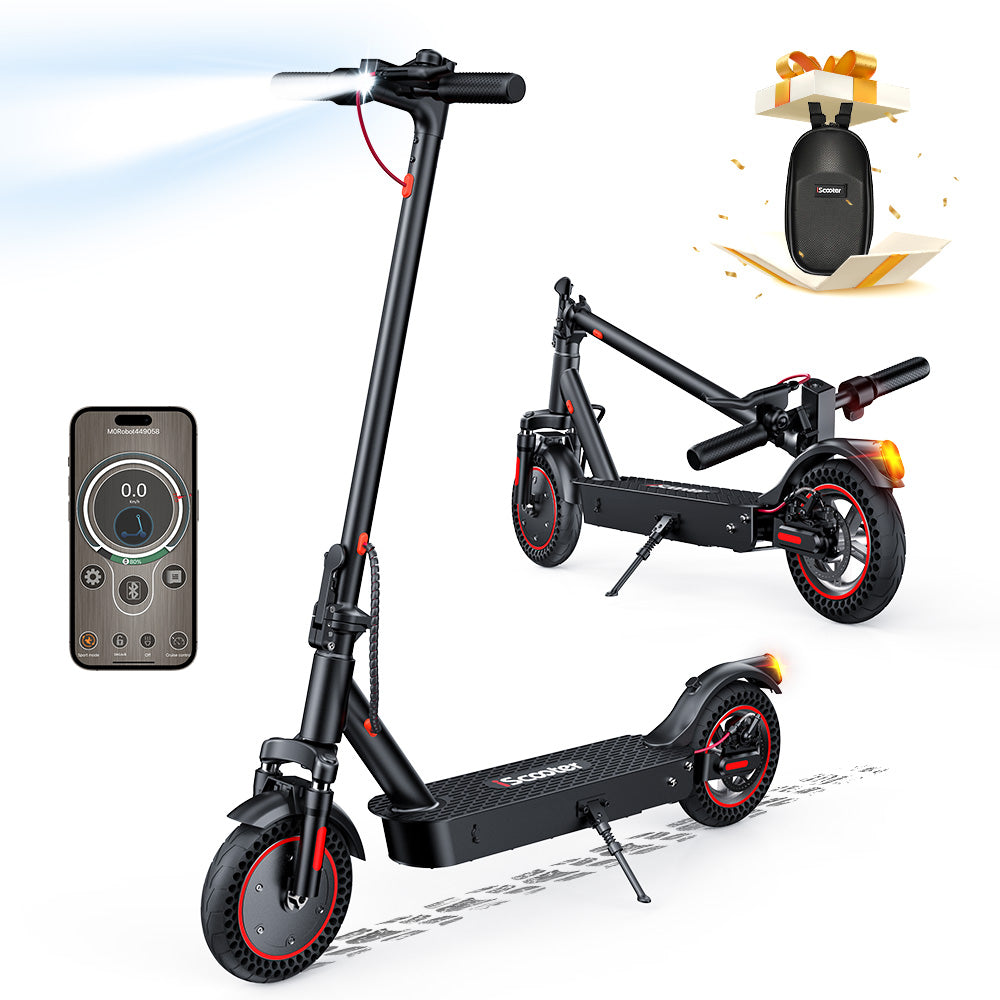
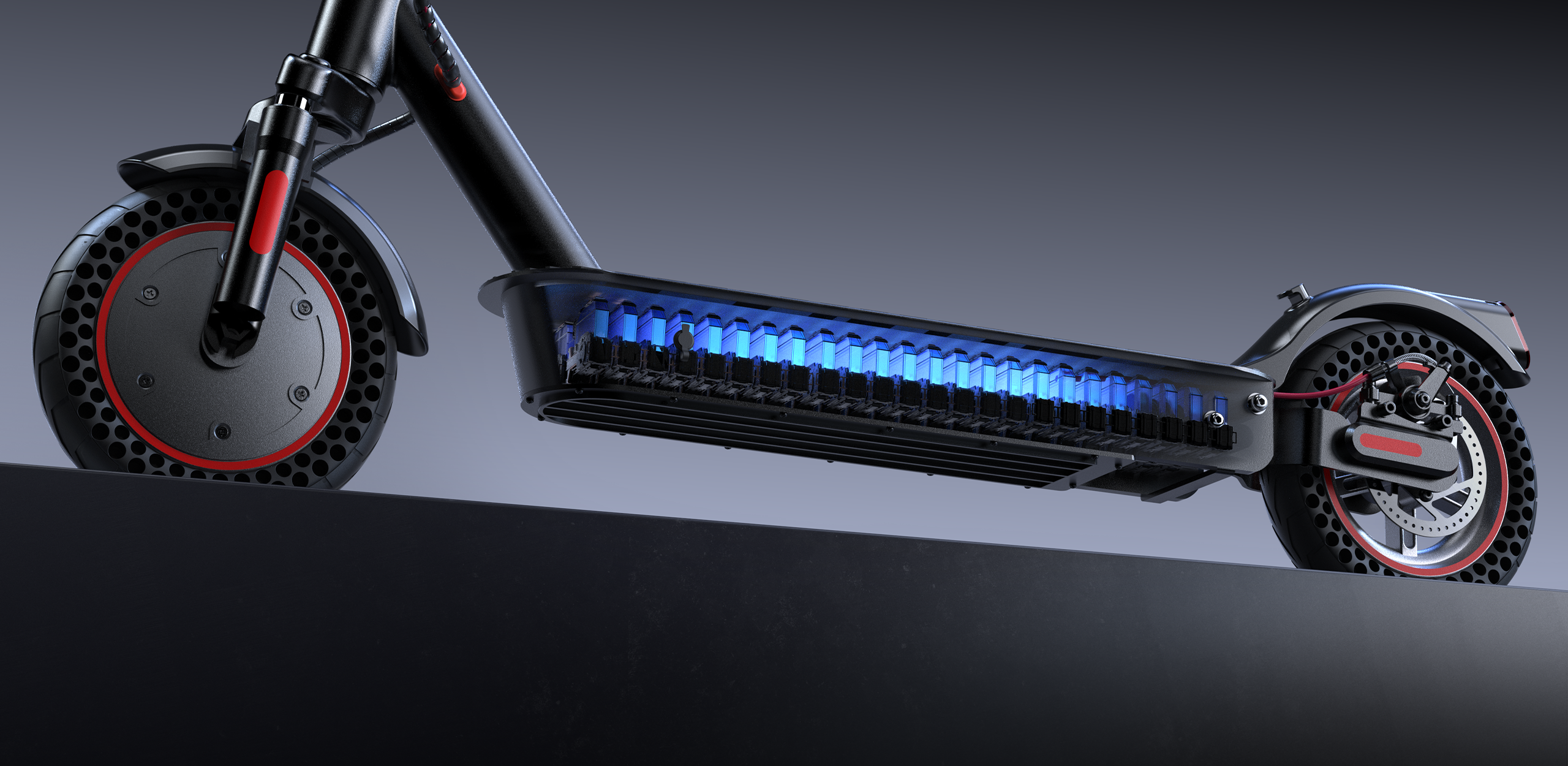
If you want a concrete example of a Commuter Scooters spec stack, the iScooter i9Max lists IPX4 water resistance, a 36V 10.4Ah (374.4Wh) battery, and a 500W front-drive motor. It is also built around 10-inch honeycomb solid tires and dual front and rear suspension, which can help stabilize the ride when surfaces get inconsistent. (iscooterglobal.co.uk)
That combination is useful for wet commuting because it frames the real trade-off: IPX4 can handle splashes, but your technique still determines whether you avoid puddles, keep the charge area dry, and limit high-risk maneuvers.
Tires Contact Patch and Grip
Solid vs pneumatic tires: what changes in rain
Your tire type controls comfort, feedback, and how the scooter behaves on small, wet irregularities. Pneumatic tires can deform and maintain contact over texture, which can improve perceived grip. Solid tires remove puncture risk and maintenance, but they can transmit more vibration and can feel harsher on slick micro-textures.
The iScooter i9Max uses 10-inch honeycomb solid tires, which emphasize durability and "never go flat" convenience for commuting and Last-mile Delivery schedules. (iscooterglobal.co.uk)
In the rain, a solid tire setup rewards smoother control inputs. You can still commute safely, but you should avoid sudden steering corrections and commit to earlier, gentler braking.
Tread and compound priorities for wet streets
If you can choose between tire options on an off-road electric scooter or All-terrain E-scooters, the tread becomes more valuable as water increases. Tread helps evacuate water and maintain contact with roughness. Compound matters too: softer compounds can grip better, but they may wear faster.
Wet-grip checkpoints you can apply without being a tire engineer:
- If the tire looks glossy or hard, expect less wet bite
- If there are channels or textures, expect better water handling
- If you feel "skatey" at low speed, reduce speed immediately
Speed is your biggest traction tool
Most riders chase equipment fixes first, but speed management is usually the highest leverage move. When you cut speed, you reduce the traction demand for every action: braking, turning, and accelerating.
A useful rule for electric scooters in the rain:
- Enter turns slower than you think
- Keep throttle neutral mid-turn
- Exit with gentle acceleration
This matters even more on shared roads with Ride-sharing Platforms and mixed micromobility traffic, where unpredictable path changes are common.
Braking Systems for Rain
Redundancy matters more than raw stopping power
In dry weather, a strong brake can feel reassuring. In wet weather, a controllable brake feels safer. You want a setup that lets you "dial" braking in, because the best rain stop is the one that never crosses the line into a skid.
Look for:
- A mechanical brake that you can feel at the lever
- An electronic brake that supports stability
- Predictable engagement without a sudden bite
If you ride Off-road Electric Vehicles in wet conditions, you also need to account for grit and mud that can contaminate braking surfaces and change feel mid-ride.
How the iScooter i9Max brake stack fits wet commuting
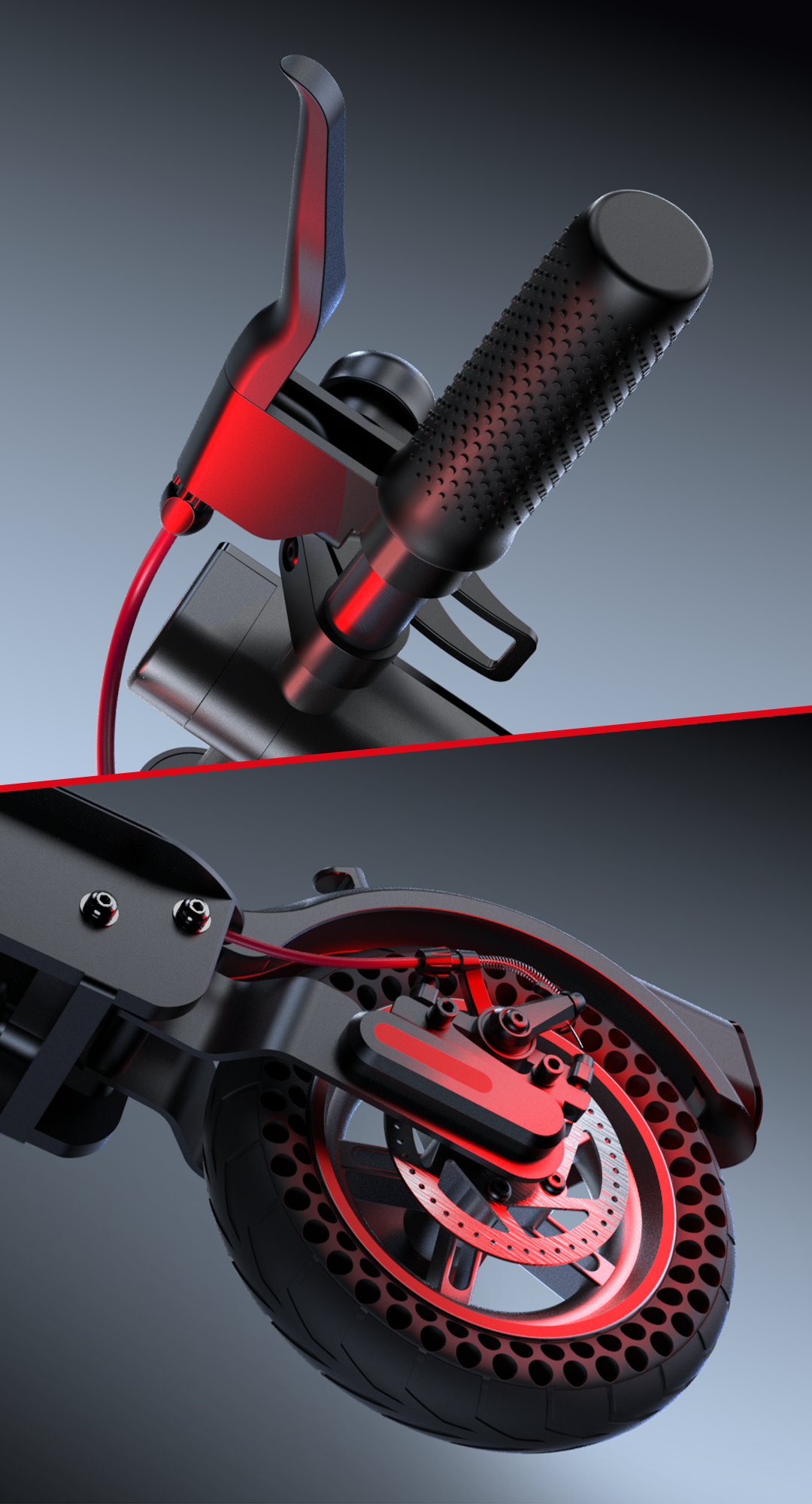
The iScooter i9Max lists a front E-ABS electronic brake and a rear mechanical disc brake. (iscooterglobal.co.uk) That blend can be practical in the rain because you can start with gentle electronic braking while settling weight, then add mechanical braking progressively.
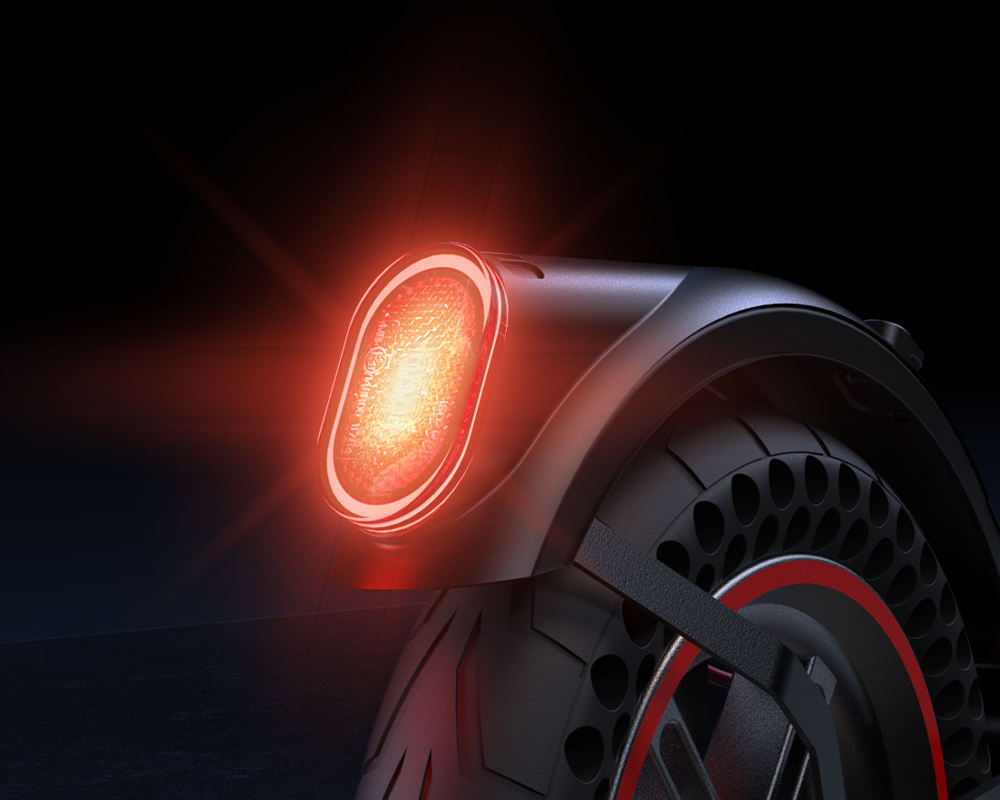
The scooter also highlights "dual brakes" positioning and a rear taillight that flashes during braking, which supports the other half of wet braking safety: being seen early by traffic behind you. (iscooterglobal.co.uk)
What to practice (in an empty lot) before your next wet commute:
- Light lever pull to feel initial engagement
- Straight-line braking only, then gradual turns
- Two-stage braking: gentle then firm
When to Consider Hydraulic Disc Brakes
Some higher-end Electric Scooters and All-terrain E-scooters use Hydraulic Disc Brakes because they can offer smoother modulation and a consistent feel. They are not automatically "better" for every commuter, but they can reduce hand fatigue for riders who brake frequently during Last-mile Delivery routes.
If you are comparing brake approaches, focus on outcomes:
- Can you brake smoothly at low grip?
- Does the feel stay consistent after multiple stops?
- Can you maintain the brakes easily in your climate?
Even the best brakes cannot create grip. They can only help you use the grip you have.
Visibility Signaling and Gear
Lights reflectivity and sight lines in rain
Rain reduces visibility in two ways: it dims ambient light, and it adds glare from headlights reflecting off wet surfaces. That is why many incidents happen at intersections and driveways, not at top speed.
Prioritize a visibility stack that works even when spray is heavy:
- Bright front light aimed slightly down
- Rear light that stays visible through mist
- Reflective elements on moving parts (ankles, wrists)
The iScooter i9Max includes front and rear LED lights and a red flashing brake light. (iscooterglobal.co.uk) This is helpful, but you still need to assume drivers will see you late in heavy rain.
Gloves footwear and wet-contact control
Your control inputs are only as good as your grip on the bars and your footing on the deck. Wet gloves can reduce bar control, and wet shoes can slide on smooth decks.
Practical upgrades that do not overcomplicate your workflow:
- Gloves with textured palms designed for wet grip
- Shoes with softer rubber soles (not hard dress soles)
- A quick wipe routine before stepping on the deck
If you ride an ebike sometimes and an electric scooter other times, remember the posture difference: scooters put more load through your feet. A foot slip is a bigger deal than many riders expect.
Smart Helmets and signaling for mixed traffic
If your route mixes cars, buses, and micromobility traffic, signaling earlier can reduce close passes. Smart Helmets with integrated lights can add a higher sight line than deck-level lights, which helps when spray blocks low-mounted lighting.
If you already carry a helmet for safety, choosing one with integrated lighting can be an easy "one item" upgrade. iScooter offers an LED helmet accessory option that is oriented toward visibility for electric scooter riding. (iscooterglobal.co.uk)

How to Choose Rain-Ready Electric Scooters
Start with your rain exposure profile
Before comparing models, classify your real rain exposure. This prevents overbuying an off-road electric scooter when what you need is predictable commuting behavior.
Use this quick profile:
- Light exposure: occasional showers, sheltered routes
- Medium exposure: weekly rain, mixed surfaces
- Heavy exposure: frequent rain, standing water is common
Then match equipment to profile. A commuter-focused scooter with a realistic splash rating and strong lighting can outperform a more aggressive Off-road Electric Vehicles setup if you mostly ride smooth city streets.
IP rating tires and brakes decision table
Use the table below as a framework, not as a product ranking.
| Scenario | IP target | Tire priority | Brake priority | Trade-off |
|---|---|---|---|---|
| Occasional light rain | IPX4 | stable 10-inch | predictable modulation | avoid deep puddles |
| Frequent wet commutes | IP54 or better | treaded grip | dual systems | more maintenance |
| Mixed surfaces, wet debris | higher sealing | larger contact patch | consistent feel | heavier scooter |
| Off-road wet paths | robust sealing | pneumatic tread | strong discs | mud contamination |
Remember: IP ratings describe test conditions. Real commuting adds vibration, aging seals, repeated folding, and temperature swings.
Battery and support policies matter in wet climates
Wet commuting increases the chance you will need advice on drying, storage, or replacement parts. Support is not a luxury feature in rain-heavy regions; it is part of your risk plan.
From the iScooter i9Max product page, iScooter highlights fast UK shipping (often 1 to 3 business days), a 30-day return policy for new unused products, and warranty coverage (with electric scooters listed as 1-year and electric bikes listed as 2-year in their policy section). (iscooterglobal.co.uk)
That matters because wet-weather wear is often about small issues that become big issues if you cannot resolve them quickly.
Best Practices and Pitfalls
Best practices
The principle is simple: ride smoother and keep water from becoming trapped. If you do those two things, most wet commuting problems become manageable.
Best practices you can apply immediately:
- Ride with smaller inputs: gentle throttle, gentle steering
- Brake early, then build force progressively
- Scan for low-grip zones 3 to 5 seconds ahead
- Dry the scooter after the ride, especially the deck seams
- Store and charge in a dry, ventilated area
If you are commuting daily, treat a quick wipe-down like chain lube on an ebike: boring, but it prevents bigger failures.
Common pitfalls to avoid
Most wet-weather crashes come from predictable mistakes. Avoiding them is less about skill and more about refusing to rush.
Common pitfalls:
- Riding through deep standing water (hidden potholes)
- Turning sharply on paint, metal, or wet leaves
- Hard braking while leaning in a turn
- Spraying water directly at under-deck areas
- Charging before the charge port is fully dry
For the IP side, remember that IPX4 is splash-oriented. For the battery side, treat moisture plus charging as an avoidable risk, and keep everything dry before plugging in. (hellermanntyton.com)
Conclusion
Rain-ready electric scooters are not about being fearless in bad weather. They are about reducing surprises: understanding traction limits, building controllable braking habits, and keeping water away from the places it causes long-term damage.
If you upgrade anything first, upgrade your process: slow down earlier, brake progressively, and improve visibility. Then match your scooter setup to your real exposure using IP ratings, tire behavior, and brake redundancy as the core decision points.
Frequently Asked Questions
What IP rating is enough for commuting in the rain?
For most commuting in light to moderate rain, an IPX4 to IP54 class rating can be workable because it targets splash exposure rather than immersion. However, an IP rating is not a promise that your scooter can handle every puddle, especially if water is forced into seams by speed or spray. If your route regularly has standing water, you should treat that as a routing problem first, not a rating problem. Over time, folding joints and cable entry points can also age, so you should stay conservative even with a good rating.
How do I reduce skidding on wet pavement?
You reduce skidding by lowering peak traction demand, which means slowing down earlier and making smoother inputs. Start braking sooner with a light initial pull, then increase force only when the scooter is stable and upright. Avoid braking hard while turning because the lean angle already consumes grip. Finally, treat painted lines, metal covers, and wet leaves like ice patches and cross them as straight and slowly as possible.
Is it safe to charge after a wet ride?
It is only safe to charge after a wet ride once the scooter, charge port area, and any exposed connectors are fully dry. Moisture at the port can create corrosion over time and can increase the risk of an electrical fault during charging. A good routine is to wipe the scooter down, let it air-dry indoors, and visually check the port before plugging in. If you suspect water got into the deck or electrical area, wait longer and consider contacting support before charging immediately.
What matters most for wet-weather braking performance?
The most important factors are controllability and redundancy, not the most aggressive stopping force. A brake system that lets you smoothly modulate force helps you stay below the skid threshold on low-grip surfaces. Redundancy matters because wet conditions can reduce the performance of one brake path, and having a second system gives you more predictable slowing. Tire grip sets the ceiling, so improving technique often delivers more benefit than swapping components.
How can I make myself more visible in the rain?
You become more visible by raising your light sources, adding reflectivity, and reducing glare issues. Use a bright front light angled slightly downward and a rear light that remains visible through spray, and add reflective strips on moving parts like ankles. Wear a high-contrast outer layer because headlights pick it up faster than dark fabrics. If you ride in traffic often, a helmet with integrated lighting can place a visible light higher than deck-level lights.
Solid tires or pneumatic tires are safer in the wet?
Neither is automatically safer; the safer choice depends on how the tire manages contact on your surfaces and how predictable it feels at low grip. Pneumatic tires can improve comfort and may maintain contact over rough terrain, but they require pressure checks and puncture management. Solid tires remove puncture risk and are convenient for commuting, but they can feel harsher and demand smoother control inputs in the rain. Whichever you choose, speed management and progressive braking will still be the biggest safety factors.
Does an E-bike handle rain better than an electric scooter?
An ebike often feels more stable in the rain because of larger wheels, longer wheelbase, and the ability to shift weight more dynamically. An electric scooter can still be a practical wet commuter, but it usually requires more conservative cornering and earlier braking because the wheels are smaller and the stance is more upright. Visibility and surface hazards affect both, but scooters can be more sensitive to sudden low-grip patches. If you switch between an ebike and a scooter, give yourself a few rides to recalibrate braking and turning habits in the wet.
Table of Contents
- Introduction
- Rain-Ready E-Scooter Fundamentals
- Wet-Weather Risk Check
- Water Resistance and IP Ratings
- Tires Contact Patch and Grip
- Braking Systems for Rain
- Visibility Signaling and Gear
- How to Choose Rain-Ready Electric Scooters
- Best Practices and Pitfalls
- Conclusion
-
Frequently Asked Questions
- What IP rating is enough for commuting in the rain?
- How do I reduce skidding on wet pavement?
- Is it safe to charge after a wet ride?
- What matters most for wet-weather braking performance?
- How can I make myself more visible in the rain?
- Solid tires or pneumatic tires are safer in the wet?
- Does an E-bike handle rain better than an electric scooter?
iScooter E Scooter Collections:
Electric Scooter | Kids Electric Scooter | Electric Scooter for Adults | Electric Scooter with Seat | Off-Road Electric Scooter | Foldable Electric Scooter | Girls Electric Scooter | 1000W Electric Scooter | 2000W Electric Scooter | Boys Electric Scooter | Dual Motor Electric Scooter | Big Electric Scooter | Electric Scooter with Suspension | Lightweight Electric Scooter | Commuter E-Scooters | 3 Wheel Electric Scooter
Show more ▼iScooter E Bike Collections:
Foldable Electric Bike | Affordable Cheap Electric Bike | Electric Bike for Adults | Electric Motor Bikes | Trek Electric Bike | Fastest Electric Bike | Electric Road Bike | Full Suspension Electric Mountain Bike | Giant Electric Bike | Womens Ladies Electric Bike | Mens Electric Bike | Electric Bike with Throttle | Electric Gravel Bike | Electric Mountain Bike UK | Fat Tyre Electric Bike | Electric Hybrid Bike | Electric Motorised Bike | Electric Push Bike | 1000W Electric Bike | Cool Electric Bikes | Electric Off Road Bike | Pedal Assist Electric Bike | Good Electric Bikes | Small Electric Bike | Trek Electric Mountain Bike | 2000W Electric Bike | Full Suspension Electric Bike | Mini Electric Bike | Road Legal Electric Bike | Step Through Electric Bike
Show more ▼👍 Buying Guide | 🚴♂️ Riding Guide
📋 Feature Guide | ❓ Common problem

Product category
Electric Scooter
Cheap Electric Scooters for Adults | Fastest Electric Scooter | Kids Electric Scooter | Mini Electric Scooter
Electric Bike
U4 Foldable E-bike | EB3S E-MTB
Hoverboards
Electric Scooter for Kids | iK3Pro E-Scooter for Kids | iK7 Height Adjustable Kids E-Scooter






Article tags :
Leave us a message