








Best Road Bike & Cycling Helmets 2026: Safety, Fit & Buying Guide
Choosing the best road bike cycling helmets is essential for staying safe, comfortable, and confident on every ride. Modern helmets combine lightweight construction, advanced safety technology, strong ventilation, and precise fit systems, giving riders better protection than ever before.
This guide covers what matters most when choosing a high-quality helmet, how different features affect your ride, and what to look for whether you're road cycling, riding an e-bike, or getting around on an e-scooter.
Why a Good Cycling Helmet Matters
Wearing a properly fitted helmet significantly reduces the risk of head injuries, with studies showing up to a 60% decrease in serious head trauma. Helmets absorb impact energy through their outer shell and foam liner, while technologies like MIPS help reduce rotational forces during angled crashes. Beyond safety, modern helmets are built for comfort too, with lightweight shells, ventilation channels, and adjustable fit systems that keep you protected without slowing you down.
Key Features to Look For
The right helmet comes down to understanding the features that affect safety, comfort, and performance. Racing cyclists may prioritise aerodynamics, while everyday riders often value all-day comfort — so the ideal feature set depends on how and where you ride.
Fit and Adjustment
- Sizing: Measure your head circumference and compare it with the manufacturer's size chart. A correct fit is the single most important safety feature of any helmet, an oversized or undersized shell can compromise protection.
- Retention system: A rear dial or ratchet lets you fine-tune the fit, keeping the helmet stable and free of pressure points.
- Straps: Straps should form a clean "V" or "Y" shape just below your ears, sitting flat without pinching. The chin strap should be secure but not restrictive.
Safety
- Rotational impact protection (MIPS or equivalent): Technologies like MIPS, SPIN, or WaveCel add a low-friction layer inside the helmet to reduce rotational force during angled impacts, a common cause of head injuries.
- In-mould construction: In-moulded shells fuse the outer shell to the foam core, creating a stronger structure than cheaper glued-on designs.
- Visibility features: Integrated LED lights or reflective detailing make a real difference for low-light riding, particularly on an e-bike or e-scooter.
Performance and Comfort
- Weight: A lighter helmet reduces fatigue on longer rides.
- Ventilation: Multiple vents and internal channelling pull cool air in and push warm air out, which matters most on warm days or longer routes.
Types of Cycling Helmets
Helmets vary by riding style, coverage, and technology. Here are the main categories to know:
- Aero / Racing helmets — streamlined for speed, with fewer vents, built for competitive road cycling.
- All-Around helmets — a balance of ventilation, comfort, and low weight, suited to everyday rides and training.
- MIPS-equipped helmets — add rotational impact protection for extra safety on any terrain.
- Everyday / Leisure helmets — prioritise comfort and practicality, often with extra coverage and integrated lights for daily riding.
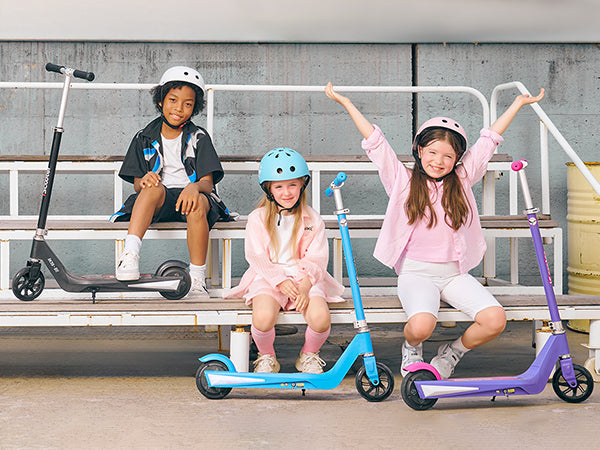
- Kids' helmets — sized and certified specifically for children, with adjustable fit for growing riders.
How to Choose the Right Helmet for Your Riding Style
All helmets sold legally must meet minimum safety certifications, but the best choice for you depends on your priorities and how you ride.
- Road racing: Prioritise aerodynamic, lightweight helmets with minimal vents.
- Long-distance riding: Focus on ventilation, comfort, and a balance of weight and protection.
- Everyday riding on an e-bike or e-scooter: Look for helmets with added coverage, reflective detailing, and built-in lights for visibility.
- Kids and young riders: Always choose a helmet designed specifically for children, with proper fit and certified safety standards.
Helmet Fit Guide
A well-fitted helmet maximises both comfort and safety. Follow these steps:
- Measure your head roughly 2.5cm above your eyebrows using a flexible tape or string, then match it to the manufacturer's size chart.
- Check the initial fit — the helmet should sit level, cover your forehead, and feel snug without excessive movement.
- Adjust the retention dial until secure but comfortable, and set the side straps in a "V" shape under your ears.
- Buckle the chin strap so no more than two fingers fit between the strap and your chin.
- Do a final check — the helmet shouldn't shift more than 2.5cm when you bend forward, and should meet recognised safety standards such as EN 1078 (Europe) or CPSC (USA).
Recommended iScooter Helmets
iScooter stocks a range of protective helmets built for e-bike, e-scooter, and everyday riding:
- Electric Scooter Helmet with LED Light — from £49.99, built-in LED lighting for low-light visibility.
- iScooter Protective Ebike Helmet with Rechargeable Taillights — from £49.99, rechargeable rear lights for added road presence.
- iScooter Cycling Scooter Helmet with Frosted PC Shell — from £35.99, lightweight shell with a safety warning tail light.
- Matte Black Full-Face Helmet Kit — from £89.99, full-face coverage with matching goggles and gloves.
- Kids Stylish Classic Helmet — from £29.99, sized for younger riders on e-scooters and hoverboards.
UK Helmet & Riding Rules
Helmets are not a legal requirement for adult cyclists in the UK, but they're strongly recommended by road safety organisations. For e-scooter riders, the rules are stricter: it's currently only legal to ride an e-scooter on private land with the landowner's permission, and illegal to ride one on a public road, cycle path, bridleway, or pavement. Always check current local regulations before riding, and see our safety guidance page for more detail.
FAQs
What is the 2-2-2 rule when fitting a helmet?
The helmet sits two finger-widths above your eyebrows, the side straps form a "V" shape two fingers below your ears, and no more than two fingers fit between the chin strap and your chin.
Can I use an MTB helmet for road biking?
Yes, though road helmets are typically lighter, more aerodynamic, and better ventilated for higher speeds. MTB helmets are bulkier and offer more coverage.
Do I need a helmet to ride an e-scooter in the UK?
Helmets aren't a legal requirement for e-scooter riders in the UK, but wearing one is strongly recommended for head protection.
Is it legal to ride an e-scooter on the road in the UK?
No. private e-scooters can currently only be ridden on private land with the landowner's permission. Riding on public roads, cycle paths, bridleways, or pavements is illegal.
iScooter E Scooter Collections:
Electric Scooter | Kids Electric Scooter | Electric Scooter for Adults | Electric Scooter with Seat | Off-Road Electric Scooter | Foldable Electric Scooter | Girls Electric Scooter | 1000W Electric Scooter | 2000W Electric Scooter | Boys Electric Scooter | Dual Motor Electric Scooter | Big Electric Scooter | Electric Scooter with Suspension | Lightweight Electric Scooter | Commuter E-Scooters | 3 Wheel Electric Scooter
Show more ▼iScooter E Bike Collections:
Foldable Electric Bike | Affordable Cheap Electric Bike | Electric Bike for Adults | Electric Motor Bikes | Trek Electric Bike | Fastest Electric Bike | Electric Road Bike | Full Suspension Electric Mountain Bike | Giant Electric Bike | Womens Ladies Electric Bike | Mens Electric Bike | Electric Bike with Throttle | Electric Gravel Bike | Electric Mountain Bike UK | Fat Tyre Electric Bike | Electric Hybrid Bike | Electric Motorised Bike | Electric Push Bike | 1000W Electric Bike | Cool Electric Bikes | Electric Off Road Bike | Pedal Assist Electric Bike | Good Electric Bikes | Small Electric Bike | Trek Electric Mountain Bike | 2000W Electric Bike | Full Suspension Electric Bike | Mini Electric Bike | Road Legal Electric Bike | Step Through Electric Bike
Show more ▼👍 Buying Guide | 🚴♂️ Riding Guide
📋 Feature Guide | ❓ Common problem

Product category
Electric Scooter
Cheap Electric Scooters for Adults | Fastest Electric Scooter | Kids Electric Scooter | Mini Electric Scooter
Electric Bike
U4 Foldable E-bike | EB3S E-MTB
Hoverboards
Electric Scooter for Kids | iK3Pro E-Scooter for Kids | iK7 Height Adjustable Kids E-Scooter





Article tags :
Leave us a message