










Big Wheel Electric Scooters: Why Wheel Size Changes Everything About the Ride
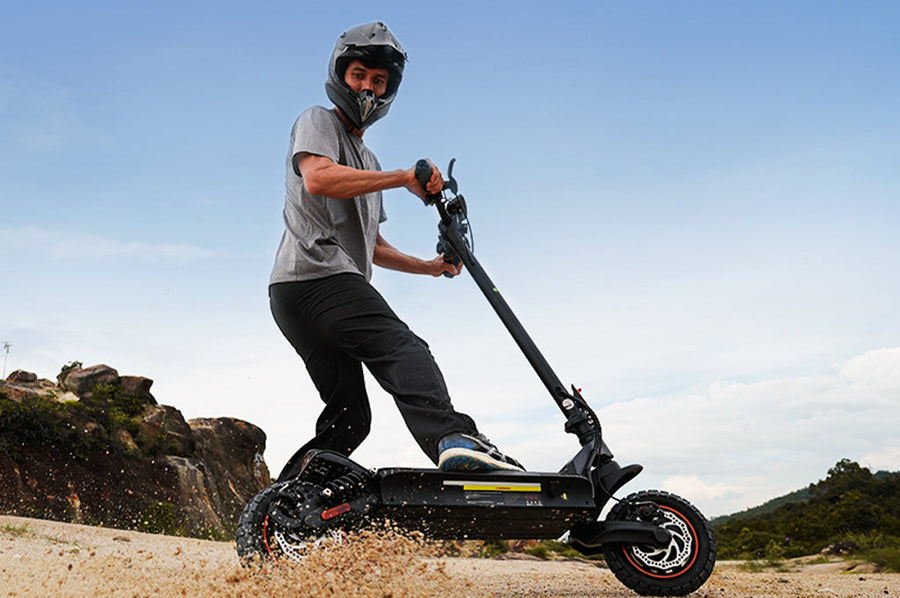
Shopping for a big wheel electric scooter often starts with specs like motor wattage and top speed, but wheel diameter quietly does more to shape how a ride actually feels. A bigger wheel rolls over obstacles that would stop a smaller one dead, soaks up vibration before it reaches your arms, and changes how stable the deck feels once you leave smooth, flat ground behind. For anyone comparing an electric scooter with big wheels for adults against a standard model, the difference shows up almost immediately. This guide breaks down what changes when wheels get bigger, which iScooter models lean into the trend, and how to decide whether a large-wheel setup actually suits how you plan to ride. Motor wattage gets most of the attention in scooter marketing, but wheel diameter does just as much work underneath you. A larger wheel has a bigger "attack angle" on any bump or rut, so it rolls up and over an obstacle instead of slamming into it, the same reason a car tyre shrugs off a crack that would stop a shopping trolley wheel dead. That difference matters because every jolt that reaches the deck is energy the motor has to fight to maintain, and energy your wrists and knees absorb over a longer ride. A fat wheel electric scooter built with this in mind holds a steadier line at speed, simply because the wheels aren't constantly deflecting off small surface changes. Standard 8" or 8.5" wheels, common on lighter models, are tuned for flatter, more predictable ground. Push those same wheels onto gravel, packed mud, or a field scattered with tree roots, and every imperfection gets transmitted almost directly into the frame. Suspension can soften some of that, but it's compensating for the wheel rather than working with it. A big wheel electric scooter, by contrast, typically runs 10" to 11" tyres. Here's what that extra diameter changes on uneven ground: Bigger wheels don't eliminate the bumps entirely, but they change how those bumps reach the rider. iScooter's off-road lineup is built around this principle, with wheel size scaling alongside motor power and intended terrain. Model Wheel Size & Type Motor Notable For 10" chunky off-road tyres 800W Budget entry into big-wheel stability Solid honeycomb off-road tyres 800W Puncture-proof, low-maintenance option 10" pneumatic off-road tyres 1000W Foldable, dual hydraulic brakes 11" fat pneumatic tyres 2000W dual-motor Hydraulic disc brakes, flagship stopping power 11" off-road tyres 3000W dual-motor Top of the range for rough terrain Mixed big-and-small wheel design 1500W Larger front tyre paired with dual suspension Across the lineup, the pattern holds: as wheel size increases, so does the comfort ceiling on rough terrain, though that usually comes with a bit more weight to manage. Whether you call it a fat tire e-scooter or a big-wheel off-roader, the formula stays the same: bigger tyres, chunkier tread, more stability underfoot. Nothing comes free in scooter design, and wheel size is no exception. A large wheel electric scooter for adults needs a wider, reinforced fork and frame to handle the added stress of rougher terrain, which is why the two wheel types land in different weight classes: Big Wheel Scooters Standard Wheel Scooters Wheel size 10"–11" 8"–8.5" Typical weight 18kg–25kg 12kg Stability on rough ground Lower centre of gravity, wider stance, feels planted More responsive to small surface changes Carrying (e.g. up stairs) Takes more effort Easier to lift and carry Folding mechanism Sturdier hinges, less one-handed convenience Quicker, lighter fold The trade-off comes down to how the scooter will be used day to day. Anyone choosing between the two should weigh how often it needs to be carried versus how often it needs to handle rough ground. Wheel diameter is only half the story, tyre construction matters just as much, and it's what really decides how a big wheel behaves on rough ground. Solid (honeycomb) Pneumatic (air-filled) Used on iX4 iX5S, iX7Pro, W12 Puncture risk None Low, but present Maintenance None needed Occasional pressure checks Ride feel Firmer Flexes and absorbs more Best for Riders who want zero upkeep Riders prioritising a smoother ride over rough terrain Pneumatic tyres flex under load, letting them mould around rocks, roots, and ruts instead of transmitting every impact straight through the wheel, which is part of why iScooter's bigger-wheeled models lean pneumatic once the terrain turns properly rough. Solid tyres trade cushioning for total peace of mind: no flats, no pressure checks, just a slightly firmer ride in exchange. The right wheel size comes down to matching the scooter to where it'll spend most of its time. If most rides happen on packed trails, gravel paths, or open grass, a 10" or 11" pneumatic setup like the iX5S or iX7Pro earns its weight by keeping the ride steady where smaller wheels would struggle. If the scooter needs to be carried often, such as up stairs or into a car boot, a lighter, smaller-wheeled model might be the more practical everyday choice, even if it means a firmer ride on rough patches. Budget plays a role too. The iX3 and iX4 offer a genuine taste of big-wheel stability without the price tag of the flagship W12 or iX7Pro, making them a sensible starting point for anyone testing whether off-road riding suits them before investing in a top-tier setup. Browse iScooter's full off-road electric scooter range to compare wheel sizes, motor power, and suspension setups side by side. Folding mechanisms on big-wheel models are built with sturdier hinges to support the extra frame weight, so folding can feel slightly stiffer than on lightweight, standard-wheel scooters. Most still fold down to a manageable size for storage, just with a touch more effort involved. Pneumatic big-wheel tyres, like those on the iX5S and iX7Pro, do need occasional pressure checks to stay at their best, since underinflated tyres soften ride comfort and can affect handling on loose ground. Solid honeycomb tyres, used on models like the iX4, skip this step entirely because there's no air to maintain. Generally, yes. Larger wheels roll over loose stones, ruts, and roots more smoothly than smaller ones, which is why iScooter pairs its bigger tyre sizes with off-road-focused models rather than lightweight, flat-ground scooters.
Why wheel size matters as much as motor power for ride quality
Big wheel electric scooters: how they handle bumps and uneven ground differently
Which iScooter models use bigger wheels, and why
Big wheels vs standard wheels: what changes in weight and portability
Solid vs pneumatic: how tyre type pairs with wheel size
Choosing wheel size based on where you'll actually ride
FAQs
Are big-wheel iScooter models harder to fold than standard ones?
Do big wheels need a different tyre pressure routine?
Is a big-wheel scooter better suited to gravel and uneven paths?
iScooter E Scooter Collections:
Electric Scooter | Kids Electric Scooter | Electric Scooter for Adults | Electric Scooter with Seat | Off-Road Electric Scooter | Foldable Electric Scooter | Girls Electric Scooter | 1000W Electric Scooter | 2000W Electric Scooter | Boys Electric Scooter | Dual Motor Electric Scooter | Big Electric Scooter | Electric Scooter with Suspension | Lightweight Electric Scooter | Commuter E-Scooters | 3 Wheel Electric Scooter
Show more ▼iScooter E Bike Collections:
Foldable Electric Bike | Affordable Cheap Electric Bike | Electric Bike for Adults | Electric Motor Bikes | Trek Electric Bike | Fastest Electric Bike | Electric Road Bike | Full Suspension Electric Mountain Bike | Giant Electric Bike | Womens Ladies Electric Bike | Mens Electric Bike | Electric Bike with Throttle | Electric Gravel Bike | Electric Mountain Bike UK | Fat Tyre Electric Bike | Electric Hybrid Bike | Electric Motorised Bike | Electric Push Bike | 1000W Electric Bike | Cool Electric Bikes | Electric Off Road Bike | Pedal Assist Electric Bike | Good Electric Bikes | Small Electric Bike | Trek Electric Mountain Bike | 2000W Electric Bike | Full Suspension Electric Bike | Mini Electric Bike | Road Legal Electric Bike | Step Through Electric Bike
Show more ▼👍 Buying Guide | 🚴♂️ Riding Guide
📋 Feature Guide | ❓ Common problem

Product category
Electric Scooter
Cheap Electric Scooters for Adults | Fastest Electric Scooter | Kids Electric Scooter | Mini Electric Scooter
Electric Bike
U4 Foldable E-bike | EB3S E-MTB
Hoverboards
Electric Scooter for Kids | iK3Pro E-Scooter for Kids | iK7 Height Adjustable Kids E-Scooter








Article tags :
Leave us a message