










Electric Scooter Tyres UK: Solid vs Pneumatic — Which Is Actually Better?
Choosing an electric scooter UK riders can rely on comes down to more than top speed or battery range. The part that touches the road on every single ride is the tyre, and it's often the last thing buyers think about. Solid or pneumatic? Skinny or fat? The answer changes depending on where you actually ride, a smooth commute through London is a different world from a gravel towpath in the Peak District. This guide breaks down what solid and pneumatic tyres really mean for grip, comfort, and puncture risk on UK roads, so you can pick a scooter that matches how you ride rather than how it looks in a product photo. Most people shopping for their first electric scooter focus on motor wattage and range, then treat tyres as an afterthought. That's backwards. Tyres decide how the scooter actually feels underneath you, whether a pothole jolts through your wrists or gets swallowed up before you notice it. The UK throws a lot at tyres: wet tarmac, cracked pavements, cobbled high streets, the odd gravel path through a park. A tyre built for a smooth warehouse floor in a product demo video isn't necessarily built for a rainy commute in Manchester. Before you compare motor specs, it's worth understanding the two main tyre types on the market and what each one trades off. Are made from dense rubber or foam. There's no air chamber, so there's nothing to puncture. They're low-maintenance, no pressure checks, no pumps, no repair kits which makes them popular for city commuters who just want to get on and go. Are air-filled, similar in principle to a car or bicycle tyre. That cushion of air absorbs shocks far more effectively, which matters a lot on UK pavements where dropped kerbs, expansion joints, and patched-up tarmac are the norm rather than the exception. Riders who want an electric scooter with suspension UK conditions actually reward tend to pair it with pneumatic tyres, since the two work together to smooth out the ride rather than one having to do all the work. Neither type is objectively "better"; they're built for different priorities. Solid tyres win on convenience and puncture-proofing. Pneumatic tyres win on comfort and grip. The right choice depends on your daily route. This is where most buyers make their decision, so it's worth being specific rather than vague. Solid tyres are essentially immune to punctures, there's no air inside to lose. Pneumatic tyres can be punctured by glass, thorns, or sharp debris, though decent tread and correct inflation reduce that risk considerably. If your commute regularly crosses building sites or debris-strewn back lanes, that's a real point in favour of solid tyres. Pneumatic tyres flex and absorb impact, so bumps and potholes feel far less harsh. Solid tyres transmit more vibration straight up through the deck and into your legs, especially on longer rides. If comfort is your priority, particularly over the kind of broken tarmac common on older UK residential streets, pneumatic is the clear winner. Air-filled tyres also tend to hold the road better in the wet, since the rubber can flex into the surface rather than skating across it. Solid tyres, being rigid, can lose traction more easily on greasy or rain-soaked roads. For anyone riding through a typical British winter, that's not a minor detail. Solid tyres need essentially none. Pneumatic tyres need occasional pressure checks and, eventually, a repair kit or replacement tube. It's a small extra chore in exchange for a noticeably smoother ride. iScooter's range splits fairly evenly between the two tyre types, depending on what each model is designed for. If you're weighing up which setup suits you, our full electric scooter tyres range breaks down sizing, tread patterns, and replacement options for every current model. "Fat tyres" refers to wider tyres, usually 3 inches or more across, rather than the slimmer tyres found on standard commuter scooters. A fat tire electric scooter spreads your weight over a larger contact patch, which improves stability and traction on loose or uneven ground like gravel, packed sand, or muddy park trails. Do you actually need one? If your riding is limited to pavements and cycle lanes, a standard tyre width is perfectly adequate and usually lighter to carry. But if your route regularly leaves smooth tarmac, or you simply want extra confidence on wet and unpredictable surfaces, a fat tire electric scooter for adults is worth the small weight trade-off. Riders exploring countryside routes or weekend trails tend to get the most value from the wider footprint, since it noticeably reduces the chance of the front wheel catching in a rut or skidding on loose stones. A little regular attention keeps either tyre type performing as it should: There's no single "correct" tyre for every rider. It comes down to where you actually take your scooter. If your ride is mostly pavements and predictable routes, solid tyres offer a genuinely hassle-free experience with one less thing to think about. If comfort, grip, and off-road capability matter more to you, pneumatic tyres, ideally paired with proper suspension will reward you with a noticeably smoother ride. Whichever direction you lean, matching tyre type to your actual riding conditions makes a bigger difference to day-to-day satisfaction than almost any other spec on the page. Browse the full iScooter UK range to compare solid and pneumatic models side by side, or head straight to our off-road scooter collection if trails and rougher terrain are part of your regular route. It depends on the model. Commuter-focused scooters like the i9 use honeycomb solid tyres for low maintenance, while off-road models such as the iX3 and iX7Pro use pneumatic tyres for extra comfort and grip. The iX4 is a middle-ground option, using solid tyres but pairing them with dual suspension. Pneumatic tyres generally hold the road better in wet conditions, since the rubber flexes and grips the surface rather than skating across it. If your commute involves regular rain which, in the UK, is most of the year, pneumatic tyres are usually the safer bet. Yes, slightly. Wider tyres add a modest amount of weight compared to standard tyres, and models built for off-road use often have reinforced frames too. It's a small trade-off most riders find worthwhile once they've ridden on genuinely uneven ground, though it's worth factoring in if you regularly carry your scooter up stairs or onto public transport. The tyre question every UK buyer gets wrong before purchasing
Solid vs pneumatic tyres: what the difference means on UK roads
Solid tyres
Pneumatic tyres
Puncture risk, ride comfort, and grip: an honest comparison
Puncture risk
Ride comfort
Grip
Maintenance
Which iScooter models come with which tyre type?
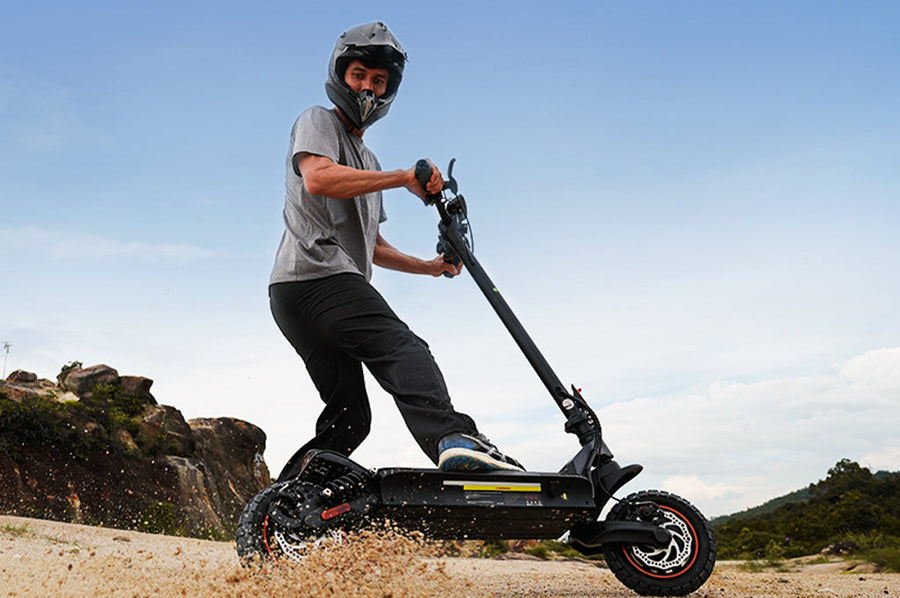
Fat tyres explained: when do you actually need them?
How to check and maintain your electric scooter tyres in the UK
Which Tyre Is Right for You?
FAQs
Do iScooter models use solid or pneumatic tyres?
Which tyre type is better for wet UK roads?
Are fat-tyre iScooter models noticeably heavier to carry?
iScooter E Scooter Collections:
Electric Scooter | Kids Electric Scooter | Electric Scooter for Adults | Electric Scooter with Seat | Off-Road Electric Scooter | Foldable Electric Scooter | Girls Electric Scooter | 1000W Electric Scooter | 2000W Electric Scooter | Boys Electric Scooter | Dual Motor Electric Scooter | Big Electric Scooter | Electric Scooter with Suspension | Lightweight Electric Scooter | Commuter E-Scooters | 3 Wheel Electric Scooter
Show more ▼iScooter E Bike Collections:
Foldable Electric Bike | Affordable Cheap Electric Bike | Electric Bike for Adults | Electric Motor Bikes | Trek Electric Bike | Fastest Electric Bike | Electric Road Bike | Full Suspension Electric Mountain Bike | Giant Electric Bike | Womens Ladies Electric Bike | Mens Electric Bike | Electric Bike with Throttle | Electric Gravel Bike | Electric Mountain Bike UK | Fat Tyre Electric Bike | Electric Hybrid Bike | Electric Motorised Bike | Electric Push Bike | 1000W Electric Bike | Cool Electric Bikes | Electric Off Road Bike | Pedal Assist Electric Bike | Good Electric Bikes | Small Electric Bike | Trek Electric Mountain Bike | 2000W Electric Bike | Full Suspension Electric Bike | Mini Electric Bike | Road Legal Electric Bike | Step Through Electric Bike
Show more ▼👍 Buying Guide | 🚴♂️ Riding Guide
📋 Feature Guide | ❓ Common problem

Product category
Electric Scooter
Cheap Electric Scooters for Adults | Fastest Electric Scooter | Kids Electric Scooter | Mini Electric Scooter
Electric Bike
U4 Foldable E-bike | EB3S E-MTB
Hoverboards
Electric Scooter for Kids | iK3Pro E-Scooter for Kids | iK7 Height Adjustable Kids E-Scooter









Article tags : electric scooter tyre comparison · electric scooter tyre guide · honeycomb scooter tyres · solid vs pneumatic scooter tyres · tubeless pneumatic tyres ·
Leave us a message