










Foldable E-Bikes for Commuting in 2026: Durable Build Quality
Introduction
Tired of folding an ebike on a rainy platform with one hand while your bag swings into the drivetrain with the other? The wrong electric bike choice shows up fast: wobbly small wheels, brakes that feel sketchy in the wet, and Lithium-ion Battery anxiety when you are trying to make a meeting (or a Last-mile Delivery drop) on time.
This list helps you shortlist commuter-ready Electric Bikes that match real daily carry and storage constraints, not just optimistic spec sheets. You will see what to prioritise for durability, braking, and battery safety in 2026, plus where a non-folding long-range electric option can make sense if you rarely lift your bike.
The foldable commuter picks worth shortlisting
Best ultra-compact feel for short commutes
1: iScooter U1 Foldable Electric Bike 500W
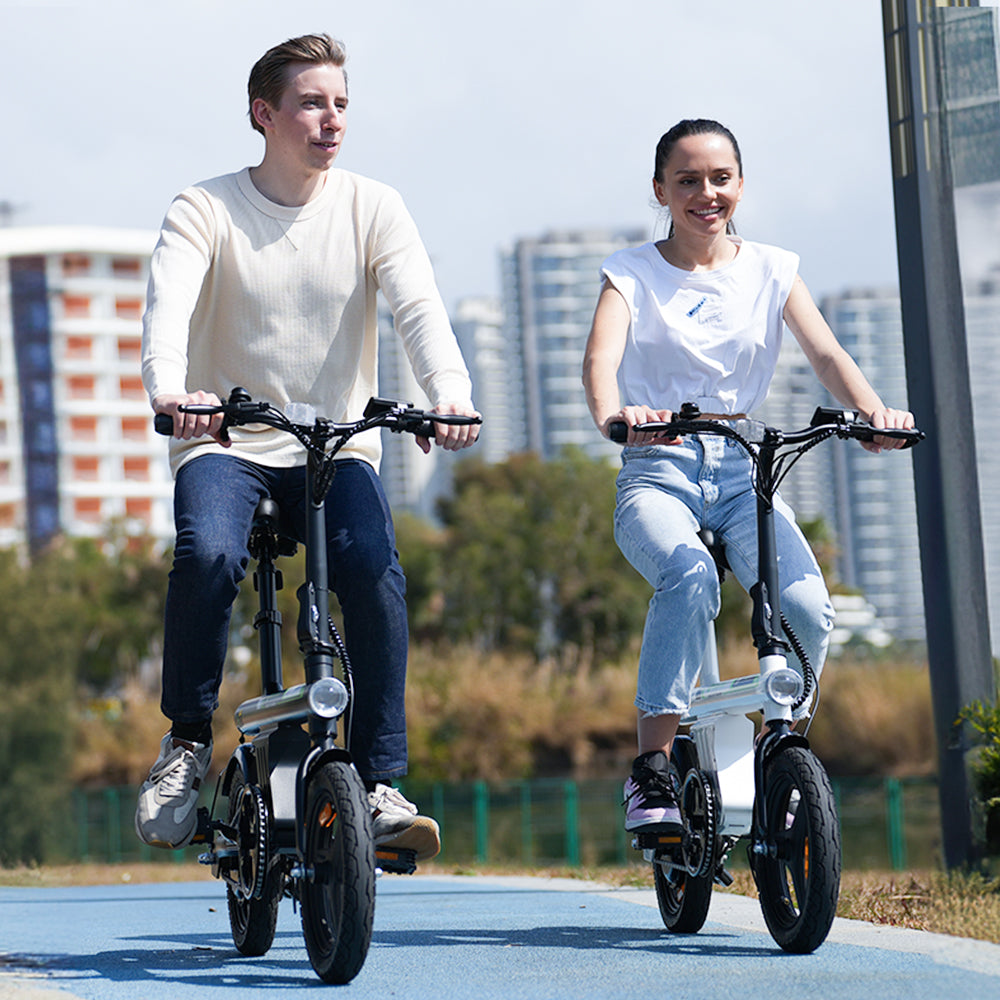
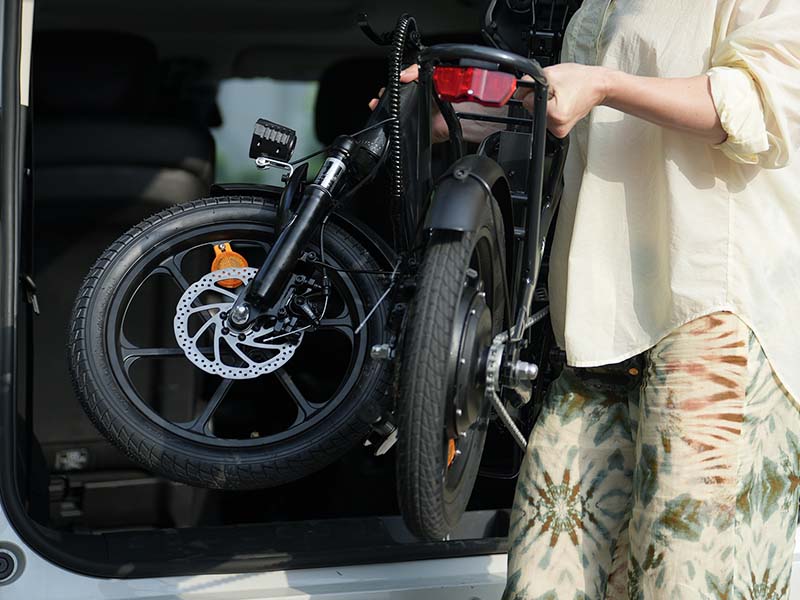
If your commute is a mix of train plus short urban hops, you need an electric bike that stores quickly and does not turn every transfer into a wrestling match. The iScooter U1 is built around a compact folding setup and small pneumatic tyres, so it fits the reality of tight hallways, bike cages, and office corners.
- Best for: short commutes, campus runs, and last-mile delivery loops
- Motor: 500W
- Top speed: up to 20 MPH (unlocked mode)
- Battery: 36V 7.8Ah (about 281Wh) Lithium-ion Battery
- Range: up to 40 miles (max)
- Tires: 14 x 1.95 in pneumatic
- Brakes: dual disc brake (front and rear)
- Hill climbing: up to 25% (listed)
- Frame: alloy steel folding frame
- Lights: front LED headlight (111 lumens) and taillight
- Weight and carrying: 52.2 lbs (23.7 kg); payload capacity 264 lbs (120 kg)
Why it wins: If you fold often, consistency matters more than peak performance. The U1 focuses on practical commuter basics: compact storage, disc brakes, and a battery size that is realistic for daily charging routines. It is also a straightforward match for riders cross-shopping electric scooters, Commuter Scooters, or ride-to-transit workflows where you want a stable two-wheel ride without dealing with full-size bike storage.
Shop: iScooter U1 Foldable Electric Bike 500W
A non-folding comparison for battery-first riders
2: Eahora Juliet Electric Bike (Long Range)
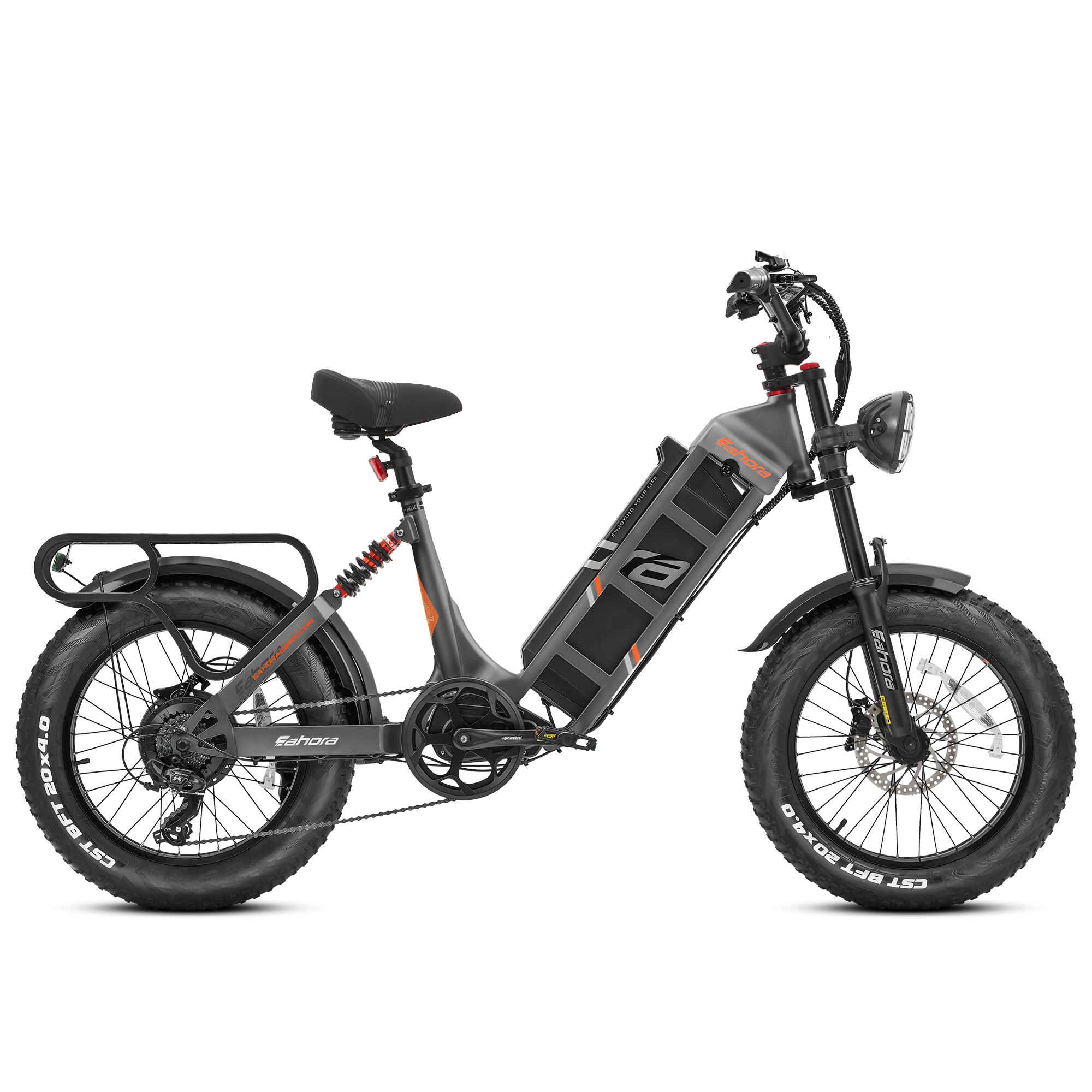
If you hate charging and your commute stacks errands, school runs, or longer suburban routes, the foldable question can become secondary to battery capacity and braking confidence. The Eahora Juliet is not a foldable commuter ebike, but it is a useful contrast: it prioritises a very large pack and a heavier, more cruiser-like build.
- Best for: long-range errands and fewer charging cycles
- Battery: 2,880Wh (48V 60Ah) Lithium-ion pouch cells (listed)
- Range: 110 to 120 miles with pedal assist (listed)
- Brakes: hydraulic disc brakes with motor cutoff
- Rotors and callipers: 180mm rotors; 4-piston callipers; semi-metallic pads (listed)
- Top speed: 25 to 28 MPH (listed)
- Weight and handling: 116 lbs with battery installed (listed)
- Max load: up to 330 lbs (listed)
Why it wins: You get a battery-forward commuter approach and a braking package that is designed to feel controlled in stop-and-go riding. The trade-off is obvious: it is heavy, which changes your storage plan, your lifting reality, and how practical it feels with public transit.
Shop: Eahora Juliet Electric Bike
How to pick a foldable commuter ebike without regrets
Durability starts with the frame and your carry plan
A commuter ebike fails you in small, annoying ways first: hinge play that grows, fasteners that back out, and folded packages that bump into walls and chip paint. Before you compare Electric Bikes, decide how often you will lift the bike and where it will live during the day.
- Will you lift it daily? Start with the total weight, then factor in a lock and bag.
- Do you fold on platforms? Fewer steps and fewer pinch points matter.
- Do you store it indoors? Measure the folded footprint you can actually fit.
- Do you ride in wet weather? Prioritise disc brakes and fenders.
If you are also looking at electric scooters or Electric Scooters for the same route, remember the trade: scooters can be easier to carry, but an ebike can feel more stable over rough pavement, especially on longer rides.
Battery reality check and Lithium-ion Battery safety
Range claims do not ride your route for you. Wind, cold, tyre pressure, rider weight, and stop-and-go traffic all reduce real-world distance. The best commuter plan is simple: size your battery for your worst day, then treat charging like part of the routine.
For the 2026 safety context, UK product safety guidance and fire services have continued emphasising the risks from unsafe batteries, chargers, and modifications. London Fire Brigade reported a 78% increase in e-bike fires in 2023 compared to 2022 (155 e-bike fires), which is a big reason battery quality and charging habits belong in your buying criteria, not just in a safety pamphlet. According to London Fire Brigade, that spike is tied to enforcement action against dangerous products and ongoing battery concerns. (london-fire.gov.uk)
- Choose reputable packs and chargers, and avoid mystery replacements.
- Do not de-restrict or modify battery systems to chase speed.
- Charge where failure will not block exits, and do not leave charging unattended.
Braking and control for stop-and-go streets
Commuting is a braking sport: junctions, zebra crossings, turning cars, and wet leaves. A durable build is not only the frame; it is also the brake system that stays predictable when conditions are bad.
- Disc brakes: typically more consistent in wet conditions than rim brakes.
- Hydraulic Disc Brakes: smoother lever feel and strong control, but you still need pad checks.
- Motor cutoff braking: useful on some electric bikes because it reduces the push during emergency stops.
If you are considering Off-road Electric Vehicles or All-terrain E-scooters for rougher surfaces, keep in mind that tyre size and contact patch matter just as much as brake type for real stopping distance.
Legal-speed expectations for commute-proof planning
The fastest e-bike is not automatically the best commuter e-bike, especially if you want to use cycle paths legally. In Great Britain, an EAPC-compliant e-bike must have a maximum continuous rated motor power of 250W, and electrical assistance must cut off at 15.5 mph. According to GOV.UK, bikes outside those rules can be classified as mopeds or motorcycles. (gov.uk)
That matters because your daily route might include shared paths, low-speed areas, or mixed-use zones. If you also use Ride-sharing Platforms for part of the trip, legal compliance and predictable speeds can help you plan transfers and arrival times without relying on risky modifications.
Common mistakes to skip
The most common commuter failure is buying for the best-case ride and ignoring the worst-case day.
- Buying for speed, then realising storage is the real constraint
- Underestimating payload needs with a backpack, laptop, and lock
- Ignoring brake feel until the first wet commute
- Treating the range as fixed instead of conditional
- Skipping basic safety gear like Smart Helmets and visibility lights
Quick side-by-side check
| Attribute | iScooter U1 Foldable Electric Bike 500W | Eahora Juliet Electric Bike (Long Range) |
|---|---|---|
| Primary use | Short commute, last-mile | Long range, mixed terrain |
| Motor | 500W | 1,000W (peak 1,200W) |
| Battery | 281Wh (36V 7.8Ah) | 2,880Wh (48V 60Ah) |
| Range claim | Up to 40 miles (max) | 110 to 120 miles PAS |
| Top speed claim | Up to 20 MPH (unlocked) | 25 to 28 MPH |
| Brakes | Front and rear disc | Hydraulic disc, cutoff |
| Bike weight | 52.2 lbs (23.7 kg) | 116 lbs w battery |
| Payload | 264 lbs (120 kg) | Up to 330 lbs |
| Trade-offs | Smaller wheels feel twitchy | Heavy to lift/store |
Conclusion
If you fold and carry your ebike often, start with a compact commuter like the iScooter U1 because daily handling is what determines whether you ride consistently. If your priority is fewer charges and long range over portability, a battery-first electric bike like the Juliet shows what you gain, and what weight you accept.
Official Site: iScooter
FAQ
How much e-bike range do I actually need for commuting?
You usually need your round-trip distance plus a real buffer because wind, cold, and frequent stops reduce range. Add at least 20% to 30% if you ride faster than pedal-assist cruising or you climb hills daily. If you do errands after work, include that extra mileage because it is the part that tends to happen when your battery is already low. Battery capacity also declines over time, so planning for 1.3x your typical daily distance helps your ebike feel reliable in month 12, not just week one.
What is the tradeoff between a lighter foldable bike and a heavier long-range electric bike?
A lighter foldable electric bike is easier to lift onto trains, carry up stairs, and store under a desk, so it fits commuting with transfers. A heavier long-range ebike can feel more planted and can hold a much larger Lithium-ion Battery, but it becomes a daily burden if you must lift it even once per ride. Weight also changes how you manoeuvre in tight bike rooms and how quickly you can recover from awkward stops. If you rarely carry your bike, stability and battery capacity can matter more than folded size.
Do Hydraulic Disc Brakes matter for commuting?
Hydraulic Disc Brakes can matter because commuting involves repeated stops where a consistent lever feel helps you brake smoothly without over-gripping. They tend to self-adjust better than many cable systems as pads wear, which keeps the bite point more consistent across weeks of riding. You still need to check pad thickness and keep rotors clean, especially after wet rides. If your routes are flat and speeds are low, good mechanical discs can still be adequate, but hydraulics usually feel more confidence-inspiring in traffic.
How should I care for a Lithium-ion Battery on an electric bike?
Charge your battery with the correct charger and avoid using universal or mismatched chargers because incorrect voltage can damage cells. Store the battery away from extreme heat or freezing conditions, and do not leave it at 100% for weeks if you are not riding, because long-term full charge can accelerate ageing. Keep the charging port dry and clean, and stop using the pack if you notice swelling, unusual heat, or odd smells. A simple habit that helps is charging soon after rides while the pack is still warm, then unplugging when charging is complete.
What wheel size is better for a city commute: small or full-size?
Small wheels can make a foldable bike easier to store and quicker to manoeuvre in tight areas, which is helpful for transit-heavy commutes. Full-size wheels usually roll over potholes and broken pavement more smoothly, which reduces fatigue and feels more stable at higher speeds. If your city has rough surfaces, larger wheels can improve comfort, especially on longer rides. If your commute includes lots of folding and carrying, smaller wheels can still be the smarter compromise because storage and portability drive daily use.
What features actually improve durable build quality in daily commuting?
Durable build quality comes from parts that stay tight under vibration, plus brakes and wheels that tolerate daily abuse. Look for a solid frame design, reliable disc brakes, and tyres that match your surfaces because pinch flats and skids are what ruin weeks. Pay attention to payload rating if you carry a heavy bag, because overloading accelerates wear on wheels and hinges. Regular maintenance also becomes a durability feature in practice, because a bike that is easy to service stays safe and quiet longer.
Table of Contents
- Introduction
- The foldable commuter picks worth shortlisting
- How to pick a foldable commuter ebike without regrets
- Quick side-by-side check
- Conclusion
-
FAQ
- How much e-bike range do I actually need for commuting?
- What is the tradeoff between a lighter foldable bike and a heavier long-range electric bike?
- Do Hydraulic Disc Brakes matter for commuting?
- How should I care for a Lithium-ion Battery on an electric bike?
- What wheel size is better for a city commute: small or full-size?
- What features actually improve durable build quality in daily commuting?
iScooter E Scooter Collections:
Electric Scooter | Kids Electric Scooter | Electric Scooter for Adults | Electric Scooter with Seat | Off-Road Electric Scooter | Foldable Electric Scooter | Girls Electric Scooter | 1000W Electric Scooter | 2000W Electric Scooter | Boys Electric Scooter | Dual Motor Electric Scooter | Big Electric Scooter | Electric Scooter with Suspension | Lightweight Electric Scooter | Commuter E-Scooters | 3 Wheel Electric Scooter
Show more ▼iScooter E Bike Collections:
Foldable Electric Bike | Affordable Cheap Electric Bike | Electric Bike for Adults | Electric Motor Bikes | Trek Electric Bike | Fastest Electric Bike | Electric Road Bike | Full Suspension Electric Mountain Bike | Giant Electric Bike | Womens Ladies Electric Bike | Mens Electric Bike | Electric Bike with Throttle | Electric Gravel Bike | Electric Mountain Bike UK | Fat Tyre Electric Bike | Electric Hybrid Bike | Electric Motorised Bike | Electric Push Bike | 1000W Electric Bike | Cool Electric Bikes | Electric Off Road Bike | Pedal Assist Electric Bike | Good Electric Bikes | Small Electric Bike | Trek Electric Mountain Bike | 2000W Electric Bike | Full Suspension Electric Bike | Mini Electric Bike | Road Legal Electric Bike | Step Through Electric Bike
Show more ▼👍 Buying Guide | 🚴♂️ Riding Guide
📋 Feature Guide | ❓ Common problem

Product category
Electric Scooter
Cheap Electric Scooters for Adults | Fastest Electric Scooter | Kids Electric Scooter | Mini Electric Scooter
Electric Bike
U4 Foldable E-bike | EB3S E-MTB
Hoverboards
Electric Scooter for Kids | iK3Pro E-Scooter for Kids | iK7 Height Adjustable Kids E-Scooter







Article tags :
Leave us a message