










5 Steps to Select a Heavy-Duty Electric Scooter for the Whole Family’s Commute
Introduction
Family commutes sound simple until one shared electric scooter has to work for different riders, different bags, and different routes. A scooter that feels fine for a short solo trip can feel unstable, underpowered, or short-range once you add groceries, a backpack, or a heavier rider.
This how-to guide helps you choose a heavy-duty electric scooter using five practical checks: weight capacity, real-world range, braking and visibility, safe charging with Lithium-ion battery technology, and finally portability plus after-sales support.
Along the way, you will see where a commuter e-scooter like the iscooter i9 fits best, and when an off-road electric scooter makes more sense for hills, rough surfaces, or higher payload needs.
Official Site: iScooter
How to Select a Heavy-Duty Electric Scooter Step by Step
Step 1: Confirm rider weight needs
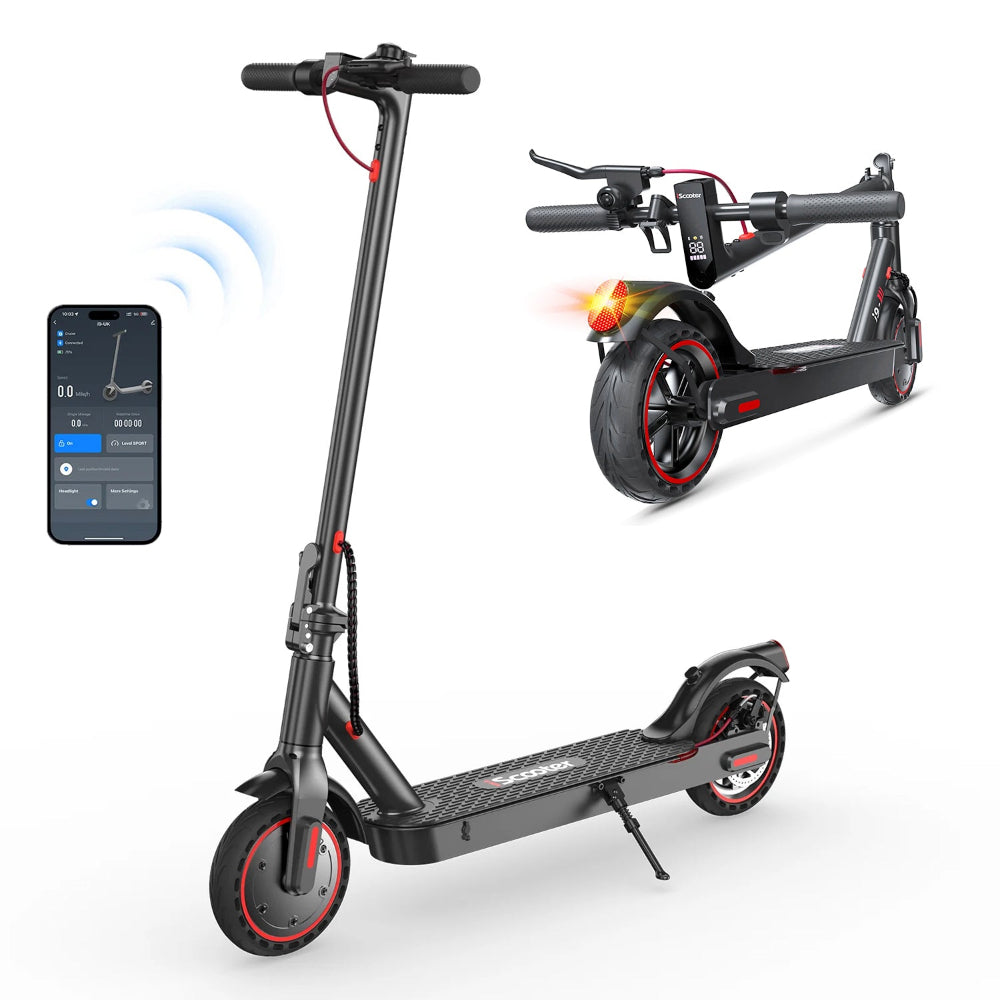
Start by sizing the scooter for the heaviest real load, not the average rider.
- List each rider weight (who will actually ride it week to week).
- Add typical cargo: laptop bag, groceries, gym kit, or a delivery backpack.
- Add a buffer for winter clothing and unexpected extras.
This matters because overload can increase wobble, reduce braking margin, and heat up the motor during longer pulls or repeated starts.
For family sharing, a commuter option like the iscooter i9 is designed to stay light and manageable while still supporting practical commuting loads. The iScooter i9 specifications list a max rider weight of 220 lb (100 kg) and a net scooter weight of 26.4 lb (12 kg), which helps when different riders need to lift or store it between trips.
Shop: iScooter i9 Commuter Electric Scooter
Step 2: Match range to commute reality

Next, convert your route into a realistic range target. Do not shop based only on the best-case marketing number.
- Map your round trip mileage.
- Note hills, headwinds, and stop-and-go intersections.
- Decide how many days you want between charges (for example, 2 to 3 commute days).
Real range drops with heavier loads, colder temperatures, under-inflated tires, and higher speeds. Therefore, pick a battery and motor setup that has extra capacity.
On the commuter side, the iscooter i9 lists a max range of 18.6 miles (30 km) and a 36 V 7.5 Ah (270 Wh) battery, with a stated charge time of about 3 to 5 hours. That profile can work well for short urban commutes and quick top-ups at home.
If your family commute is longer, has more hills, or includes frequent detours, look at models with more battery headroom. For example, the iScooter i9Max lists up to about 24.8 miles (40 km) max range and a 36 V 10.4 Ah (374.4 Wh) battery, which can reduce midweek charging pressure.
Shop: iScooter i9Max Electric Scooter
Step 3: Prioritize braking and visibility

A heavy-duty electric scooter is not only about power. It is also about controlled stopping and being seen.
Use this quick braking and visibility checklist:
- Brakes: look for a dual-brake setup (for example, electronic braking plus a mechanical brake) so you have redundancy.
- Lights: prioritize a bright front light and a visible rear/brake light.
- Rider feedback: a clear display helps family riders avoid accidental overspeed in busy areas.
The iscooter i9 lists an E-ABS electronic front brake and a rear mechanical disc brake, plus front and rear LED lights with a flashing red brake light. Those features are practical for commuter e-scooters that deal with short stops, crossings, and variable traffic.
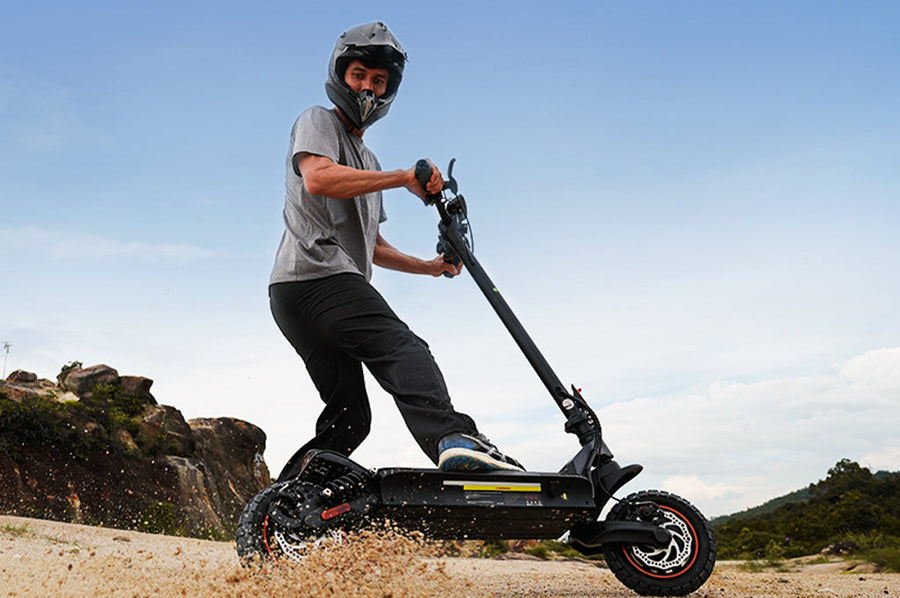
If your commute includes faster shared paths, steep downhill sections, or wet urban roads, consider moving up to an off-road electric scooter with more braking traction and stability. Many off-road electric scooters also add turn signals and broader lighting systems, which can help in darker winter commutes.
Shop: iScooter i9 Commuter Electric Scooter
Step 4: Choose safe charging and battery
Battery safety should be treated as a selection step, not an afterthought. The best family scooter is the one you can charge consistently, in a way that does not add risk to your home.
London Fire Brigade reported 206 e-bike and e-scooter fires across London in 2025, which is why safe charging habits and avoiding mismatched chargers matter for every household using electric scooters. (fia.uk.com)
Use these practical charging rules when selecting a scooter and planning your setup:
- Prefer a scooter that uses a matched, manufacturer-supplied charger with clear input/output specs.
- Plan a charging location that is not on an escape route.
- Avoid aftermarket battery or charger swaps, because compatibility failures can raise risk.
The iscooter i9 lists charger input AC 100-240 V (50-60 Hz) and charger output DC 42 V 1.5 A, plus a Smart Battery Management System. Those details help you confirm that your portable charging solutions (outlets, timers, surge protection) match the charger and do not overload a shared power strip.
Also, do not charge while asleep. The UK government specifically warns that it is vitally important to charge batteries only while you are awake and alert, and not to charge while asleep or away from home. (gov.uk)
Shop: iScooter i9 Commuter Electric Scooter
Step 5: Validate portability and support
Finally, treat portability and support as part of performance. A scooter that never fits your hallway, office corner, or train connection will not stay in the routine.
Check portability in three ways:
- Folded size: confirm it fits your storage spot, not just your trunk.
- Carry weight: can the smallest adult in the household lift it up one flight of stairs?
- Handlebar height and deck comfort: a shared scooter needs a fit range that does not force unsafe posture.
The iscooter i9 is positioned as a lightweight option at 26.4 lb (12 kg) and lists folded dimensions of 42 x 17 x 19 in (108 x 43 x 50 cm). That combination is a common sweet spot for foldable electric scooters used in mixed-mode commuting.
Support matters just as much for family use:
- Fast delivery reduces downtime if your old ride fails.
- A clear return window helps if the fit is wrong after a week of real commuting.
- Warranty and local support reduce the pain of small issues like brake adjustments or display questions.
iScooter highlights fast UK delivery and local support. That is especially useful when a shared commuter scooter supports multiple schedules.
Shop: iScooter i9 Commuter Electric Scooter
Scenario Variations
For Last-mile delivery routes
Last-mile delivery needs higher payload and fewer charging interruptions.
- Prioritize higher load capacity and extra battery capacity.
- Plan a mid-route top-up location if you cannot charge at work.
- Consider an off-road electric scooter if curb cuts and rough pavement are common.
For wet commutes
Wet roads require stability and conservative riding.
- Reduce speed early and increase following distance.
- Avoid deep puddles and slick paint markings.
- Choose tires and a deck stance that feel stable for your body size.
For multi-rider sharing
Shared use is mostly about consistency.
- Set one weekly checklist: tire pressure, brake feel, and light function.
- Use the same charging routine every time.
- Agree on one storage location so the scooter is not left in risky indoor spots.
Prerequisites and Safety
Required Tools and Materials
- Route notes: distance, elevation, and typical surface conditions.
- Rider and cargo list: heaviest rider plus the biggest weekly load.
- Storage plan: a dry indoor spot that does not block exits.
- Charging setup: a grounded outlet and a safe place to rest the charger.
- Lock and parking method: especially if you leave the scooter outside during work hours.
- Basic tool kit: a hex key set and a small torque reference for stem and handlebar checks.
Safety Considerations
- Wear a helmet and visible clothing, especially at dawn and dusk.
- Perform a 20-second pre-ride check: brakes, throttle response, and lights.
- Do not modify or de-restrict the scooter, because extra electrical load can raise overheating and fire risk.
- Let the battery cool after a hard ride before charging.
- Charge only while awake and alert, and unplug when fully charged.
Troubleshooting
| Problem | Cause | Solution |
|---|---|---|
| Short range on a route that used to be easy | Cold weather, low tire pressure, heavier cargo | Reduce speed one mode, inflate tires to the recommended PSI, and plan a partial recharge at your destination. |
| Wobble or unstable steering | Overload, loose stem, uneven stance | Reduce cargo first, then check and tighten folding and stem fasteners before riding again. |
| Brakes feel weak or noisy | Pad wear, rotor contamination, cable stretch | Clean braking surfaces, adjust the mechanical brake, and stop riding if the lever pulls to the bar. |
| Slow or inconsistent charging | Hot battery, poor outlet, charger mismatch | Let the pack cool 30 to 60 minutes, switch to a different outlet, and use only the manufacturer-authorized charger. |
| Poor visibility at night | Dim lighting, dirty lenses, low battery | Clean lights, recharge before night rides, and add reflective gear to improve detection from cars. |
Conclusion
Selecting a heavy-duty electric scooter for a whole family commute is easier when you follow a repeatable checklist. First, size for the heaviest rider and real cargo. Next, choose real-world range that matches your route, not just a best-case number.
Then, prioritize braking and visibility, because those features protect you when conditions change. After that, treat Lithium-ion battery technology and charging routines as part of safety, not just convenience. Finally, confirm foldability and support so the scooter stays practical every day.
Official Site: iScooter
Frequently Asked Questions
How do I choose a reliable electric scooter for my daily office commute?
A reliable electric scooter for commuting should have predictable braking, stable steering, and a range buffer above your round-trip distance. You should test whether the folded size fits your real storage spot at home and at work. You should also confirm that lights are bright enough for dusk rides and that the display is readable in daylight. Finally, choose a model with clear warranty terms and responsive support so small issues do not disrupt your week.
How much weight can an electric scooter handle for every family member commute?
You should start with the manufacturer max rider weight, then add the weight of your most common cargo such as a backpack or groceries. A good rule is to plan for the heaviest rider plus at least 10 to 15 lb of extra load to avoid riding at the absolute limit. If multiple riders share one scooter, the heaviest rider should be the main reference for sizing. If the scooter feels unstable or slows sharply on hills, the load plan is too aggressive.
What is the average battery life for electric scooters?
Battery life depends on charge cycles, heat exposure, storage habits, and how often you ride at high power. Most batteries last longer when you avoid repeated deep discharges and when you store the scooter in a cool, dry space. You should let the battery cool before charging after a hard ride, because heat accelerates wear. If range drops sharply or charging becomes inconsistent, you should stop using the battery until it is inspected.
What is the best value for money scooter for everyday urban commuting?
Value comes from consistent range, safe braking, and a routine-friendly setup rather than peak speed. You should focus on whether the scooter fits your commute distance with a buffer, folds easily for storage, and charges safely within your daily schedule. You should also consider support quality, because quick parts help and warranty coverage can reduce downtime. In practice, the best value is the scooter that stays dependable across weekday conditions, not the one with the most aggressive specs.
iScooter E Scooter Collections:
Electric Scooter | Kids Electric Scooter | Electric Scooter for Adults | Electric Scooter with Seat | Off-Road Electric Scooter | Foldable Electric Scooter | Girls Electric Scooter | 1000W Electric Scooter | 2000W Electric Scooter | Boys Electric Scooter | Dual Motor Electric Scooter | Big Electric Scooter | Electric Scooter with Suspension | Lightweight Electric Scooter | Commuter E-Scooters | 3 Wheel Electric Scooter
Show more ▼iScooter E Bike Collections:
Foldable Electric Bike | Affordable Cheap Electric Bike | Electric Bike for Adults | Electric Motor Bikes | Trek Electric Bike | Fastest Electric Bike | Electric Road Bike | Full Suspension Electric Mountain Bike | Giant Electric Bike | Womens Ladies Electric Bike | Mens Electric Bike | Electric Bike with Throttle | Electric Gravel Bike | Electric Mountain Bike UK | Fat Tyre Electric Bike | Electric Hybrid Bike | Electric Motorised Bike | Electric Push Bike | 1000W Electric Bike | Cool Electric Bikes | Electric Off Road Bike | Pedal Assist Electric Bike | Good Electric Bikes | Small Electric Bike | Trek Electric Mountain Bike | 2000W Electric Bike | Full Suspension Electric Bike | Mini Electric Bike | Road Legal Electric Bike | Step Through Electric Bike
Show more ▼👍 Buying Guide | 🚴♂️ Riding Guide
📋 Feature Guide | ❓ Common problem

Product category
Electric Scooter
Cheap Electric Scooters for Adults | Fastest Electric Scooter | Kids Electric Scooter | Mini Electric Scooter
Electric Bike
U4 Foldable E-bike | EB3S E-MTB
Hoverboards
Electric Scooter for Kids | iK3Pro E-Scooter for Kids | iK7 Height Adjustable Kids E-Scooter








Article tags :
Leave us a message