










Prevent Your E-Scooter From Slipping on Wet Roads — A Useful 2026 Guide
Introduction
Preventing your electric scooter from slipping on wet roads is not about riding slower only. It is a repeatable safety skill that combines traction setup, smooth control, and smart scanning.
Rain changes the grip level on almost every surface. Painted lane lines, metal utility covers, bridge plates, and polished concrete can become low-friction zones that behave like ice for electric scooters. Even small puddles can hide debris or a sharp edge that causes a quick front-wheel washout.
This 2026 guide focuses on practical steps you can use right away:
- How wet traction works (so you know what to change).
- How to scan and predict low-grip patches early.
- How to set up tires and deck grip to reduce foot slip.
- How to brake and corner without sudden traction spikes.
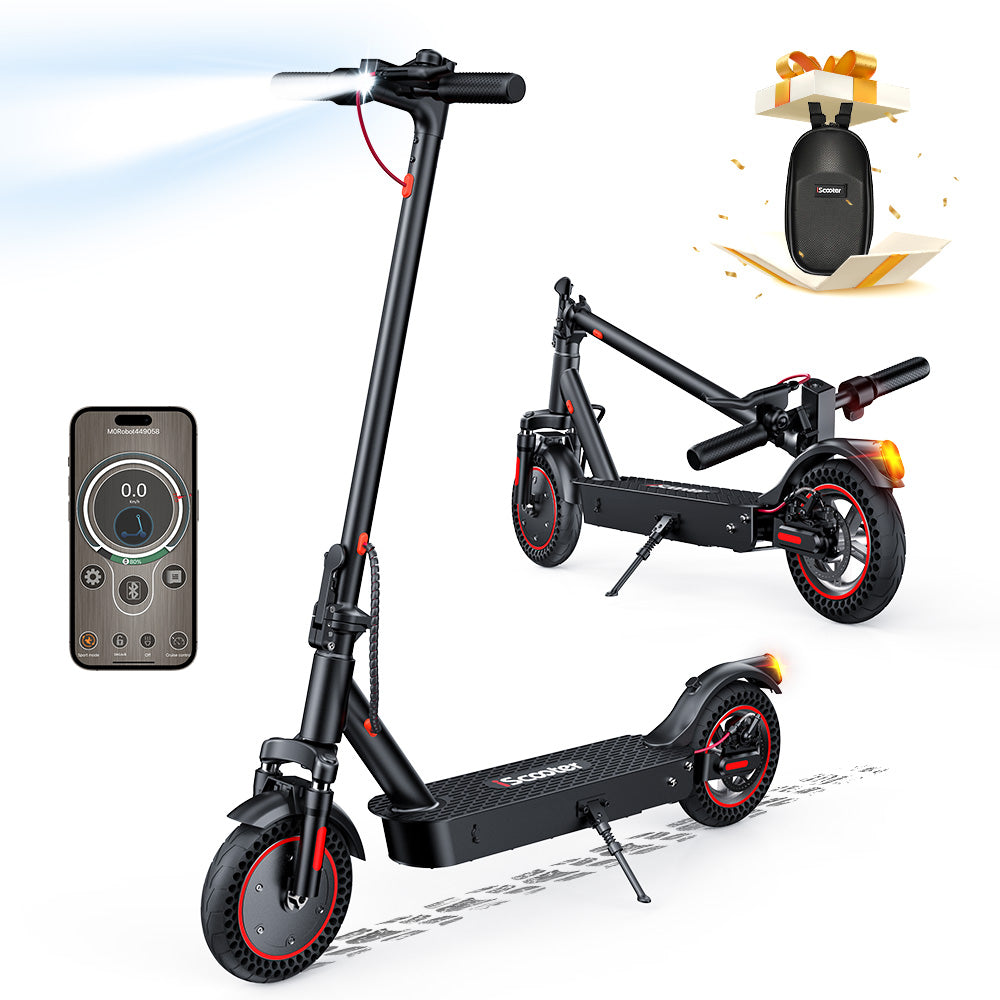
- How to configure a rain-ready iscooter commuter setup using the iscooter i9 family and iScooter i9Max.
Official Site: iScooter
Core Foundations
Traction basics: friction, load, and contact patch
Wet-road grip is the combination of three things:
- Friction between tire and road. Water reduces friction by creating a thin film that lowers rubber-to-road bonding.
- Load on each wheel. When you brake, weight shifts forward. This can overload the front tire or unload the rear tire, which changes how easily each wheel can slip.
- Contact patch size and stability. A stable patch helps, but the real goal is to keep the tire within its traction limit by avoiding sudden inputs.
For most Commuter Scooters, the biggest wins come from smoother braking and steering. Riders often focus on speed, but traction is mostly lost because of abrupt changes in force.
Wet hazards taxonomy: smooth, oily, loose
Wet hazards usually fall into three types. Train your eyes to label them quickly.
- Smooth surfaces: paint lines, polished stone, metal covers, tiled sidewalks, bridge joints. These can be slippery even at low speed.
- Oily film: first rain after a dry spell often lifts oil and dust. The road can be slickest in the first 10 to 20 minutes.
- Loose material: wet leaves, sand, fine gravel, or mud. Loose debris acts like tiny ball bearings under scooter tires.
When you combine smooth + wet + a turning load, the traction margin can drop fast. This is where riders most often lose the front wheel.
Control inputs: throttle, brake, and steering limits
On wet roads, treat throttle, braking, and steering like three dials sharing one traction budget.
- Throttle: roll on gently after the scooter is upright. Avoid strong acceleration while crossing paint or metal.
- Braking: build pressure progressively. If you must stop quickly, brake in a straight line first, then turn.
- Steering: keep lean angles smaller. Turning demands traction, so it reduces braking traction at the same time.
This is why smoothness is not just comfort. It is a traction management strategy.
Water resistance limits: what IPX4 really means
Many electric scooters are built for light rain, not deep water.
The iScooter i9Max lists IPX4 water resistance, which generally indicates splash resistance rather than protection for immersion or riding through deep standing water. The same product page also lists key wet-ride stability elements like dual front and rear suspension and 10-inch honeycomb solid tires. (iscooterglobal.co.uk)
A simple rule: if water can reach the deck level or submerge connectors, treat it as a no-go. Avoid deep puddles and any flooding, even if your scooter is labeled water resistant.
Wet-Road Surface Scanning
Identify low-friction micro-surfaces fast
Wet riding is won or lost in the two seconds before a hazard. Scanning is the skill that buys those two seconds.
Use a repeating pattern:
- Near field (1 to 2 seconds ahead): look for paint, metal, and puddle edges.
- Mid field (3 to 6 seconds ahead): look for road camber, turns, and braking zones.
- Far field (7+ seconds ahead): look for traffic light timing and driver behavior.
In rain, do not stare at one point. Move your eyes and label surfaces quickly.
Track water film, debris, and camber
Wet grip is uneven across the same lane.
- Water film: glossy patches often mean a thicker film. Matte patches often have more texture.
- Debris lines: gutters and lane edges collect leaves and grit.
- Camber: road slope can pull the scooter sideways during braking or turning.
If you see a shiny metal cover, plan a line that crosses it upright. If you cannot avoid it, reduce lean and reduce throttle before contact.
Reduce surprises and stabilize rider inputs
Surprises cause panic inputs. Panic inputs cause slips.
Build a habit of pre-loading decisions:
- Decide your braking point early.
- Choose a line that avoids smooth hazards.
- Commit to smooth, slow inputs while crossing the worst surfaces.
This mental routine matters as much as hardware. Even a high-spec off-road electric scooter can slide if the rider grabs brakes mid-turn.
Tire and Deck Traction Setup
Inspect tread, compound behavior, and embedded grit
Tires are your only contact with the road. Wet traction problems often start with simple maintenance.
- Check for uneven wear. A squared-off tire profile reduces predictability in turns.
- Remove embedded glass or grit. Small stones can reduce grip and create vibration.
- Wipe down tire surfaces. Road oil can cling to rubber after rain.
If you ride frequently in wet conditions, do quick checks weekly. This is especially important for electric scooters used for daily commuting.
Keep deck grip tape clean and reduce foot slip
Foot slip is the hidden cause of many wet crashes. When a foot slides, the rider yanks the handlebar and the front wheel can wash.
Practical steps:
- Clean grip tape with a soft brush and mild soap.
- Dry the deck before riding when possible.
- Consider footwear with a flat, grippy sole.
If your shoes are soaked and smooth, your control inputs get worse. The goal is consistent foot pressure so steering stays calm.
How the i9Max tire and suspension design helps in wet
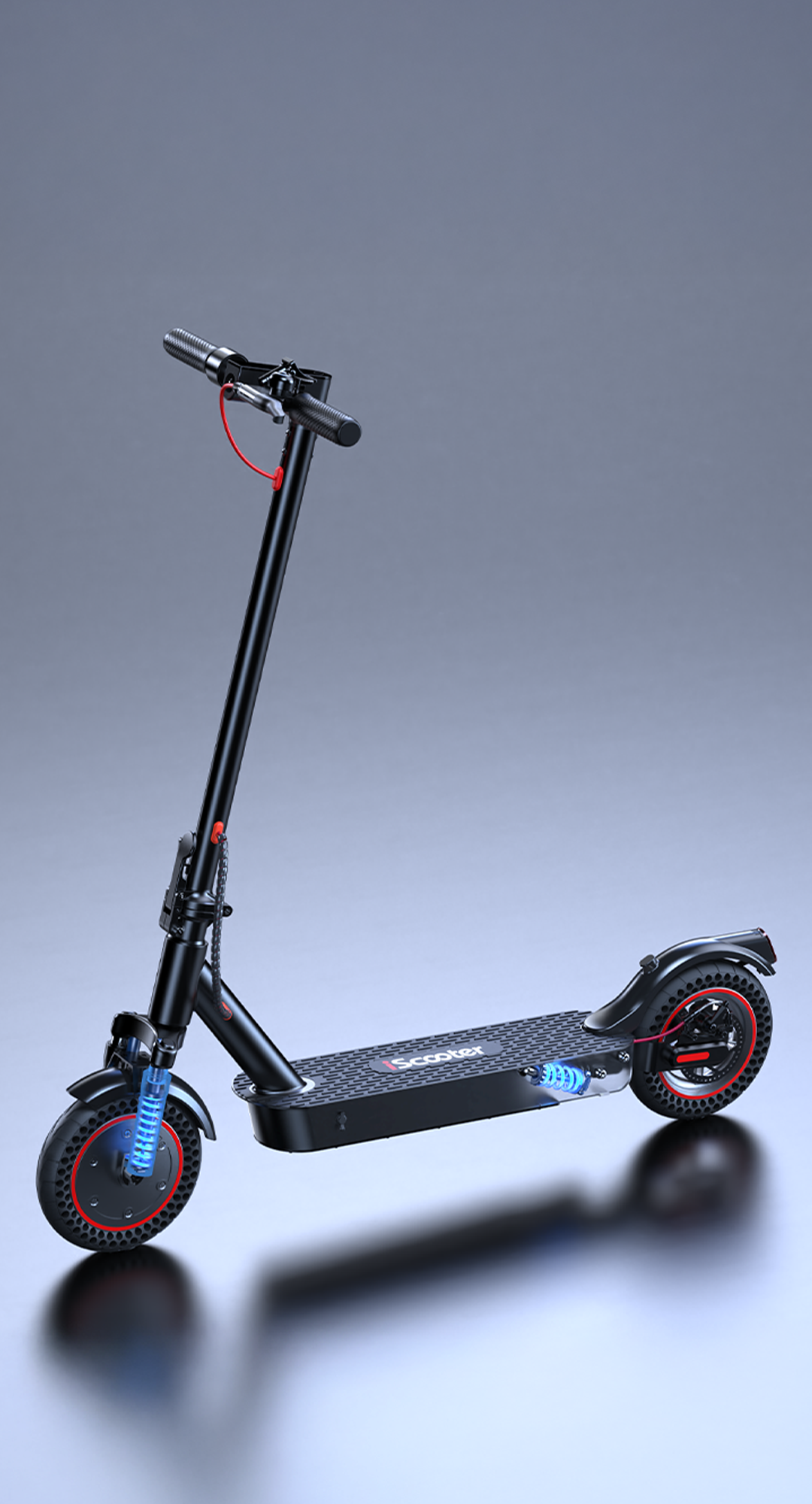
The iScooter i9Max uses 10-inch honeycomb solid tires and dual front and rear suspension, which can reduce the harsh kick that often triggers sudden steering corrections on wet bumps. (iscooterglobal.co.uk)
Solid tires will not puncture, which can be helpful for commuting reliability. However, they can feel different from pneumatic tires on slick surfaces. Because of that, treat smoothness and scanning as your primary wet safety tools.
Braking and Cornering Control
Use progressive braking and avoid spikes
Wet braking is about avoiding a traction cliff.
Use this sequence:
- Settle your body (knees bent, elbows soft).
- Apply light brake to load the tire.
- Increase brake force gradually.
- Release smoothly as you reach the stop or turn.
If you feel a skid starting, reduce brake force immediately and straighten the scooter. Trying to "muscle through" usually makes the slide worse.
Prioritize upright braking before turns
The safest wet corner is the corner where you did your speed control before you leaned.
- Brake early while upright.
- Enter the turn slower.
- Keep lean angle smaller.
- Accelerate gently only after you exit and straighten.
This is the same principle used in many two-wheel disciplines. The difference on electric scooter platforms is the smaller tire diameter and shorter wheelbase, which can make grip changes feel sudden.
How E-ABS plus disc braking affects modulation
The iScooter i9Max lists front E-ABS electronic brake and a rear mechanical disc brake. (iscooterglobal.co.uk)
This split setup can support smoother braking when you do your part:
- Use progressive inputs so E-ABS can manage front-wheel slip without abrupt engagement.
- Avoid grabbing the rear disc suddenly, since rear lockup can start a fishtail.
In wet conditions, your main goal is controlled deceleration, not shortest possible stop at any cost.
Rain-Ready Scooter Configuration
Verify your braking system before every wet ride
Before rolling out, do a 10-second brake check.
- Squeeze or engage brakes at walking speed.
- Confirm you get smooth slowing, not pulsing or grabbing.
- Listen for rubbing that could indicate misalignment.
If braking feels inconsistent, do not "test it at speed" in the rain. Fix it first.
Why suspension helps stability on wet bumps
On wet roads, bumps and cracks are more dangerous because they can cause quick unloading of the tire.
Suspension helps by:
- Keeping the wheel in contact more consistently.
- Reducing handlebar kick that leads to over-correction.
- Improving comfort so the rider stays relaxed and responsive.
The iScooter i9Max emphasizes dual front and rear suspension, which can be useful for the everyday reality of wet city streets with uneven pavement. (iscooterglobal.co.uk)
A wet-road stability checklist for the iScooter i9Max
Use this quick setup routine before rainy commutes:
- Confirm the scooter is rated IPX4 and avoid deep water anyway.
- Check tire surfaces are clean.
- Confirm lights work and lenses are clean.
- Reduce top speed expectations. Wet traction should set your pace.
- Keep battery charging routines safe and dry, especially for Lithium-ion Battery systems.
If you want a commuter-oriented configuration, the i9Max listed specs include 500 W max power, 10-inch tires, and dual suspension, which align with stability priorities for Commuter Scooters. (iscooterglobal.co.uk)
Shop: iScooter i9Max Electric Scooter
Protective Gear and Visibility
Helmet, gloves, and eye protection: control and injury reduction
Wet roads increase fall risk. Gear reduces injury severity and also improves control.
- Helmet: Research summarized by NHTSA reports helmets reduce brain injuries by 41 to 69 percent. (nhtsa.gov)
- Gloves: wet grips can slip. Gloves improve bar control and protect hands in a fall.
- Eye protection: rain and spray reduce hazard detection. Clear lenses help you scan.
Even if you also ride an electric bike or E-bikes, keep separate wet-weather gear so you are not forced to "make do" with the wrong setup.
Visibility: be seen, not just able to see
Rain lowers contrast and increases glare from headlights.
- Use front and rear lighting.
- Add reflective elements on jacket, backpack, or helmet.
- Signal earlier and keep bigger gaps.
A simple rule in rain: assume drivers see you late. That means you should brake earlier and avoid surprise lane changes.
Training benefit: gear supports smoother riding
Protective gear indirectly reduces slipping.
When riders feel exposed, they tense up. Tension causes jerky throttle and braking. Gear makes you more willing to ride smoothly and keep a stable posture, which protects traction.
Selection/Decision Guide
Tire type: wet grip consistency vs maintenance
Tire choice affects feel and confidence on wet roads.
- Pneumatic tires: can offer better micro-grip on rough asphalt because they deform and maintain contact. They need pressure checks and puncture management.
- Solid tires (including honeycomb): eliminate flats and reduce maintenance. They can transmit more vibration, so suspension and rider smoothness matter more.
If your priority is low-maintenance commuting, solid tires can fit well. If your priority is maximum wet grip feel, you may prefer pneumatic options.
Braking system: modulation under wet load
In rain, braking quality is mainly about control.
- Look for a setup that allows progressive braking.
- A combination like electronic braking (E-ABS) and mechanical disc can help when tuned well.
- Avoid setups that feel grabby at low lever travel.
For the iScooter i9Max specifically, the listed brake configuration is front E-ABS electronic braking and rear mechanical disc braking. (iscooterglobal.co.uk)
Suspension: stability over wet bumps
Suspension is not just comfort.
- More stability over wet cracks reduces sudden steering inputs.
- Reduced bounce helps the tire stay loaded consistently.
For mixed city pavement, a dual suspension commuter design can be a strong fit. The i9Max lists dual front and rear suspension as a core feature. (iscooterglobal.co.uk)
Water rating: interpret IPX ratings correctly
Water ratings are often misunderstood.
- IPX4 usually means splash resistance.
- It does not mean safe for deep puddles or water jets.
A good decision rule is behavioral: even with IP ratings, choose routes that avoid flooding and slow down before any wet hazard.
Wet-road decision table (framework-first)
| Riding scenario (wet) | Primary risk | What to prioritize | Trade-off |
|---|---|---|---|
| Painted intersections and bike boxes | sudden low grip mid-turn | scan early, stay upright over paint, gentle throttle | slower corner speed |
| Utility covers and bridge joints | metal slip + steering kick | reduce lean, steady bars, brake before cover | longer stopping distance |
| Rough asphalt with puddles | hidden debris and edge hits | pick a cleaner line, avoid puddle edges, bigger following gap | less direct route |
| Stop-and-go commute | frequent braking traction spikes | progressive braking, earlier braking points | slightly longer travel time |
Best Practices
- Slow before paint and metal: do speed changes on high-grip asphalt, then cross hazards upright.
- Keep your body loose: bent knees and relaxed elbows help the scooter track straight over wet bumps.
- Increase following distance a lot: rain reduces traction and visibility, so give yourself more time.
- Use a "no surprises" line: avoid last-second swerves. Plan around puddles early.
- Do a 30-second pre-ride check: brakes, lights, deck grip, and tire surfaces.
To stay current on legal use expectations for rental scooters in the UK trial context, GOV.UK explains rules for trial areas and states rental e-scooters must not be used on pavements. (gov.uk)
Conclusion
Wet-road safety on an electric scooter comes from traction management, not luck. When you scan early, keep your deck and tires clean, and use progressive braking, you reduce the sudden inputs that cause most slips.
If you ride a commuter setup like the iScooter i9Max, use its stability features (10-inch solid tires, dual suspension, and E-ABS plus rear disc braking) as part of a complete wet routine, not as a substitute for technique.
Official Site: iScooter
Frequently Asked Questions
How do I prevent my e-scooter from slipping on wet roads?
Smooth throttle and braking reduce traction spikes, which is the most common trigger for wet slides. You should scan for paint, metal covers, and glossy patches, then cross them upright with minimal steering input. Brake earlier than usual and finish most braking before you lean into a turn. Keep your deck grip clean so your feet do not slide and jerk the handlebar. If a skid starts, reduce brake force and straighten the scooter rather than fighting the slide.
Are there any e-scooters designed specifically for rain?
Some electric scooters are built with higher water resistance and better sealing, but no scooter is truly designed for deep water or flooding. Rain still reduces traction, so riding technique matters more than the model name. You should treat any water rating as protection from light spray and puddle splashes, not immersion. Even with a capable commuter design, you should avoid standing water that can reach the deck. If you ride often in rain, prioritize predictable braking, stable tires, and strong lighting.
What’s the best e-scooter for commuting in rainy weather?
A good wet-weather commuter scooter is stable, predictable, and easy to control at lower speeds. Look for a braking setup you can modulate smoothly, plus tires and suspension that reduce sudden kicks from cracks and bumps. A longer range can help because you can choose safer routes instead of the shortest route. Lighting and brake lights also matter because rain reduces contrast and increases glare. Finally, the best choice is the one you will actually maintain, because worn tires and weak brakes magnify wet risk.
Is it suitable for wet or rainy conditions?
It can be suitable for light rain if the scooter has a water resistance rating and you avoid deep puddles. You should still assume reduced traction, especially on paint lines, metal covers, and smooth concrete. Lower your speed target and increase your following distance because stopping distances can grow. If conditions include flooding, heavy standing water, or poor visibility, postponing the ride is often the safest decision. After the ride, dry the scooter and check for grit around brakes and wheels.
How can I ensure my e-bike performs well in wet conditions?
An ebike needs the same traction mindset as an electric scooter, but it also adds drivetrain and brake considerations. You should keep tires properly inflated for the conditions, since under- or over-inflation changes grip and handling. Check brake pad wear and rotor cleanliness because wet braking relies on consistent friction. Clean and lubricate the chain to prevent rust, but avoid contaminating braking surfaces. Use lights and reflective gear because wet roads reduce visibility for drivers.
Can you recommend an e-bike that’s safe for use in rainy conditions?
A safe wet-weather e-bike is one with reliable brakes, stable tires, and good lighting, but rider behavior still sets the real safety limit. Choose a frame size that fits so you can brake without pitching forward and so you can put a foot down confidently at stops. Prioritize tires with a tread pattern designed to channel water and maintain contact on rough pavement. In rain, reduce speed, avoid sharp leans, and brake earlier than you would in dry conditions. You should also store and charge the battery in a dry place to reduce corrosion risk and keep electrical contacts clean.
Table of Contents
- Introduction
- Core Foundations
- Wet-Road Surface Scanning
- Tire and Deck Traction Setup
- Braking and Cornering Control
- Rain-Ready Scooter Configuration
- Protective Gear and Visibility
- Selection/Decision Guide
- Conclusion
-
Frequently Asked Questions
- How do I prevent my e-scooter from slipping on wet roads?
- Are there any e-scooters designed specifically for rain?
- What’s the best e-scooter for commuting in rainy weather?
- Is it suitable for wet or rainy conditions?
- How can I ensure my e-bike performs well in wet conditions?
- Can you recommend an e-bike that’s safe for use in rainy conditions?
iScooter E Scooter Collections:
Electric Scooter | Kids Electric Scooter | Electric Scooter for Adults | Electric Scooter with Seat | Off-Road Electric Scooter | Foldable Electric Scooter | Girls Electric Scooter | 1000W Electric Scooter | 2000W Electric Scooter | Boys Electric Scooter | Dual Motor Electric Scooter | Big Electric Scooter | Electric Scooter with Suspension | Lightweight Electric Scooter | Commuter E-Scooters | 3 Wheel Electric Scooter
Show more ▼iScooter E Bike Collections:
Foldable Electric Bike | Affordable Cheap Electric Bike | Electric Bike for Adults | Electric Motor Bikes | Trek Electric Bike | Fastest Electric Bike | Electric Road Bike | Full Suspension Electric Mountain Bike | Giant Electric Bike | Womens Ladies Electric Bike | Mens Electric Bike | Electric Bike with Throttle | Electric Gravel Bike | Electric Mountain Bike UK | Fat Tyre Electric Bike | Electric Hybrid Bike | Electric Motorised Bike | Electric Push Bike | 1000W Electric Bike | Cool Electric Bikes | Electric Off Road Bike | Pedal Assist Electric Bike | Good Electric Bikes | Small Electric Bike | Trek Electric Mountain Bike | 2000W Electric Bike | Full Suspension Electric Bike | Mini Electric Bike | Road Legal Electric Bike | Step Through Electric Bike
Show more ▼👍 Buying Guide | 🚴♂️ Riding Guide
📋 Feature Guide | ❓ Common problem

Product category
Electric Scooter
Cheap Electric Scooters for Adults | Fastest Electric Scooter | Kids Electric Scooter | Mini Electric Scooter
Electric Bike
U4 Foldable E-bike | EB3S E-MTB
Hoverboards
Electric Scooter for Kids | iK3Pro E-Scooter for Kids | iK7 Height Adjustable Kids E-Scooter






Article tags :
Leave us a message